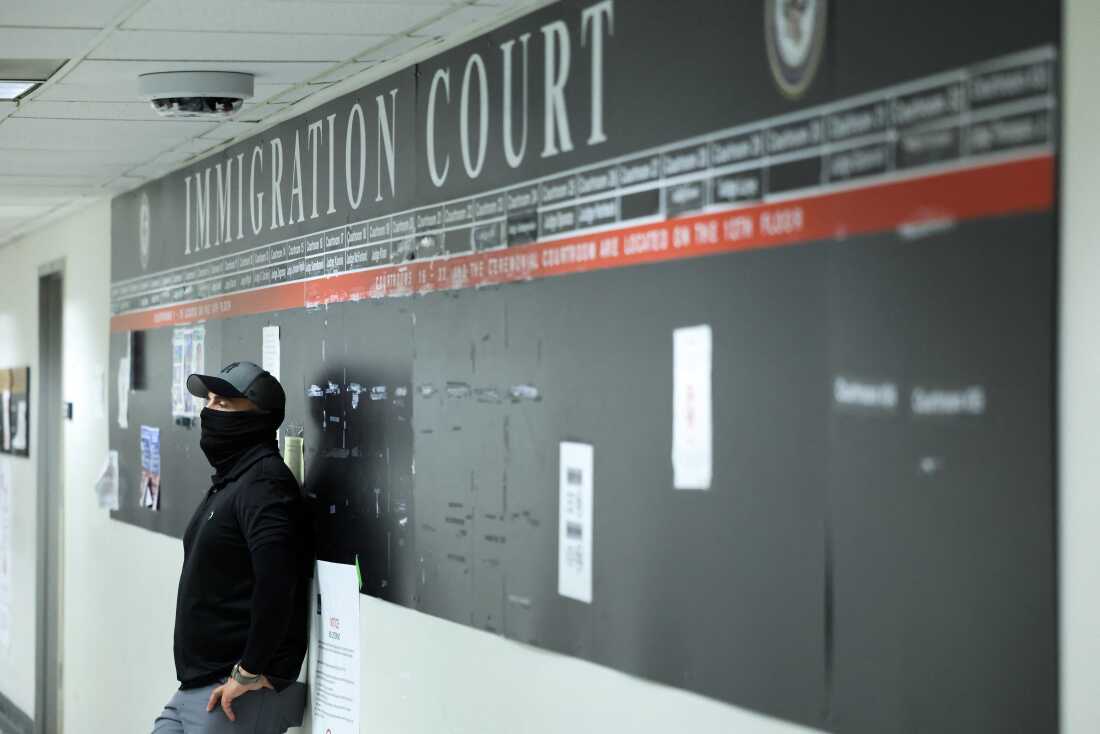
Inside the Jacob K. Javitz Federal Building in New York, federal officers oversee accelerated immigration hearings aimed at increasing deportation orders. By conducting mass hearings, referred to as ‘mega masters,’ the Justice Department’s immigration courts gather over 100 individuals for proceedings at once. Previously, these initial hearings typically involved two or three dozen people.
Many immigrants experience their first court appearance during these sessions, often without legal representation. Individuals who arrive late or fail to appear risk receiving immediate removal orders, highlighting the limited due process available. Vanessa Dojaquez-Torres from the American Immigration Lawyers Association (AILA) expressed concerns about inadequate notice for unrepresented immigrants and insufficient court seating for the large gatherings.
The Executive Office for Immigration Review (EOIR), which manages these courts, declined to comment on the strategy. Reports indicate the tactic began in cities like Chicago, Boston, and Chelmsford, Massachusetts, and will soon expand to the Dallas Immigration Court. The initiative aligns with President Trump’s goal to deport a million individuals annually, a significant increase from the 600,000 deportations in 2025, amid concerns about immigration court backlogs.
Inadequate Notice and Strained Courthouses
Judges can issue removal orders when individuals miss hearings—even unintentionally. NPR analysis notes an increase in such occurrences under the Trump administration, with many fearing detention as a result. Concerns arise over insufficient notice, as immigrants and their lawyers often receive minimal communication about rescheduled dates. These ‘mega masters’ involve individuals with hearings slated for 2027 to 2029.
A Texas-based immigration attorney speculated the courts anticipate most will miss the hearings, allowing for cases to be resolved in absentia. The attorney expressed concerns over potential courthouse overcrowding and overwhelmed staff if people do attend. Some view expedited scheduling as beneficial, yet acknowledge that most individuals lack legal counsel to take advantage of faster proceedings.
DOJ Expands Staff to Manage Increased Caseloads
The DOJ continues efforts to expedite cases, prioritizing specific nationalities and juvenile cases. In line with these efforts, the agency recently onboarded its largest-ever group of new immigration judges, including 77 judges and 5 temporary military lawyers. This fiscal year, the DOJ hired 153 judges, marking a record for any given year.
Acting Attorney General Todd Blanche emphasized the administration’s commitment to enforcing immigration laws through dedicated judges. However, last year saw a reduction in the judiciary, with over 100 judges dismissed. NPR noted that judges with experience in immigrant representation faced higher dismissal rates compared to those with Department of Homeland Security backgrounds.
Leave a Reply