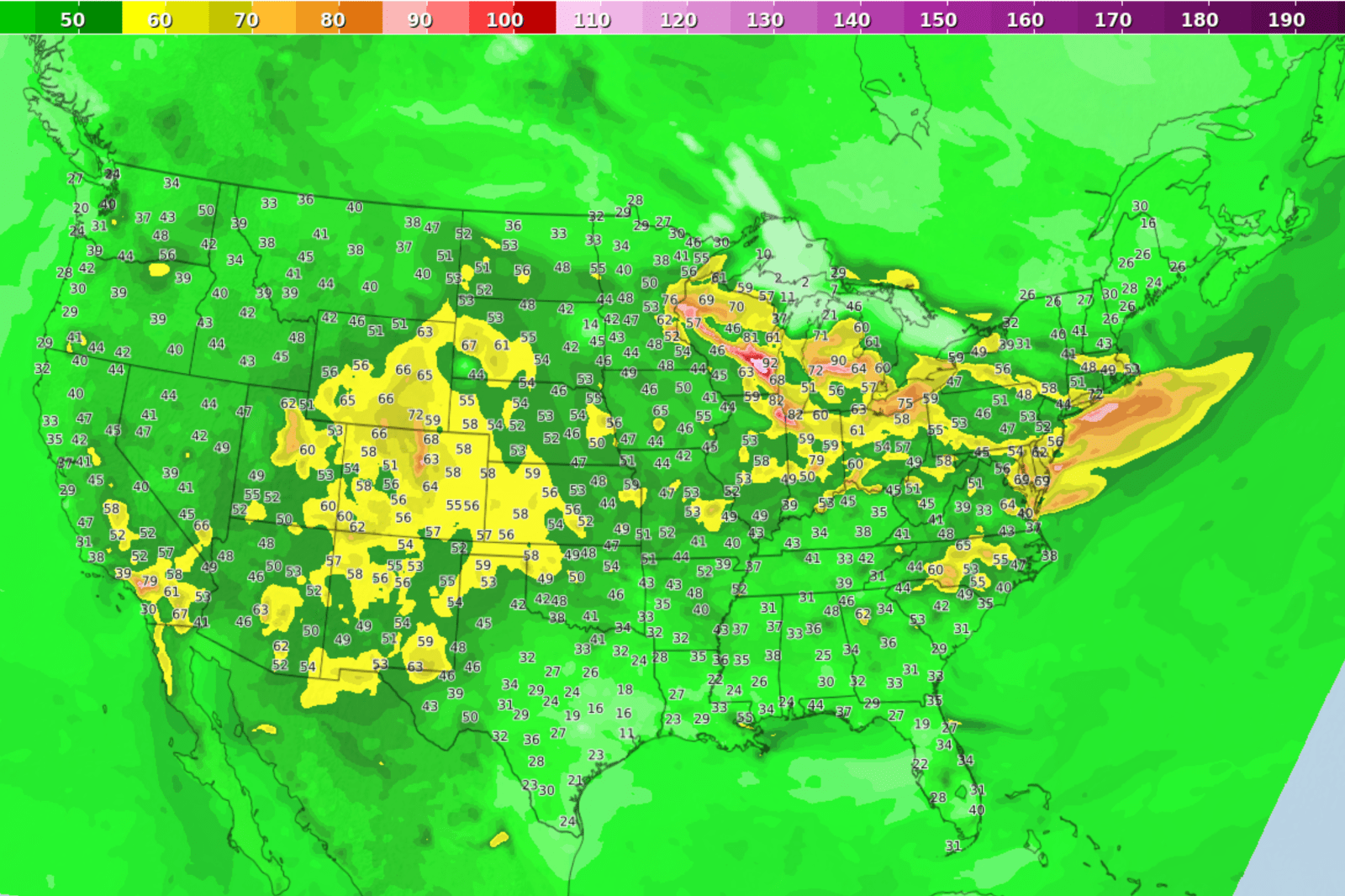
Smoke from hundreds of wildfires in Canada is spreading into the United States. This is causing air quality alerts across several states, including New York, and creating a visible haze in parts of the region.
Air Quality Alerts and Health Advisories
More than 800 active Canadian wildfires are affecting the air quality in New York and neighboring states. Officials are warning about the unhealthy conditions this smoke can create, especially for children, older adults, and people with respiratory or cardiovascular issues. The smoke brings concentrations of harmful fine particulate pollution, reducing visibility.
Emergency Measures in New York City
Officials in New York City have expanded emergency measures as the smoke coincides with summer heat. Mayor Zohran Mamdani advised staying in air-conditioned spaces, limiting outdoor activities, staying hydrated, and checking on vulnerable neighbors. Free KN95 masks are being distributed as forecasts indicate that air quality could reach the ‘Unhealthy’ category.
The New York State Department of Environmental Conservation (DEC) and Department of Health (DOH) have extended a statewide Air Quality Health Advisory. Governor Kathy Hochul urges residents to remain informed and take necessary precautions, especially sensitive groups who should be extra cautious.
Extent of Air Quality Alerts in New York
Significant parts of New York State are under air quality health advisories due to the wildfire smoke. This includes New York City, Long Island, Hudson Valley, the Capital Region, Central New York, the North Country, and western New York. The DEC warns that elevated fine particulate pollution is expected, with AQI levels likely rising above 100 in many areas.
Impacted Areas Beyond New York
The smoke is affecting numerous parts of the United States, including the Midwest, Great Lakes, and Northeast. Air quality alerts have been issued in Minnesota, Michigan, Illinois, Indiana, Ohio, Pennsylvania, and West Virginia. Minnesota is experiencing severe conditions, with the AQI expected to reach the ‘Maroon’ or Hazardous category. In Pennsylvania, Code Red air quality alerts have been issued, indicating smokey conditions persist. Ohio’s Environmental Protection Agency warns of unhealthy air quality for sensitive groups.
Health Risks Associated with Wildfire Smoke
Wildfire smoke contains PM2.5 particles that can penetrate the lungs and bloodstream, causing health issues such as coughing, shortness of breath, and fatigue. It can exacerbate asthma, COPD, heart issues, and other conditions. Authorities recommend reducing outdoor activity when smoke levels are high, using air conditioning or air filtration systems, and wearing N95 or KN95 masks if outdoors.
Ongoing Monitoring and Caution
Meteorologists and air quality experts are watching the smoke’s movement across the Northeast. Residents should stay updated on local air quality forecasts and advisories, as shifting wind patterns can cause rapid changes in smoke concentrations. With summer heat, the combination of high temperatures and poor air quality remains a concern until conditions improve.
Leave a Reply