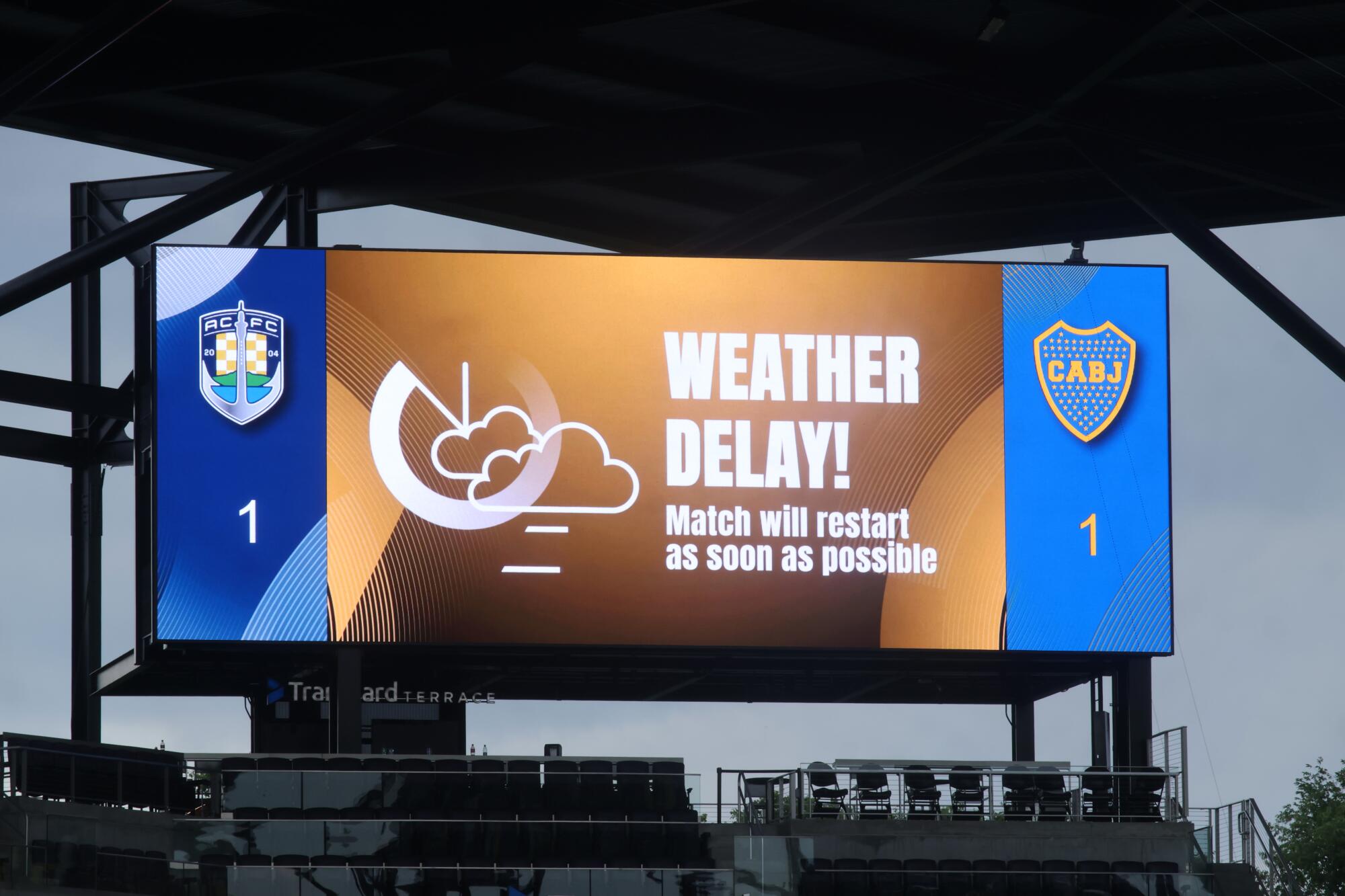
Shortly after Lionel Messi and the Argentine World Cup team arrived at their Kansas City training base, severe thunderstorms affected the area. The storms knocked out power, uprooted trees, and brought flood and tornado warnings. These are not ideal conditions for the world’s most famous soccer tournament. This weather event marks the beginning of a potentially disruptive weather system that could impact the 38-day competition, which starts next week across Mexico, Canada, and the U.S.
Kaitlyn Trudeau, a senior research associate at Climate Central, remarked, “Climate change is going to affect this World Cup.” She explained that climate change increases not only temperatures but also humidity. The summer’s World Cup may be among the last held during June and July. Temperatures have risen 1.89 degrees since the first World Cup in 1930, based on data from NASA. Although this might seem small, it reflects numerous days and nights of extreme heat.
“It can be a very dangerous situation,” Trudeau said.
FIFA President Gianni Infantino plans to move future tournaments after 2030 to March or October. Until then, early kickoffs, cooling breaks, and weather-related delays will be frequent, as discussed in the “Pitches in Peril” report. Elliot Arthur-Worsop, director of Football For Future, stated, “Football is starting to confront new climate realities.” Extreme weather is becoming unpredictable, posing risks to players, spectators, and officials, especially concerning extreme heat.
Adapting may involve rescheduling tournaments to times with milder weather. Short-term measures can include adjusting kickoff times, adding drink breaks, and implementing heat and safety protocols. Some climatologists fear summer events like the World Cup may be one heatwave away from significant weather-related incidents. Arthur-Worsop warned that this World Cup might be the last in North America for a long time. Future hosting cycles may be unplayable due to extreme weather conditions.
Trudeau expressed concern that adaptations won’t keep up with a rapidly warming planet. She stressed, “We are pushing ourselves to a limit.” Ensuring the safety of participants is paramount. FIFA moved the 2022 World Cup from June to November to address Qatar’s intense heat. Many games played there required air-conditioned stadiums. This summer, only three of the tournament’s venues are climate-controlled.
The upcoming 2030 World Cup will mainly occur in Spain, Portugal, and Morocco, where high temperatures are common in June and July. Recent studies highlight that conditions in nearly all host cities may exceed the extreme Wet Bulb Globe Temperature threshold. This index measures heat stress on the human body, factoring in temperature and humidity. For example, in Miami, humidity could make a 90-degree air temperature feel like 109 degrees.
Under such conditions, cooling the body becomes harder. Trudeau emphasizes that temperature alone doesn’t account for heat felt from humidity. Excessive humidity hinders the body’s ability to cool itself by sweating. Thus, extreme caution is needed for players and spectators. Cool evening games might help, but many are scheduled for 3 p.m. or earlier to accommodate European TV viewers.
Despite mid-half hydration breaks, Trudeau doubts their effectiveness since games occur during peak heat. She questioned FIFA’s priorities, asking if the focus is on ratings or players’ safety. FIFA defended the schedule, citing climate risk assessments in planning. Responses will include shaded areas, misting systems, cooling buses, and expanded water distribution when elevated temperatures are forecasted.
Last summer’s FIFA Club World Cup, acted as a rehearsal for this event, faced various climate challenges. It dealt with high temperatures, humidity, thunderstorms, and lightning at different venues in the U.S. Argentine midfielder Enzo Fernandez shared, “The heat is incredible,” recounting dizziness and laying down from the heat. Extreme weather impacts play quality too, according to Norwegian defender Julian Ryerson. He acknowledged football becomes “really tough” in such conditions.
As the Earth’s temperature rises, hosting options for world sporting events shrink. Future World Cups may occur at nontraditional times and places, or in indoor, air-conditioned stadiums. Another possibility is ceasing the event altogether. Trudeau concluded, “Unless we address climate change, we risk losing culturally and economically important events.” The necessity to reevaluate current practices in light of climate impact is urgent.
Leave a Reply