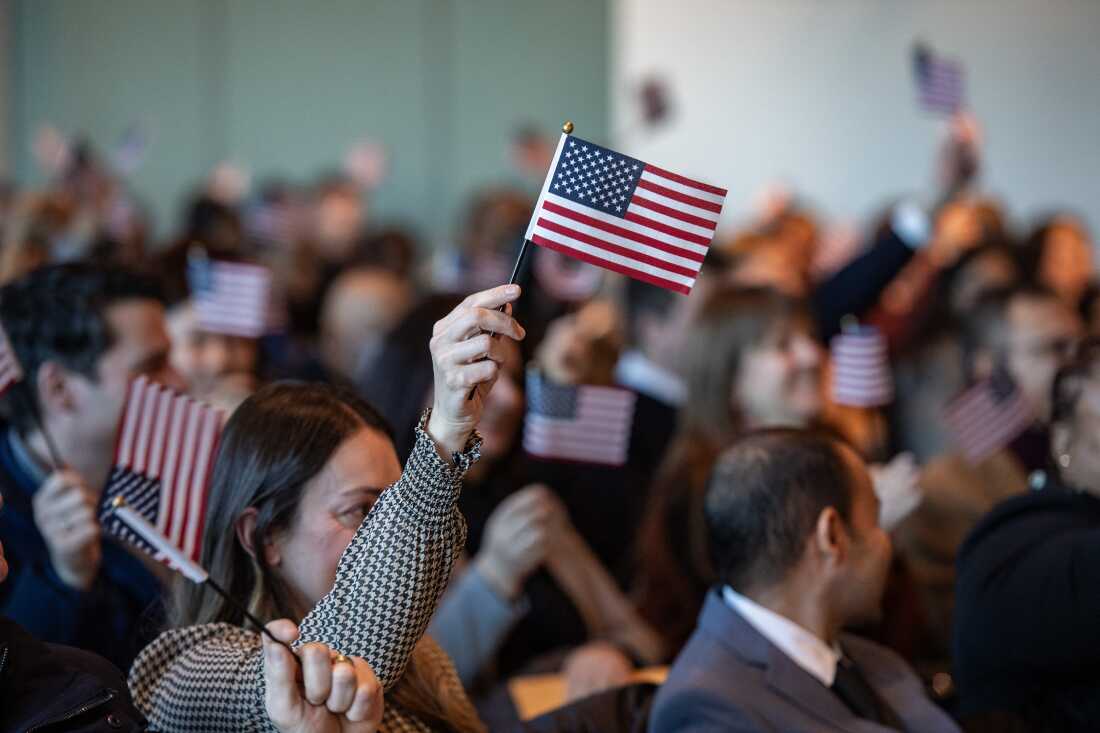
During a naturalization ceremony in Boston in January 2025, new U.S. citizens waved flags in celebration. The Trump administration’s changes to slow legal migration have affected a group previously untouched: spouses of U.S. citizens.
Policy Changes Affecting Spouses
Since President Trump’s return to the White House, several policy changes have been enacted. These include pausing immigrant visas for individuals from 75 countries and increasing scrutiny at green card interviews. All immigrants, including those married to U.S. citizens, have felt these impacts.
Non-U.S.-citizen spouses face separation and fear engaging with the immigration system. Ashley DeAzevedo, executive director of American Families United, highlights the growing difficulty for Americans married to non-citizens. Her organization has seen membership increase as more people seek support. Currently, around 1.4 million people in the U.S. seek the group’s assistance, with an additional 300,000 outside the country.
“Life has become a lot more difficult for Americans who are married to somebody who is not born in this country,” said Ashley DeAzevedo.
Historical Perspective and Current Challenges
Sharvari Dalal-Dheini of the American Immigration Lawyers Association said that historically, the government has vetted those seeking residence through marriage. Spouses of U.S. citizens were not typically included in broad enforcement efforts. Traditionally, this group benefited from special legal status, exempt from immigrant quotas, and without needing to maintain legal status to adjust.
However, the current administration treats them like all other immigrants. Despite claims that previous administrations should have scrutinized marriage-related applications more, the U.S. Citizenship and Immigration Services (USCIS) emphasizes verifying identities to safeguard the public. USCIS spokesman Zach Kahler noted that beginning the petition process does not grant immunity from deportation.
Statistics on Immigration Processes
Immediate family sponsorship, particularly for spouses and fiancés, remains a significant pathway for green card approvals. In 2024, around 343,000 people gained green cards through this route, accounting for a quarter of approvals. When considering other immediate family members, the numbers double, underlining the importance of this pathway.
The average processing time for family member petitions is 13 months, with seven months for fiancés. In early 2026, over 167,000 family petitions and 8,612 fiancé petitions were approved, showing fluctuations across administrations.
Specific Cases of Chaos
The data does not reflect all complexities. Non-citizen spouses from over 70 countries face visa restrictions. One such case involves Es, a green card holder and spouse of a U.S. citizen in the Army. Her citizenship application remains unprocessed due to a travel ban affecting those from her birthplace. The couple faces uncertainty in their planned relocation to Germany and the implications for their children and home.
Strain on Families and Scrutiny Increase
Delays at consulates add pressure, with some spouses and fiancés lacking legal status. Individuals marrying U.S. citizens can find themselves out of status, adding to scrutiny. Recent policy changes discourage families from engaging with the process, as seen in increased USCIS interview requirements and expectations of proof in applications.
Eric Welsh, an immigration attorney, noted the vulnerability of spouses. While pathways to legal status exist, they are not guaranteed. Many families hesitate to move forward with immigration processes. DeAzevedo acknowledged the chilling effect on family decisions, as the risk of placing spouses in difficult situations deters action.
Leave a Reply