For years, physicists struggled to unravel a profound mystery: why certain particles, like protons, possess mass, while photons, the particles of light, do not. Understanding this phenomenon was crucial for grasping the origins of planets and galaxies. A leading theory suggested an interaction with an invisible field, the Higgs field. However, proving its existence required global scientific collaboration on an unprecedented scale. Scientists across the globe, including rivals, united for this cause. The U.S. played a key role, contributing significant resources.
In 2012, efforts paid off with the detection of the Higgs boson, validating the Higgs field theory. This discovery, considered one of the 21st century’s most significant, led to a Nobel Prize for two theorists involved. However, a new rule proposed by the Trump administration threatens future international scientific efforts. The rule would limit collaboration and give political appointees power to decide or terminate funding for research projects.
David W. Miller, a U.S. physicist involved in the Higgs boson project, expressed concern. He emphasized that such breakthroughs take decades and require sustained global cooperation. Under the proposed rule, U.S. scientists might lose leadership roles in critical scientific endeavors. “This rule disrupts the principle of funding based on merit,” Miller stated.
The Office of Management and Budget (OMB) proposed the rule. It would allow political appointees to have significant control over federal grant distribution. Critics worry that appointees need not have expertise in the subjects they review. The rule has faced opposition from various sectors, including science and the arts, with many emphasizing potential adverse effects.
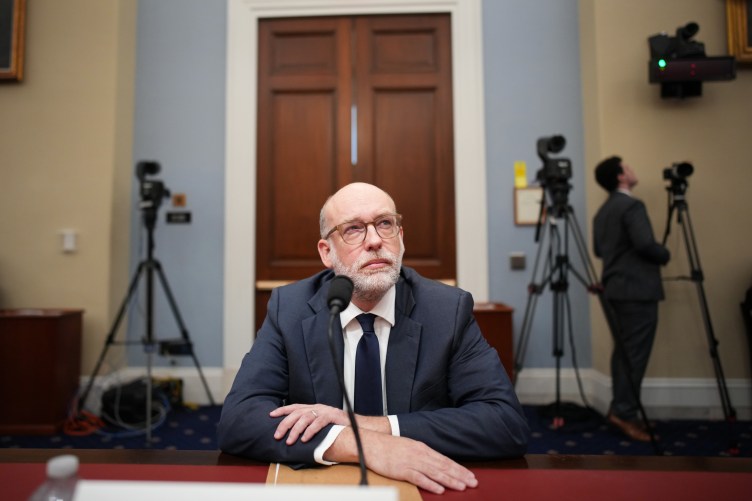
Russell Vought, leading the OMB, emphasized accountability and alignment with current laws and priorities. He has previously used this philosophy to alter U.S. aid programs and cancel significant Department of Energy grants based on political grounds. The proposed rule covers hundreds of billions in federal grants, affecting many sectors reliant on these funds.
Proponents argue the rule ensures taxpayer dollars align with election results, while critics warn against political coercion and undue interference in scientific research. The rule might also hinder collaborations with foreign entities, affecting projects like the Large Hadron Collider, where international cooperation has been crucial.
The rule follows broader trends of political interference in science funding decisions. Some alterations focus on counteracting what is deemed “woke” initiatives in funding decisions. However, fraud in federal science funding is reportedly rare, questioning the rule’s necessity.
Legal experts predict potential litigation challenging the rule, citing possible conflicts with existing statutes. Political pressure, especially from Congress, is seen as necessary to induce significant revisions before the rule’s finalization.
Amidst such challenges, the future of internationally funded scientific research in the U.S. hangs in balance. Successful groundbreaking discoveries, like the Higgs boson, exemplify the benefits of global collaboration and highlight the risks of political interference in science.
Leave a Reply