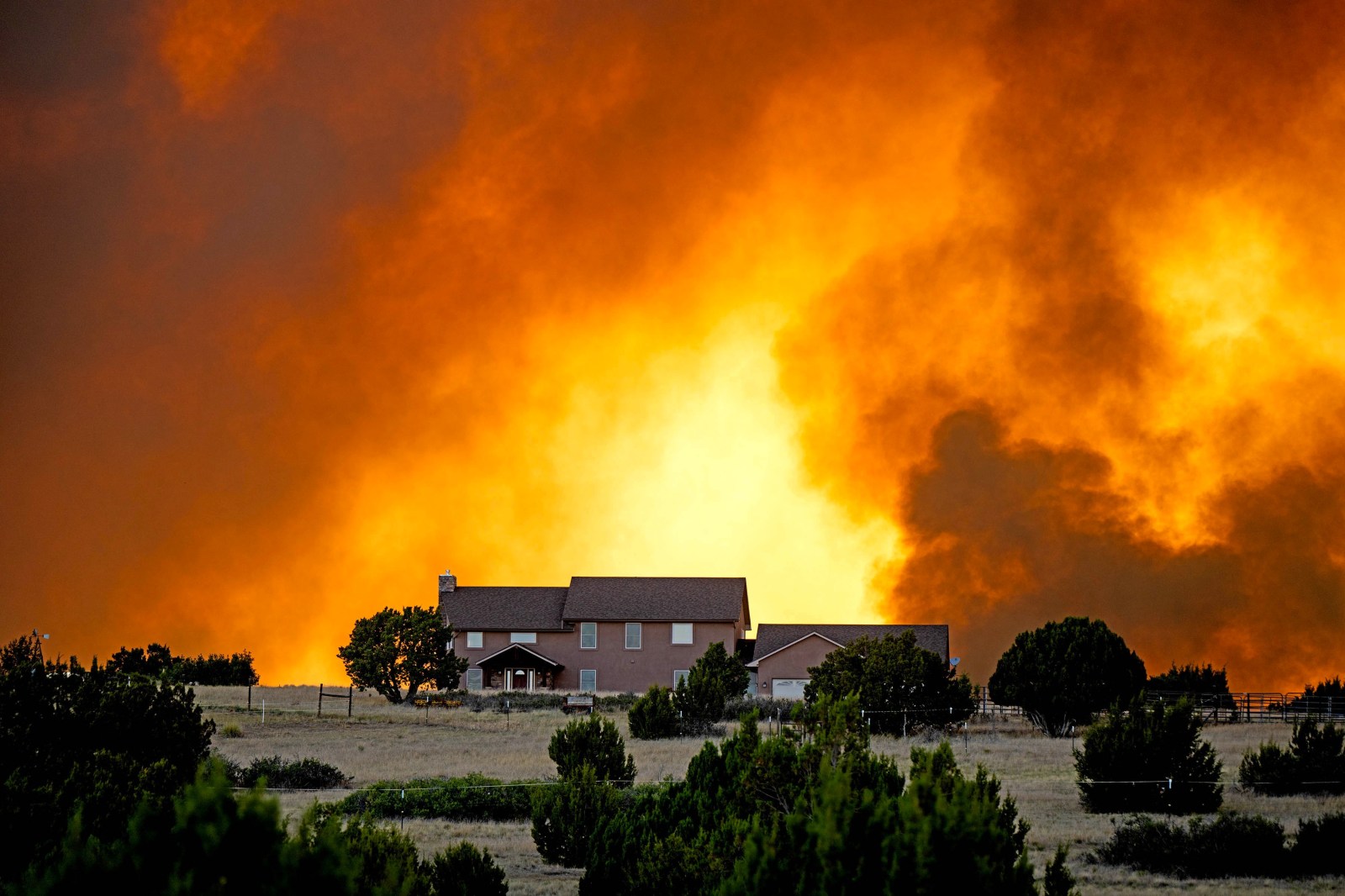
Over the Fourth of July weekend, more than 100 new wildfires broke out across the United States, intensifying the already severe fire season due to extreme heat and dry conditions gripping the West. The National Interagency Fire Center (NIFC) reported 124 new incidents nationwide since Saturday, including six major fires. Firefighters are currently tackling 41 large blazes, with mandatory evacuations enforced in three areas.
“So far this year, 36,871 fires have burned nearly 3.3 million acres across the United States,” the NIFC stated on Sunday.
While investigations continue into the weekend’s new ignitions, local officials suggest that holiday fireworks played a significant role. In Colorado, the Custer County Sheriff’s Office urgently appealed on social media for residents to cease holiday displays.
“The sheriff’s office desperately needs your help tonight. Please stop the fireworks,” urged the agency. “We are receiving 911 calls from across the county about fireworks. We are in the middle of a historic wildfire. The crews are exhausted and haven’t had a day off. We are on Stage 2 fire restrictions. We can’t handle another fire.”
The NIFC is at Preparedness Level 4 on its five-level scale, indicating heavy national mobilization and intense competition for firefighting personnel and resources. Officials warned that critically dry vegetation, low humidity, and scorching temperatures are generating volatile fire behavior in Colorado, Wyoming, Nevada, Utah, and northern Arizona. Smoke from these extensive fires has raised air quality concerns for communities located hundreds of miles away.
Deadly Fire Season Already Taking a Toll
The increasing strain on resources follows a tragic week for firefighters. On June 27, three members of an elite initial-attack crew perished while battling the Knowles Fire in western Colorado, near the Utah border. Federal authorities identified the deceased as Emily Barker from Michigan, Nick Hutcherson from Arizona, and Sydney Watson from Alabama. The fast-moving flames overtook the crew, forcing them to deploy emergency fire shelters. Two other firefighters were injured during the incident and required medical treatment.
“These heroic firefighters answered the call to protect others and made the ultimate sacrifice,” stated U.S. Wildland Fire Service Chief Brian Fennessy. Colorado Governor Jared Polis acknowledged that the crew died while safeguarding local communities and public lands.
Regional Impacts Across the West
The NIFC provided details on critical fire activity across several states:
- Utah: Hosts some of the nation’s largest active blazes, managed by the Great Basin Area. Major fires include the Cottonwood Fire (94,768 acres), Babylon Fire (87,554 acres), Cherry Fire (34,252 acres), and Snyder Fire (30,202 acres).
- Colorado: The Rocky Mountain Area manages four large fires, including the Aspen Acres Fire (86,983 acres), Ferris Fire (41,337 acres), and Gold Mountain Fire (25,920 acres).
- Nevada and Arizona: Nevada’s Grapevine Fire has burned about 26,464 acres under critically dry conditions in the eastern state. Arizona’s Southwest Area manages three large incidents, including the 25,597-acre Pocket Fire.
- California and Oregon: Forecasters warned of isolated mixed wet and dry thunderstorms across northeast California and southeastern Oregon. These storms could trigger lightning with minimal rainfall, threatening to ignite dry fuelbeds.
- Wyoming: Southern portions remain under active fuels and fire behavior advisories.
Forecast Warns of Continued Threat
Fire risks in the West are expected to stay high. The National Weather Service (NWS) Storm Prediction Center (SPC) cautioned that hot temperatures, single-digit humidity, and dry lightning will persist across the Great Basin and central Rockies.
Relative humidity levels could drop between 4 percent and 20 percent in the most affected regions. Meteorologists expect temperatures to climb above 110 degrees Fahrenheit this week in Arizona and southeastern California, further priming these areas for rapid and unpredictable fire growth.
Contact Newsweek editors for this story: Steve Mollman and Anthony Murray.
Leave a Reply