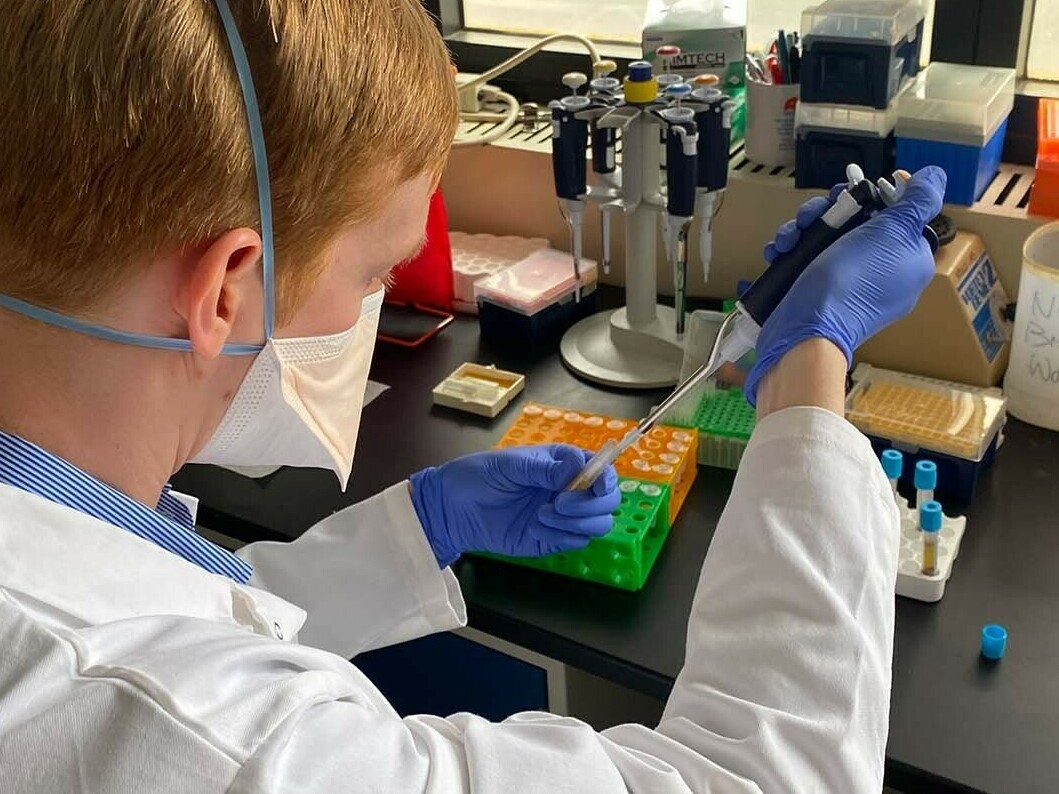
Graduate researcher Bradley Wade Hamilton examines microclots in blood, focusing on their relation to long COVID. Despite the official end of the COVID-19 public health emergency, long COVID still impacts millions worldwide. Estimates suggest that over 65 million people globally have ongoing symptoms post-infection. However, there is no specific biomarker or test to diagnose long COVID.
From Lungs to Blood
During the early pandemic, COVID-19 was largely viewed as a respiratory illness. Resia Pretorius, a physiological sciences professor at Stellenbosch University, observed blood-related symptoms in COVID patients. Her research into blood clotting in diseases like diabetes revealed similar patterns in COVID cases.
It was evident from the first sample that severe clotting pathology was present,Pretorius explains.
Pretorius and her team study the blood of long COVID patients, comparing it to those during acute infection. They found that the spike protein in the virus can convert soluble clotting proteins into insoluble microclots, initiating a cascade of issues. For some, these microclots dissolve over time, but others experience them long-term, causing vascular damage and impaired organ function.
Identifying a Biomarker
The absence of a reliable test for long COVID hinders research and patient care. Pretorius notes that many patients face skepticism from doctors, even when symptoms persist because standard blood tests show no abnormalities. She emphasizes the need to look in the right places for answers.
Pretorius and collaborator David Putrino aim to develop a test to identify high microclot levels. Putrino reports all long COVID patients tested exhibit microclots and hyperactivated platelets, unlike those fully recovered or never infected.
Hematologist Roy Silverstein, while not involved in this research, raises questions about microclots serving as a marker for effective treatment. He notes microclots in long COVID differ from other diseases due to their unique protein composition.
Funding Challenges and Progress
With urgency, Pretorius resorts to crowdfunding to acquire a flow cytometer for more precise analysis, bypassing slower grant processes. Investor Hannah Davis, who has long COVID, highlights the inadequacy of traditional funding routes in addressing patient needs promptly.
Pretorius and her team are committed to developing a long COVID diagnostic test. Davis stresses the necessity of proper funding to facilitate faster research advancements.
For more insights and updates, listen to Short Wave on Spotify, Apple Podcasts, or Google Podcasts. Feedback? Contact [email protected].
Leave a Reply