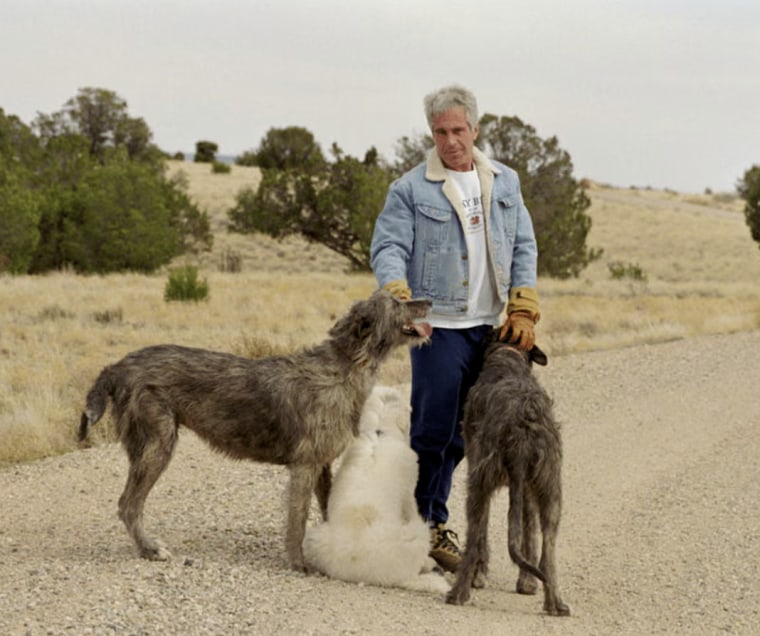
For young women who needed financial help for education or career prospects, visiting Jeffrey Epstein’s expansive 10,000-acre New Mexico ranch resembled a luxurious getaway. Flown from various parts of the United States to this fortified location, they enjoyed horseback rides across mesas, admired ancient rock carvings, and took photos at Epstein’s sprawling 26,700-square-foot mansion. Activities included hiking, swimming, shopping, and movie nights.
Though spending time with a wealthy older man felt peculiar, Epstein’s attention made the girls feel unique. He inquired about their ambitions, offered guidance, and gave them cash. Yet, these trips soon darkened as Epstein made inappropriate advances, encouraged massages, or attacked them with sex toys. Isolated and frightened, surrounded by images of Epstein with celebrities and politicians, the girls felt powerless.
One victim, only 15, fled after an assault, crashing an ATV into a tree with another young guest who assured her, “No one gets in trouble for anything here.” Epstein bought Zorro Ranch from a former New Mexico governor, transforming it into a high-desert estate. These girls eventually recognized that Epstein exploited them for sex using his wealth and influence. Starting in 2006, several victims, mostly teenagers when exploited by Epstein, came forward to accuse him of grooming or abusing them at the ranch.
Despite this, comprehensive accountability for crimes at Zorro Ranch remains elusive, bewildering victims and public officials. Missed opportunities allowed Epstein’s activities to remain hidden, denying justice to many victims. Investigations into Epstein’s crimes began only in 2019, hindered by expired statutes of limitations, and were later curtailed by federal authorities focusing on a multistate case, leaving the ranch largely unchecked.
Recent release of Department of Justice files reveals startling claims, including a tip about two ‘foreign girls’ allegedly dying during sexual encounters and being secretly buried on the ranch. Consequently, state officials initiated fresh investigations.
Epstein’s past victims and their families demand persistent probing into the ranch’s dark past. Rachel Benavidez, a victim abused at the ranch, emphasized in a statement the essential role of the FBI and local law enforcement in exposing the abuses and holding those accountable who ignored them. Still, with a new owner turning the ranch into a Christian retreat, recovering lost time poses challenges.
Passing drivers on Highway 41 still feel a sense of disgrace associated with the ranch. Locals have created a memorial outside the entrance, with flowers, crosses, and protest signs calling for justice.
Epstein described his New Mexico ranch in the mid-1990s as the state’s prettiest location. Virginia Giuffre, a notable accuser of Epstein, recounted it in her memoir as resembling Disneyland. She explained that the estate had manicured lawns, fountains, a tennis court, and a grass airstrip with a hangar. The property also included a miniature town for staff. Epstein’s acquisition of Zorro Ranch dates back to purchasing land in 1993 from the family of then-Governor Bruce King.
Various celebrities and notable figures visited the ranch, including filmmaker Woody Allen and linguist Noam Chomsky. By 2018, revelations about Epstein’s controversial plea deal in Florida reignited public and law enforcement interest. Federal investigations resumed, although the vast scope of Epstein’s connections meant details related to New Mexico were not initially a focus of indictments.
Despite New Mexico attorneys building a case, federal prosecutors discouraged them from acting, claiming potential interference with national investigations. Newly elected officials, including the Land Commissioner, took actions such as revoking Epstein’s land lease, as more details emerged. However, complexities around jurisdiction and evidence meant limited progress at both federal and state levels.
With new tips suggesting possible previously uninvestigated crimes, recent developments have prompted New Mexico authorities to further scrutinize the ranch. Owned now by Don Huffines, the estate is intended to be a Christian retreat. Huffines has pledged cooperation with ongoing investigations, amidst renewed efforts to uncover the truth.
Current inquiries aim to address the historical lack of response and ensure accountability. They also target preventing similar future abuses of power and unchecked authority. Victims and advocates continue to push for comprehensive revelations and systemic change.
Leave a Reply