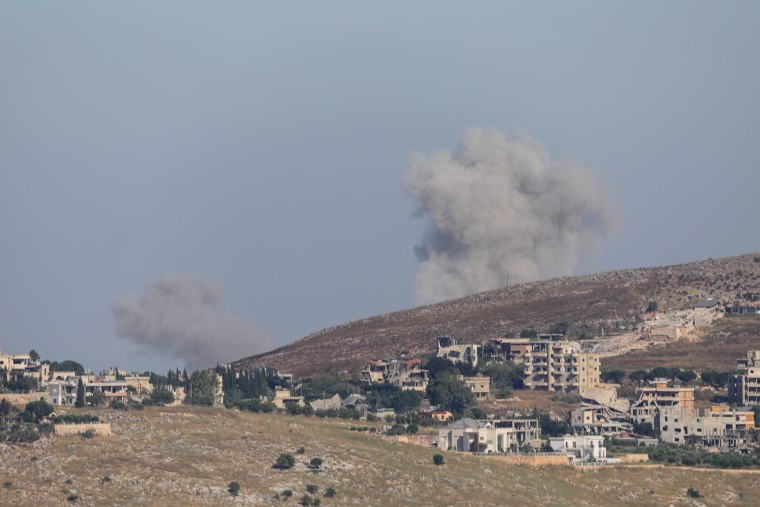
On Saturday morning, Israeli airstrikes in southern Lebanon resulted in at least 16 fatalities, including two children. Lebanese civil defense and media sources reported this, one day following the U.S. announcement of a ceasefire between Israel and Hezbollah at the behest of President Donald Trump.
According to the Lebanese news agency NNA, a series of towns in the south of Lebanon were targeted. An airstrike on Arabsalim reportedly caused three casualties, while a drone strike in Deir al-Zahrani led to one death. Seven individuals remain trapped under wreckage, as reported by the agency. A soldier from Lebanon’s army died between Kfar Rumman and Nabatieh.
The Israeli Defense Forces stated that Hezbollah had violated the ceasefire, launching over 50 projectiles at IDF soldiers in southern Lebanon. In retaliation, Israel attacked Hezbollah targets. The IDF stressed commitment to the ceasefire agreement.
Hezbollah, the Iran-backed militant organization, asserted compliance with the ceasefire since Friday evening, accusing Israel of fabricating claims as a justification for ceasefire breaches.
The recent hostilities risk undermining U.S. peace discussions with Iran. President Trump requested that Israel halt strikes on Lebanon. However, Israel’s ambassador to the U.S. indicated that Israel would cease offensive actions. Smoke was seen rising from Shweikin town and the Ali al-Tahir hill area following Israeli airstrikes.
Iran’s foreign ministry spokesperson, Esmail Baghaei, confirmed that Pakistan’s Interior Minister Mohsin Naqvi visited Tehran to converse with Iran’s Foreign Minister Abbas Araghchi. These talks with Pakistan, a mediator, are part of ongoing negotiations.
Officials from Tehran and Washington planned negotiations in Switzerland. These talks, postponed, aimed to settle unresolved issues, including Iran’s nuclear program. The U.S.-Iran memorandum called for an end to all fighting, including in Lebanon, though Israel was not directly involved.
U.S. intelligence suggests Israel could persist in its attacks on Hezbollah in Lebanon, jeopardizing the peace deal. A knowledgeable source indicated this assessment.
Israeli strikes continue amid growing conflict between the Trump administration and Prime Minister Benjamin Netanyahu, who faces an impending election in October. Netanyahu requires support from Israel’s far-right factions to maintain power. Jonathan Panikoff of the Atlantic Council elaborated on Netanyahu’s political challenges and the perception of Iran’s strategic gain.
U.S. Vice President J.D. Vance criticized Israeli officials, highlighting a lack of appreciation for American support. Although tensions in Lebanon are escalating, ship traffic through the Strait of Hormuz remains steady. Experts suggest it may take weeks to fully resolve shipping disruptions due to mine threats.
IDF spokesperson Brig. Gen. Effie Defrin stated that Israeli forces would continue operations in southern Lebanon to ensure civilian protection.
Leave a Reply