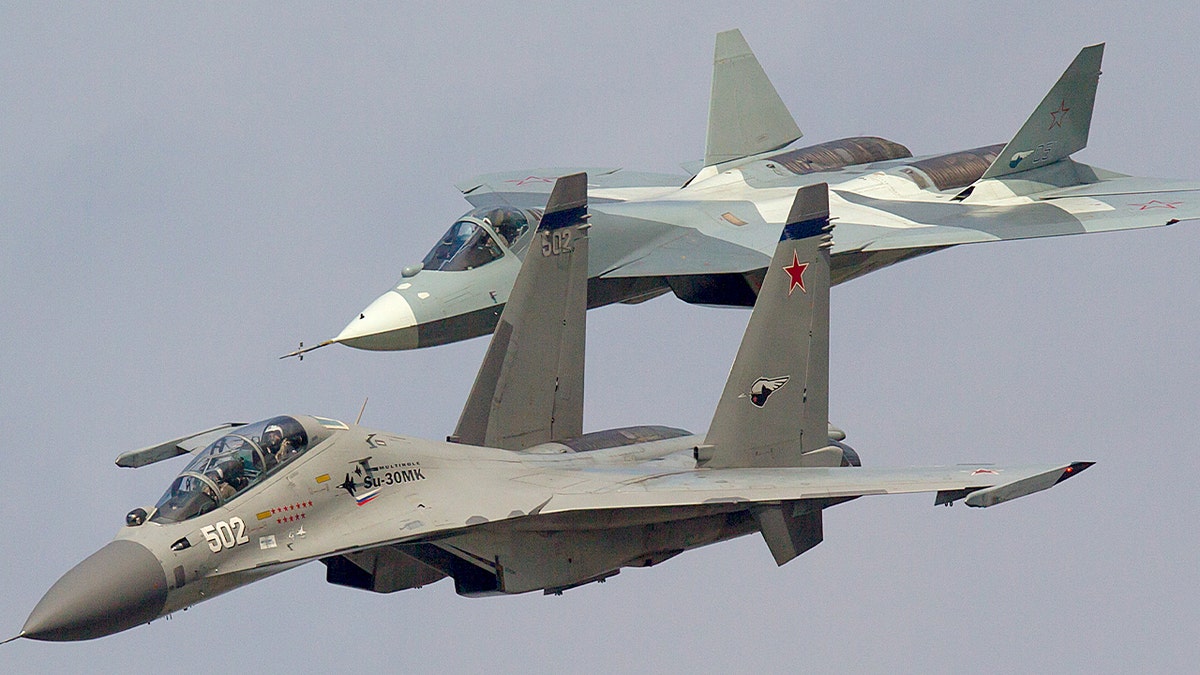
Japan sent fighter jets on a rapid response early Tuesday as two suspected Russian aircraft entered its airspace. This incident occurred ahead of Prime Minister Sanae Takaichi’s speech at the Quad Leaders’ Summit in Manila, where she warned of rising global instability.
Subsequent to this, U.S. President Donald Trump joined Takaichi, Indian Prime Minister Narendra Modi, and Australian Prime Minister Anthony Albanese at the summit. The leaders collectively opposed actions that threaten regional peace. A joint statement from the summit, issued by the White House, read, “We strongly oppose any destabilizing or unilateral actions that seek to change the status quo, including by force or coercion.”
Japan Responds to Airspace Violation
Japan’s Defense Ministry reported that the suspected Russian aircraft entered its airspace northwest of Okinoshima, Fukuoka Prefecture, on November 17 at about 4:07 a.m. Fighter jets from the Japan Air Self-Defense Force quickly responded, issuing warnings and taking necessary actions. The first aircraft remained for three minutes, followed by a second entry at 4:09 a.m. for another three minutes.
Japanese Defense Minister Shinjiro Koizumi expressed Tokyo’s strong protest to Moscow, stressing that these actions are a serious violation of Japan’s sovereignty and pose a security threat. He stated, “The incidents are entirely unacceptable.”
Measures to Strengthen Security
The detected aircraft traveled through the Tsushima Strait and proceeded between Japan’s Yonaguni Island and Taiwan into the Pacific Ocean. In response, Japan scrambled fighter jets from the Western Air Defense Force to manage the situation.
During the summit, Takaichi highlighted Japan’s increasing role in regional security, amidst growing instability in the international order. She emphasized the importance of maintaining freedom, openness, and the rule of law, while boosting cooperation with Southeast Asian countries.
Regional Concerns and Military Movements
The airspace breach happens amid heightened security concerns in the Indo-Pacific, where there is escalating monitoring of Russian and Chinese military activities by Japan and its partners. The area has faced increased strategic military movements, including the carrier USS George Washington shifting from the Middle East to the Pacific.
Japan’s relations with Russia have further strained following Russia’s invasion of Ukraine in 2022, with Japan backing sanctions against Moscow. Meanwhile, Japan and Russia continue to dispute over islands north of Hokkaido, administered by Russia but claimed by Japan as its Northern Territories.
South Korea also faced a similar situation, scrambling jets as Russian military aircraft entered its air defense zone, according to its Ministry of National Defense. This incident highlights the ongoing tension surrounding airspace security in the region.
Leave a Reply