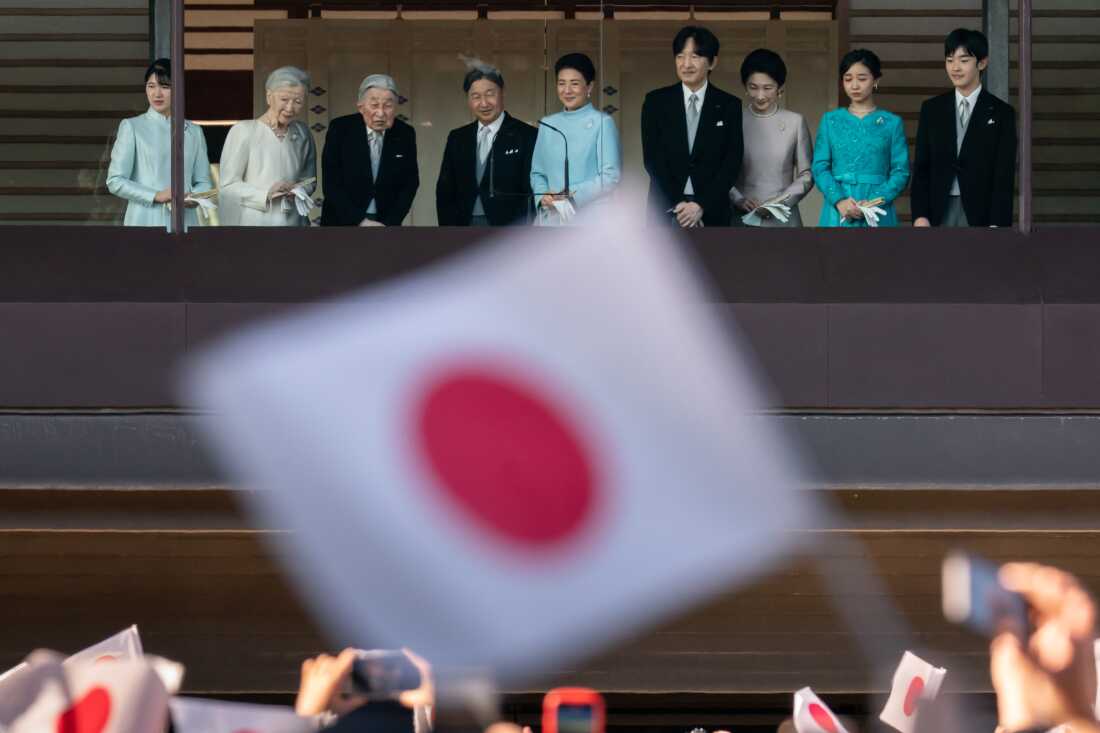
Japan’s Emperor Naruhito left a ceremony at the Imperial Palace in Tokyo in 2019 that marked his enthronement to the world. Recently, Japan’s upper house of parliament approved controversial changes to the law on imperial succession. These changes passed the lower house shortly before.
The revisions aim to maintain the number of imperial family members necessary for fulfilling official duties, as their numbers decline. Critics, however, argue the revisions have a dual purpose. Seiichiro Noboru, a former Japanese diplomat, believes they subtly aim to prevent the rise of a female emperor.
Japan’s constitutional monarchy plays a pivotal role in maintaining political stability and public support as the country moves past post-war military limitations. The changes allow princesses to stay within the royal family after marrying commoners and permit the imperial family to adopt male-line descendants from former imperial family branches.
Princesses can remain in the family post-marriage but must undertake royal duties with no succession rights. Male adoptees, though born commoners, also cannot inherit but their male descendants would be eligible for the throne.
The royal family currently lacks young heirs apart from 19-year-old Prince Hisahito, Emperor Naruhito’s nephew. This situation led to public concern about the monarchy’s future. Noboru suggests recognizing a female emperor would simplify succession.
Princess Aiko’s Popularity
Princess Aiko, Emperor Naruhito’s only child, emerges as a popular choice for many. With a degree in Japanese literature and her work at the Japanese Red Cross Society, she draws public admiration. Polls show support for female emperors ranges from 60% to 90%.
Despite widespread support, Japan’s first female prime minister, Sanae Takaichi, opposes altering the male-only line. She emphasizes the continuous male line’s historical significance as the source of the emperor’s legitimacy.
The Male-Only Succession Excels
Since 1889, male-preferred succession has prevailed under the Meiji government’s Imperial Household Law. This law viewed emperors as national figureheads and military leaders descending from divine Shinto lineage, while women held limited rights.
Many male heirs were born to concubines, with nearly half of Japan’s emperors regarded as ‘illegitimate’ due to this system. Noboru argues that excluding women based on gender contradicts Japan’s constitutional stance on equality.
Japan’s constitution, which grants sovereignty to the people, outlines the emperor as a nation symbol reflecting public will. Emperor Naruhito cautiously acknowledged this issue in a recent statement, seeking public understanding regarding imperial family size discussions.
Leave a Reply