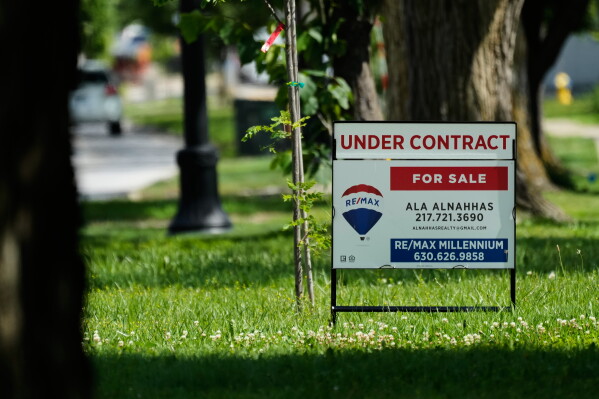
The average long-term mortgage rate in the U.S. increased this week, reaching its highest point in almost a year. The 30-year fixed-rate mortgage, a standard lending benchmark, rose to 6.55% from 6.49% the previous week, according to Freddie Mac on Thursday. A year ago, the same rate was 6.75%.
Higher mortgage rates can significantly raise monthly costs for borrowers. This increases challenges for prospective homebuyers, especially as affordability concerns prevent many from entering the market. Several factors influence mortgage rates, including decisions by the Federal Reserve regarding interest rates and bond market investors’ economic expectations.
Mortgage rates often align with the 10-year Treasury yield, which guides lenders in setting loan prices. Rates have generally increased this year. The ongoing conflict with Iran has caused crude oil prices to rise sharply, leading to expectations of greater inflation. This has increased long-term bond yields compared to before the conflict began in late February, pushing mortgage rates higher.
The 10-year Treasury yield was 4.57% at midday Thursday on the bond market, up from 4.54% the previous week. Before the war began, it was at 3.97% in late February. The average rate on a 30-year mortgage is now the highest since August 28, when it was 6.56%. As recently as late February, the average rate fell slightly below 6% for the first time since late 2022.
Shorter-term loans are also experiencing rate hikes. The 15-year fixed-rate mortgage, preferred by those refinancing, increased to 5.93%, up from 5.82% last week. A year ago, the rate was similar at 5.92%, per Freddie Mac.
A recent report indicates that prices for gas, clothing, and other consumer goods declined last month. This development could ease some pressure on the Federal Reserve as it considers changing interest rates. While the central bank doesn’t directly control mortgage rates, its decisions are keenly observed by bond investors and can impact the 10-year Treasury yields.
Hannah Jones, a senior economist at Realtor.com, commented that although a cooler inflation reading is promising, mortgage rates remain stubbornly high. She notes that this keeps buyers facing high borrowing costs despite improvements elsewhere.
Currently, long-term mortgage rates are lower than at this time last year but have still impacted home sales throughout the year. The recent data on incomplete home purchase transactions hints at possible slower home sales during the summer.
The National Association of Realtors reported on Thursday that pending U.S. home sales dropped 5.4% in June from the previous month and declined by 0.3% from June last year. Typically, a few months pass between contracting a sale and its finalization, making pending sales a short-term housing market indicator.
Moreover, data on mortgage applications suggest rising rates have made potential buyers hesitant. The Mortgage Bankers Association stated last week that mortgage applications, whether for purchasing a home or refinancing, fell by 2.7% from the previous week. Primarily, this decline was due to a 7% drop in applications to purchase homes.
Leave a Reply