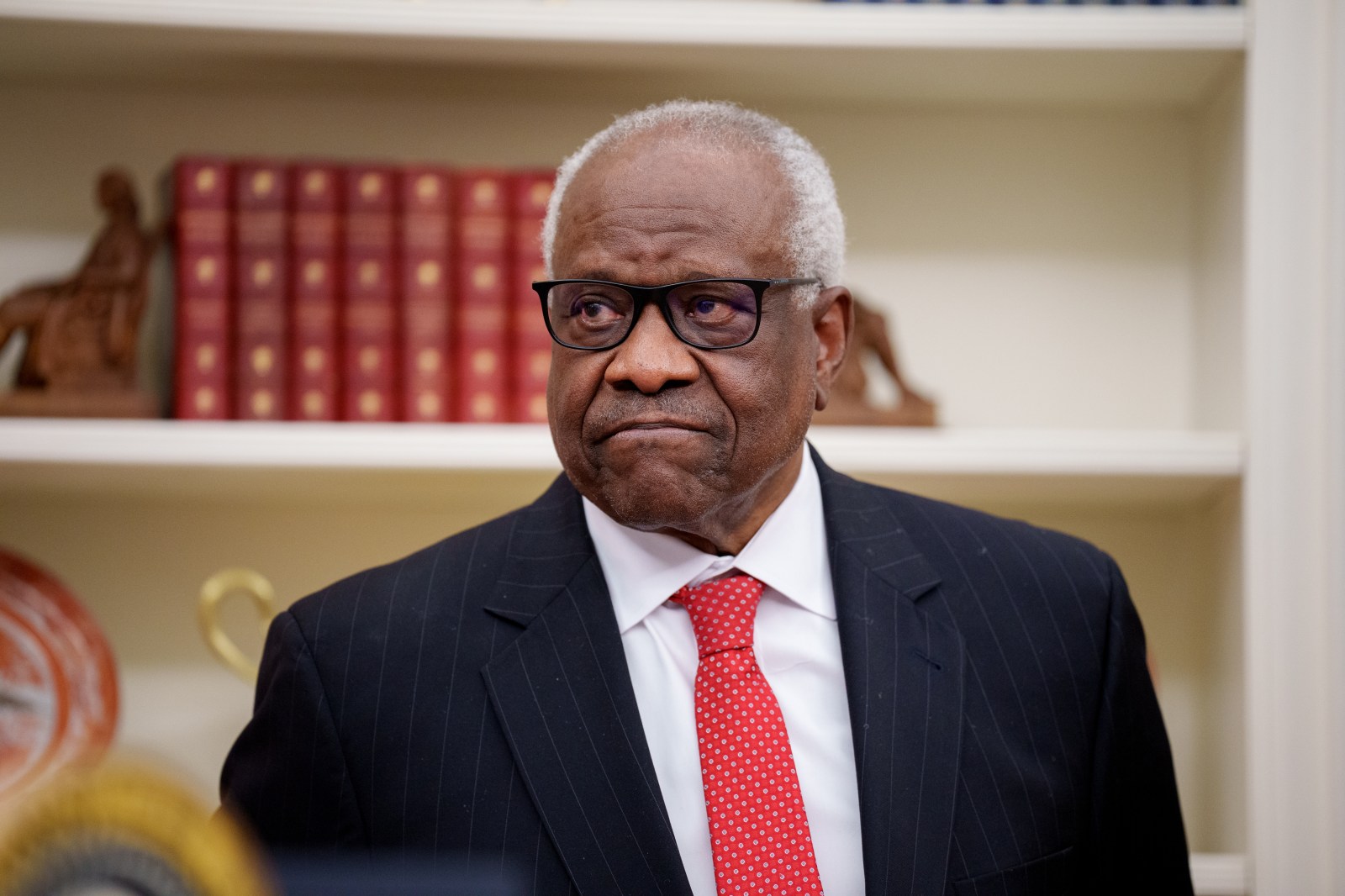
Over twenty years after the U.S. Supreme Court’s decision in Locke v. Davey, Justice Clarence Thomas might soon have the chance to challenge its precedent. An appeal from Virginia college student Bethany Hall urges the court to overturn the 2004 ruling, which allows states to deny scholarships to students pursuing ministry degrees without breaching the First Amendment’s Free Exercise Clause.
Hall’s petition argues that recent Supreme Court decisions regarding religious liberty have undermined Locke’s logic. Her attorney, Steven Fitschen, expressed confidence in the possibility of overturning the decision, despite the court’s typically low rate of accepting such petitions. If accepted, the Supreme Court will decide if states can continue withholding financial aid solely because of religious ministry pursuits. The implications may extend beyond Virginia to other states enforcing similar restrictions.
Details on Bethany Hall
Bethany Hall, a student at Liberty University in Virginia, initially qualified for the state’s Tuition Assistance Grant Program (VTAG). However, after changing her major to Youth Ministries, Christian Leadership and Church Ministries, and Music & Worship, Virginia deemed her ineligible for VTAG funding due to the religious nature of her studies, revoking her grant. Hall argues that excluding her based on her major violates her First Amendment rights.
The federal district court and the Fourth Circuit Court of Appeals ruled against Hall, referencing Locke v. Davey. Both courts found her case analogous to that of Joshua Davey, the subject of the earlier ruling, citing similar losses in scholarship eligibility upon choosing religious studies.
The Locke v. Davey Decision
Locke v. Davey was decided in 2004 with a 7-2 vote. Joshua Davey, a scholarship recipient from Washington State, wanted to study pastoral ministries and business management but was barred from using his scholarship for theology. The court, led by Chief Justice William Rehnquist, upheld Washington’s stance, maintaining the distinction between secular and religious education funding.
The majority pointed to the state’s interest in avoiding taxpayer-funded clergy training, situating this exclusion between what the Establishment Clause permits and what the Free Exercise Clause requires. Locke remains significant, allowing states to deny support for religious vocational education while supporting other educational forms.
Clarence Thomas’s Perspective
Justice Clarence Thomas joined Justice Antonin Scalia’s dissent in Locke v. Davey, challenging the exclusion of theology scholarships as unconstitutional discrimination. Thomas argued that studying theology does not inherently require religious devotion, encompassing both secular and religious perspectives.
Thomas has consistently criticized Locke, referencing it unfavorably in subsequent cases like Trinity Lutheran Church v. Comer and Espinoza v. Montana Department of Revenue. He contends that Locke misinterpreted the Establishment Clause and should be reevaluated.
Supreme Court’s Potential Review
There is a possibility that the Supreme Court could review Hall’s case, with legal experts estimating the likelihood as better than average, although uncertain. Lower courts have emphasized the similarity to Locke, suggesting an appropriate opportunity for the Supreme Court to reconsider the precedent.
If the case proceeds, experts anticipate Justices Thomas and Gorsuch will support overturning Locke. Speculation exists about Justice Roberts’s stance, given his role in previous judgments weakening Locke. Some observers remain uncertain about achieving a majority to overturn the decision.
Supporters of the Supreme Court’s review argue Hall’s case exemplifies the issues with Locke, which heavily impacts students pursuing religious vocations. The petition notes various states employ similar scholarship restrictions, raising questions about fairness and constitutional interpretation.
Leave a Reply