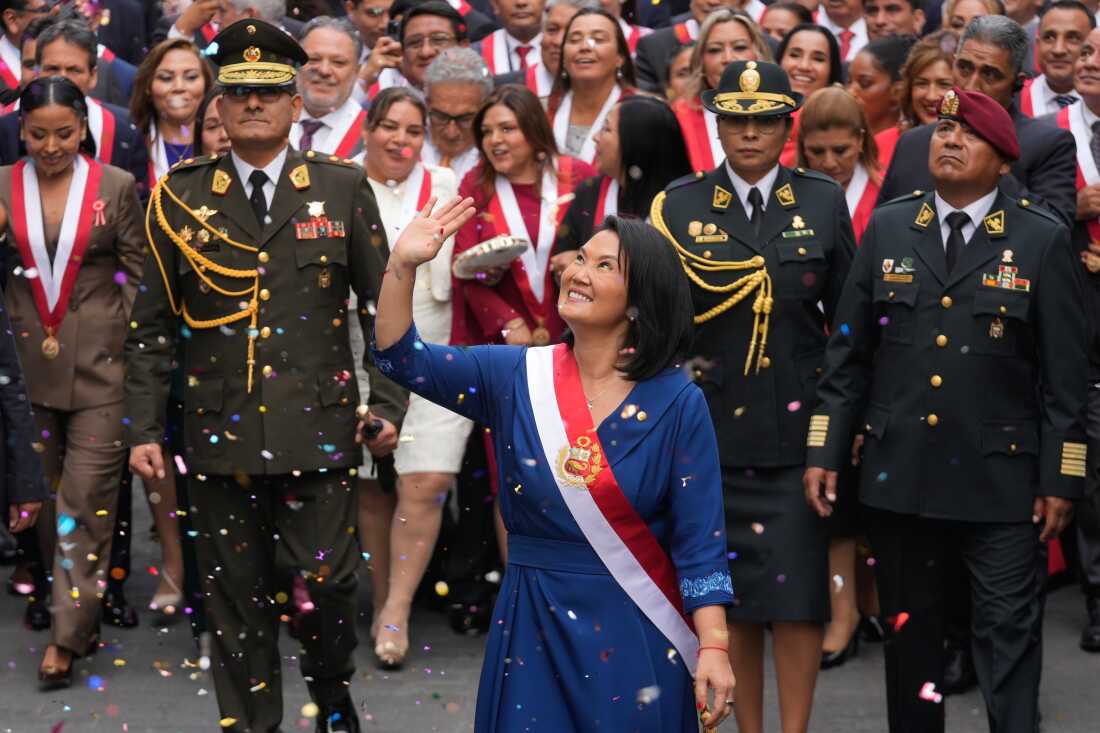
LIMA, Peru — Keiko Fujimori, a conservative political leader, was sworn in as the President of Peru on Tuesday following a narrow victory in June’s presidential runoff. Her win by fewer than 50,000 votes highlights a shift in South America towards conservatism. Fujimori, leading Peru’s largest political party, becomes the ninth president in a decade, aiming to stabilize politics, curb crime, and enhance economic growth.
Recent political history in Peru has seen only three presidents elected by popular vote, while others assumed office due to resignations or congressional removals amid corruption scandals. Fujimori’s Popular Force party, alongside Popular Renovation, will control half the senate seats, making impeachment attempts more challenging.
An Incoming President with a Defined Agenda
Fujimori’s campaign focused on improving national security, with extortion becoming prevalent. Her plans include developing infrastructure by simplifying government-private investor partnerships. As the daughter of former President Alberto Fujimori, her background is marked with economic stabilization and counter-terrorism, but also human rights abuses leading to her father’s imprisonment.
Keiko Fujimori has pledged to combat crime with firm measures, inspired by strategies from Salvadorean President Nayib Bukele.
She proposes constructing a megaprison similar to El Salvador’s Cecot penitentiary and reforms for judiciary safety, allowing judges to conceal identities during criminal trials.
On her inauguration day, Fujimori announced social service reorganizations to tackle rural malnutrition and a 15% minimum wage hike. The military will temporarily oversee security operations in crime hotspots, and she plans to prepare Peru for El Niño’s effects, which often cause flooding along the coast.
“My goal is not only to administer the state,” Fujimori stated. “My main objective is to narrow the enormous social deficit that affects millions of Peruvians.”
Opposition Urges Investigation and Reversal
Opposition leaders urge Fujimori’s government to overturn previous laws perceived to hinder crime-fighting efforts. These laws limit preventive arrests and complicate treatment of corrupt parties as criminal entities, while impeding police from seizing criminal assets.
Further, they call for investigating civilian deaths during the 2022-2023 protests after President Pedro Castillo’s removal. During the swearing-in, some opposition members protested, highlighting casualties from those events. Families of victims have expressed refusal to accept Fujimori’s presidency.
Cultural and Political Divisions
Strong support for Fujimori exists in Peru’s capital and coastal areas, whereas the Indigenous-populated highlands favored Roberto Sanchez, the left-wing candidate and Castillo ally. Sanchez contested the election results, citing consulate vote counting irregularities, dismissed by electoral officials.
Peru retains Latin America’s economic firmness, sustained by prudent public spending and a central bank maintaining a benchmark interest rate below 5%. Yet, critics note disparities between coastal and Andean highland living standards.
Fujimori’s triumph, alongside conservative wins in Colombia and Chile, illustrates South America’s political shift. This contrasts the rise of figures like Hugo Chávez and Brazilian President Luiz Inácio Lula da Silva. In recent years, conservatives claimed several significant electoral victories, coinciding with U.S. President Donald Trump’s 2025 inauguration, driven by crime, immigration, and economic growth concerns.
Leave a Reply