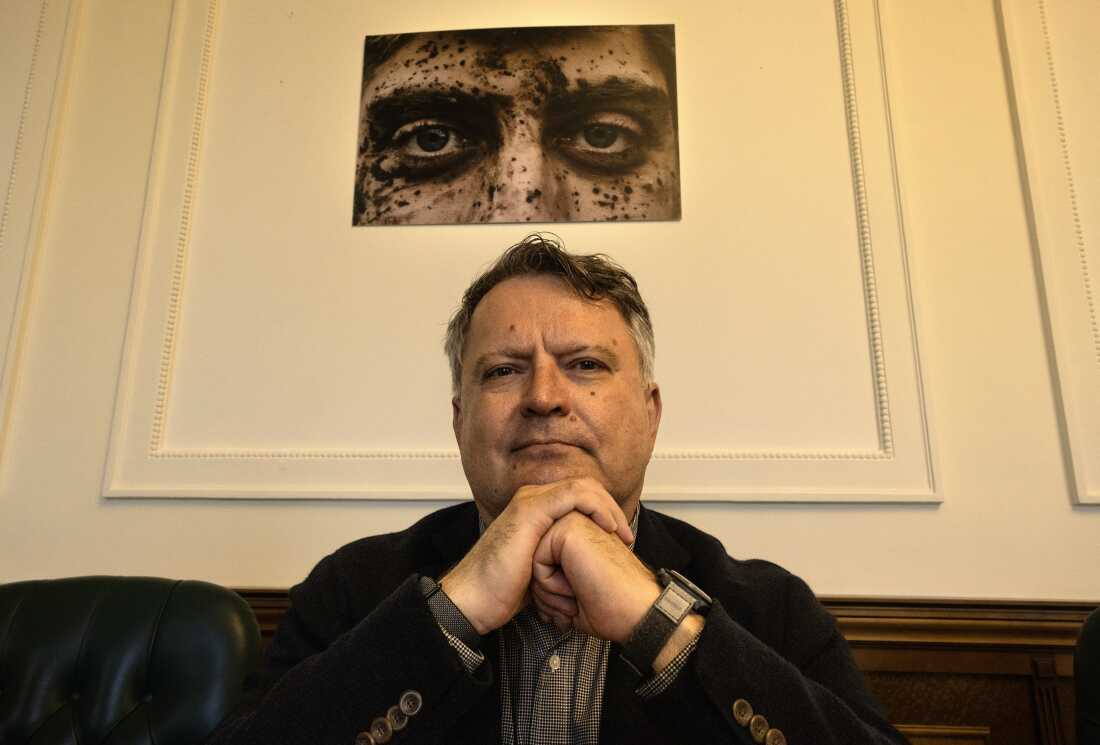
Sergiy Olehovych Kyslytsya holds the position of first deputy head in the Office of the President of Ukraine. Previously, he represented Ukraine as the permanent representative to the United Nations. On February 24, 2022, as Russia commenced its large-scale invasion of Ukraine, Kyslytsya was in New York, serving as Ukraine’s U.N. ambassador. During this critical period, he directly addressed his Russian counterpart, Vasily Nebenzya, with a firm stance. “There is no purgatory for war criminals,” he asserted. “They go straight to hell, ambassador.”
The conflict led to a breakdown in diplomatic communications between Kyiv and Moscow, positioning Kyslytsya’s role at the U.N. as the singular venue for direct interaction between Ukrainian and Russian diplomats. His colleagues globally avoided dialogue with Russian representatives, which shaped Kyslytsya’s approach as a member of the peace talk negotiations. This experience enabled him to maintain composure and focus.
“My fellow ambassadors in all capitals around the world would not talk to them,” Kyslytsya says. “So by the time I was part of our negotiating team, I already knew how to control my feelings and attitude.”
As negotiations, primarily influenced by U.S. mediation, stalled, Kyslytsya noted that Ukraine sustained communication with American and, on occasion, Russian envoys. He remains an integral part of Ukraine’s negotiation efforts since 2025, advocating active dialogue.
Kyslytsya, stationed within the fortified presidential compound in Kyiv, provided insights within his office, adorned with wartime art and literature, including material by Jared Kushner. His 13-year-old Jack Russell terrier, DeZi, keeps him company. In a detailed discussion, Kyslytsya reiterated Ukraine’s stance on halting hostilities: maintaining the fighting along the existing frontline, yet without acknowledging occupied territories as Russian.
Kyslytsya highlighted the ongoing, unrealizable demands from the Kremlin, referencing the “3+2” proposal, or “Anchorage formula,” birthed from a 2025 Alaska summit between President Trump and Russian President Putin. This proposition aimed at recognizing Russian claims over five Ukrainian regions. U.S. Secretary of State Marco Rubio stated the proposal’s failure lay in Ukraine’s rejection, aspiring for a mutually agreeable resolution.
“The Russians are obsessed, and Putin is obsessed with taking full control of the Donetsk region, the 15 to 20 percent that’s not occupied,” he says.
The conflict, once characterized predominantly by infantry and artillery, now encompasses advanced technological warfare. Ukraine’s extended-range drone strikes on Russian energy sites demonstrate a shift, impairing Russia’s capacity for sustained conflict. Kyslytsya expressed that the Russian military no longer advances significantly, a fact noted by Ukraine’s allies, including the United States.
Recent events include President Trump acclaiming Ukrainian forces at a NATO conference in Ankara and a June open letter from President Zelenskyy to Putin for direct negotiations. Kyslytsya believes a high-level meeting may occur soon, potentially fostering progress, though Putin has so far dismissed such possibilities. Kyslytsya remains hopeful, observing that continued Ukrainian strategic initiatives could prompt reevaluation by Russian leadership.
“Because, see, if we keep doing what we do, with long-range strikes, sooner or later, the Russian leader would have only one choice: to sit down and discuss how to stop this war.”
Leave a Reply