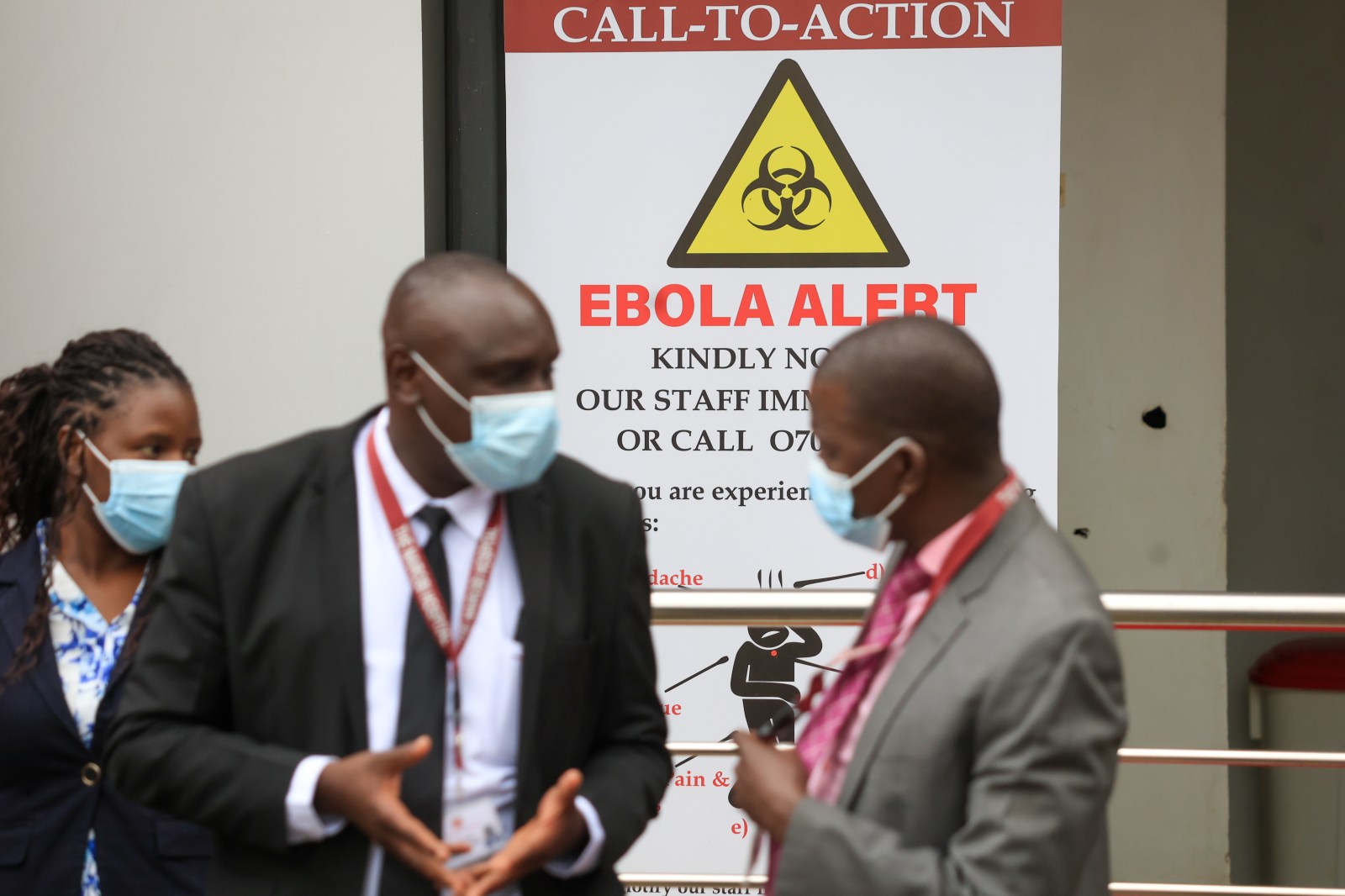
An Ebola outbreak with a high case-fatality rate has reached Kenya, where health officials confirmed a second case linked to the outbreak in the Democratic Republic of the Congo. On Wednesday, Kenya’s Health Ministry reported that this second case involves a 39-year-old who is a close relative of the country’s first confirmed Ebola patient and developed symptoms while in quarantine.
The Kenyan Health Ministry assured that the two cases are connected, with no current evidence of community transmission. This situation unfolds as health authorities contend with what the CDC calls the second-largest Ebola outbreak recorded. As of October 12, data from the Democratic Republic of the Congo shows 9,144 confirmed Ebola cases and 4,410 deaths, resulting in a case-fatality rate of approximately 48%.
The spread to Kenya highlights potential cross-border transmission risks as efforts continue to contain the outbreak, which the CDC notes is progressing faster than previous instances. Beyond Kenya, this outbreak has seen cases in Uganda and an imported case in France, further indicating regional spread. Uganda reported 21 confirmed and probable cases and three deaths.
Kenya Cases
Kenya’s second Ebola case came to light with a 39-year-old relative of the first confirmed patient, who showed symptoms while already in quarantine. The initial case involved a 40-year-old Kenyan, who fell ill while in the Democratic Republic of the Congo, later traveling to Uganda before arriving in Kenya, where he subsequently died.
Health officials have traced about 128 contacts associated with the first patient. Of these, 108 remain quarantined in Kenya; five were identified outside the country and reported to respective authorities. The second patient was already among those under quarantine. Early detection may improve the chances of recovery, according to Kenyan health officials. They confirmed no evidence of community transmission but have reinforced screening at airports and borders.
Congo Outbreak
The epidemic centers on the Democratic Republic of the Congo, marking the nation’s 17th Ebola outbreak and the second largest on record. By October 12, the Democratic Republic of the Congo recorded 9,144 confirmed cases and 4,410 deaths, reported by the European Center for Disease Prevention and Control, indicating a 48% case-fatality rate.
This outbreak involves the Bundibugyo virus, a variant of the Ebola virus. Seven provinces report cases: Bas-Uele, Haut-Uele, Ituri, North Kivu, South Kivu, South Ubangi, and Tshopo. WHO acknowledges an intense national transmission rate, with a crude case-fatality rate of 48.2% as of October 6. This outbreak has advanced notably faster than past Ebola outbreaks, surmounting 1,000 cases within 40 days of the response activation, compared to approximately 235 days in the 2018 outbreak.
What Happens Next
Kenyan health authorities are actively tracing and monitoring contacts following the second confirmed case. As of October 13, 108 contacts were under quarantine, receiving daily clinical and temperature monitoring for 21 days from their last exposure. Efforts continue to trace 15 additional contacts. Health officials are evaluating individuals who came in contact with the second patient post-symptoms, including quarantine staff and health workers. Symptomatic contacts will be isolated and tested, with reinforced infection-control measures at treatment facilities.
The Democratic Republic of the Congo’s response strategy involves enhanced surveillance, contact tracing, clinical readiness, supply deliveries, community engagement, and cross-border preparedness. Addressing the Bundibugyo virus presents additional challenges as there is no approved vaccine or specific treatment available, though research is ongoing.
In the United States, the CDC maintains that the risk of the outbreak spreading to the country remains low, with no associated U.S. cases reported by October 13.
Leave a Reply