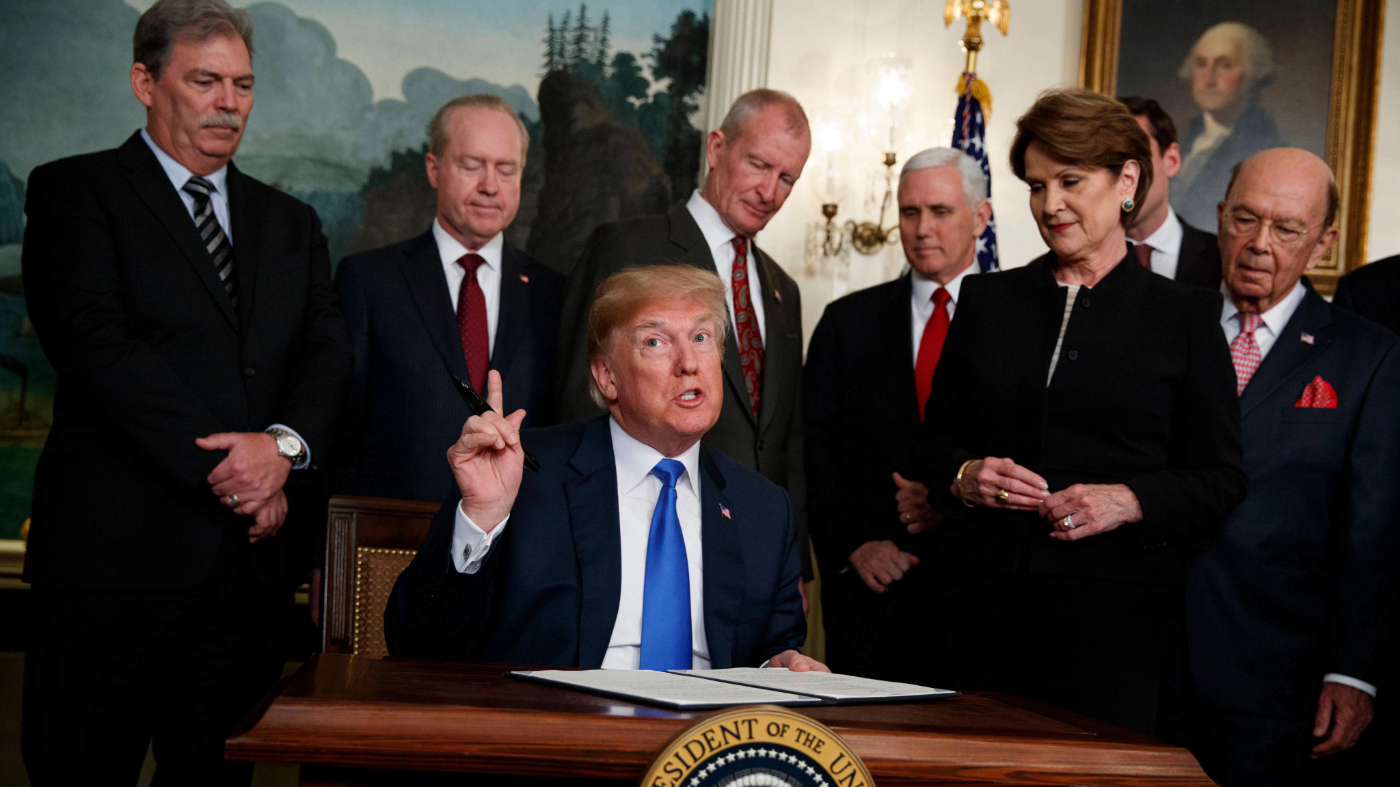
President Donald Trump’s administration imposed tariffs and investment restrictions on China in March 2018, sparking significant legal scrutiny. A key aspect of this issue revolves around Section 301 of the 1974 Trade Act. Designed as a targeted trade remedy, this section has now become central to legal debates.
Understanding Section 301
Originally, Congress never intended Section 301 to serve as a general tariff statute. It was written to provide a targeted remedy for specific trade issues. The statute requires the U.S. Trade Representative to identify problematic foreign acts, policies, or practices, determine their impact on U.S. commerce, and choose an appropriate response to resolve the issue. This defined process underscores its role as a limited form of economic diplomacy, not a blanket authority.
Lawsuit on Tariffs and Forced Labor
The Liberty Justice Center has filed a lawsuit challenging the Section 301 tariffs imposed on imports from 60 economies. These tariffs address alleged failures to combat forced labor. The broader issue at hand is whether Section 301 remains as Congress intended, targeting specific practices, or if it’s shifting towards granting broader presidential tariff authority.
The court of International Trade faces crucial questions: Are nearly uniform tariffs on imports from various economies effective in strengthening enforcement against forced labor? This examination reflects Congress’s requirement that tariffs must directly aim to remedy the specified foreign practice.
Structural Context of U.S. Trade Law
U.S. trade law encompasses specialized authorities for different problems. For instance, Section 232 deals with national security, while Section 122 involves temporary tariffs during balance of payments crises. Each section addresses separate issues under varied legal standards.
Section 301 occupies a distinct position, authorizing specific responses to particular trade practices. Broader interpretations could undermine the intended limits of other trade laws. This situation illustrates the importance of preserving statutory limits that Congress has set to prevent any single section from overwhelming other delegated powers.
Legal Interpretation and Its Implications
Court interpretations play a vital role in ensuring that statutes like Section 301 maintain their designated purpose. A principle of statutory interpretation is that Congress does not create redundant laws. Courts usually oppose interpretations that allow one statute to supersede others inappropriately.
This legal case transcends policy debates over tariffs or forced labor. It addresses whether courts will uphold the statutory limits of Congress’s economic delegations. Section 301 was crafted as a precise tool, but its broader use could eliminate essential checks on executive authority in trade matters.
Ultimately, courts must decide whether to preserve Section 301 as a targeted trade measure or allow it to evolve into a default mechanism for imposing tariffs. This decision not only affects Section 301 but also impacts the balance of trade authority defined by Congress.
Marc L. Busch and Petros Mavroidis contribute their academic insights, reflecting the significance of legal frameworks in shaping trade policies. The ongoing legal examination will determine the future application of Section 301 within the broader U.S. trade law system.
Leave a Reply