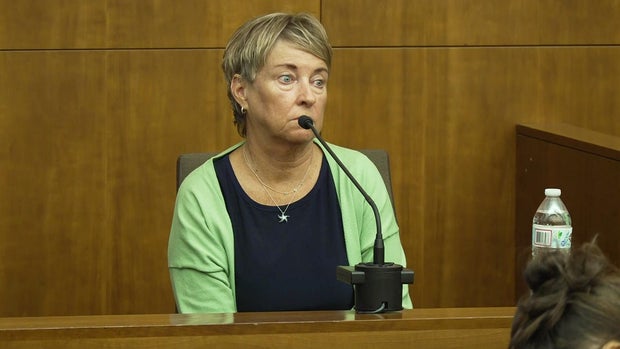
The murder trial of Lindsay Clancy resumed on Tuesday in Massachusetts, marking the 15th day of proceedings. The trial, held in Plymouth Superior Court, saw the prosecution rest its case after presenting 72 witnesses. Now, defense witnesses testify, including key testimonies from the Clancy family.
An early defense witness was Susan Clancy, mother of Patrick Clancy and former mother-in-law to Lindsay Clancy. She described her relationship with Lindsay as ‘very nurturing and loving,’ emphasizing Lindsay’s devotion as a mother. Susan Clancy recounted how Lindsay had expressed struggles with insomnia and anxiety, reaching out for support in November. As a nurse, Susan sought help from colleagues specializing in postpartum issues, highlighting Lindsay’s active efforts to seek medical aid.
During cross-examination, Susan noted that while she offered assistance with childcare, the decision was made for the children to remain at home due to their comfort. She mentioned frequent communications with Lindsay concerning her medication regimen, describing the situation as ‘confusing’ due to the volume of prescriptions.
Prosecutor Shanan Buckingham referenced a Christmas gathering, asking Susan about her church involvement and views on murder as a sin. However, Judge William Sullivan dismissed this line of questioning.
Charges Against Lindsay Clancy
Lindsay Clancy stands accused of first-degree murder in the deaths of her children, 5-year-old Cora, 3-year-old Dawson, and 8-month-old Callan, on January 24, 2023, in Duxbury, Massachusetts. Although Clancy has pleaded not guilty, she admits to the act. Her defense argues she was overmedicated and suffered from postpartum psychosis, which should negate criminal responsibility.
Prosecution argues that Clancy premeditated the killings, later attempting a suicide that left her paralyzed and wheelchair-bound. A conviction could result in life imprisonment without parole, while a finding of no criminal responsibility would mean admission to a state psychiatric facility.
Support and Resources
For those experiencing emotional distress or suicidal thoughts, the 988 Suicide & Crisis Lifeline offers support via phone or text at 988. Additional mental health resources can be accessed through the National Alliance on Mental Illness HelpLine at 1-800-950-NAMI (6264) or via email at [email protected].
Leave a Reply