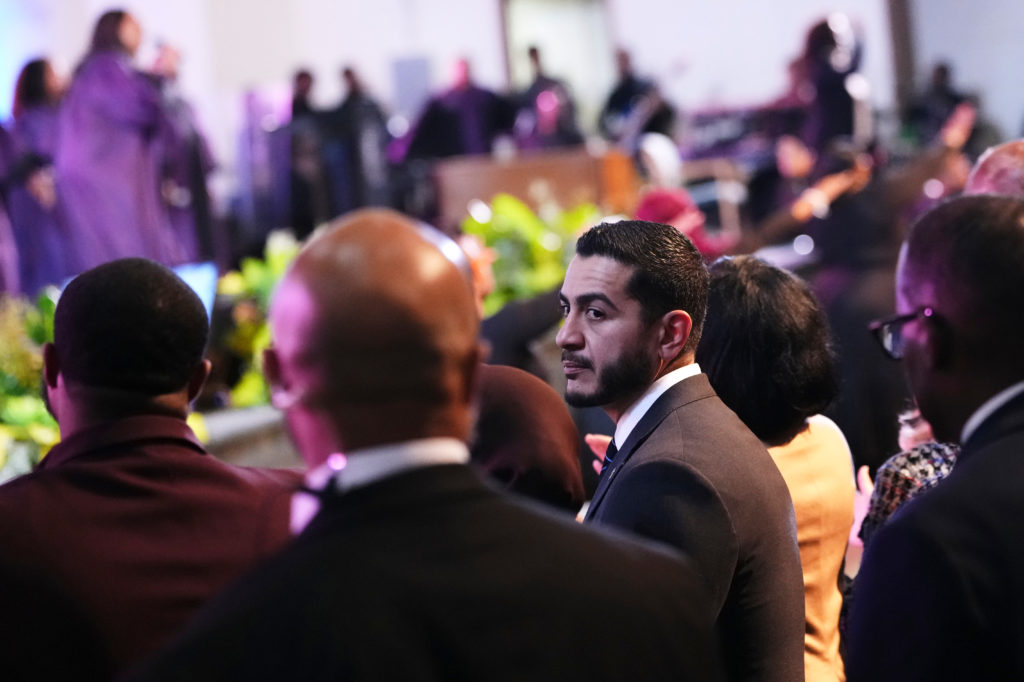
In a surprising political move, Michigan Democrat Haley Stevens endorsed Republican Mike Rogers for the U.S. Senate. This unexpected endorsement followed tense days of internal party disagreements just before the election. This race could determine the balance of power on Capitol Hill. Stevens announced her support for Rogers after attending a Detroit church service with him.
The endorsement shook the Democratic ranks as Rogers is backed by President Donald Trump. Stevens had been uninvited from a joint event with Abdul El-Sayed, her former Senate primary opponent. This occurred because of disagreements within the Democratic party.
Addressing her position in a video, Stevens stated, “Our Democratic nominee for Senate said I was no longer welcome in his campaign and that I should stay away. And he’s right. That’s why I am endorsing Mike Rogers for the United States Senate today.” Previously, Stevens had reaffirmed her intention to vote for El-Sayed, who could become the first Muslim senator if elected.
Following Stevens’ endorsement, her chief of staff resigned, and more staff members may soon leave. The information comes from sources familiar with the situation who discussed the matter anonymously. During this time, El-Sayed tried to project unity with other Democrats at a different church service nearby.
Both events were covered by the Associated Press. The infighting comes as Democrats aim to drive Black and Jewish voter turnout in key areas. El-Sayed faces a close contest against Rogers for the Senate seat currently held by retiring Democrat Gary Peters. Maintaining this seat is critical to Democrats’ strategy to secure a majority during the last two years of Trump’s second term.
Congresswoman Debbie Dingell, among others, has emphasized party unity behind El-Sayed. “United we stand, divided we fall,” she remarked, urging efforts to stay focused on collective goals.
Initially, Stevens was expected to join El-Sayed and U.S. Rep. Jim Clyburn at a church event. However, plans fell apart following disputes over Israel and a campaign ad by an external group.
During the church service, Stevens and her fiancé Jason Turkish stood with Rogers and his wife. Turkish had previously expressed his support for Rogers, citing El-Sayed’s perceived lack of engagement with the Jewish community. This developed days after Stevens had asserted her intention to vote for El-Sayed.
Meanwhile, El-Sayed attended a different service with notable Democrats like Dingell and Clyburn. He delivered a ten-minute speech but did not address the unfolding controversies. Democrats had hoped to showcase unity in the build-up to the election, especially in pivotal regions like Detroit.
The Democratic primary was notably contentious, featuring personal attacks and substantial external funding. The American Israel Public Affairs Committee’s affiliated super PAC supported Stevens in the primary, and accusations of disrespectful behavior complicated post-primary relations.
Despite pledging support post-primary, Stevens and El-Sayed have not appeared together publicly since an early unity breakfast. Throughout the campaign, Stevens’ fiancé’s public support for Rogers and related media appearances have reignited tensions.
Dingell worked to orchestrate a joint church visit to mend these rifts. However, after reports of the plan emerged, Stevens released a statement critiquing El-Sayed’s stance on Israel.
The Democratic candidate responded by emphasizing the need to concentrate on broader election efforts, distancing himself from the independent ad’s controversial content.
Despite recent challenges, El-Sayed moved forward with planned church visits alongside key Democrats, aiming to invigorate voter turnout in Detroit. Their strategy aims to ensure robust support in a city where the Democratic coalition includes a significant portion of Black residents.
Leave a Reply