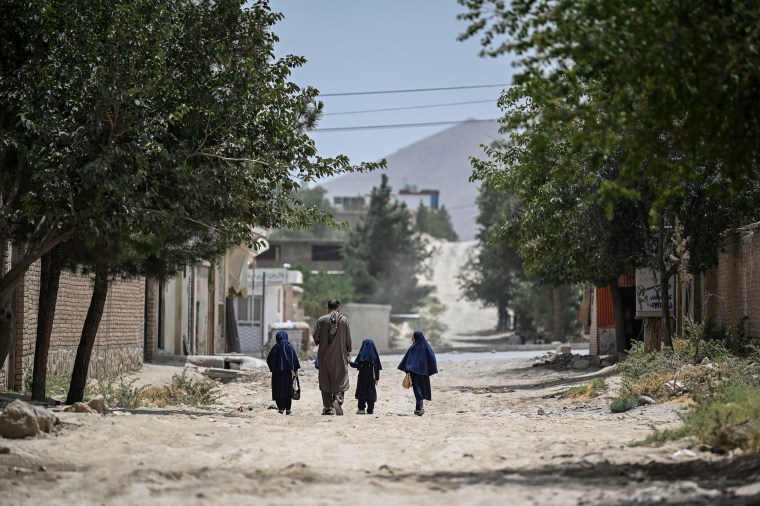
An estimated 2.4 million Afghan girls continue to be excluded from secondary education, according to a U.N. agency. This situation persists five years after the Taliban took control of Afghanistan. The U.N. Educational, Scientific and Cultural Organization (UNESCO) has renewed its call for an immediate restoration of their right to education.
“Afghanistan remains the only country in the world where girls and women are formally banned from secondary and higher education,”
stated Hoda Jaberian, UNESCO’s program coordinator for education in emergencies, during a news conference. She emphasized that the five-year exclusion is equivalent to nearly a complete secondary school cycle. Jaberian insisted that the right to education for girls and women is a basic human right that must be restored without conditions.
The Taliban regained power on August 15, 2021, as U.S. and NATO forces withdrew after two decades of conflict. Following the takeover, the Taliban banned girls from secondary schools and later expanded these restrictions to higher education and other sectors, effectively excluding women and girls from public life. Despite international appeals from organizations like the United Nations and various countries, these restrictions remain in place as the Taliban considers the issue an internal matter.
Jaberian pointed out that these limitations are undoing the educational progress Afghanistan made over the last two decades. In 2001, access to education was severely limited, but by 2021, nearly 1 million Afghan girls were attending secondary schools. She highlighted the significant expansion in girls’ education before these recent setbacks.
In response, UNESCO has been providing education support in Afghanistan through community-based programs focused on literacy and skills development. These classes often occur in homes with the awareness of local authorities. The organization has trained over 1,000 literacy facilitators to conduct these classes.
Jaberian stressed UNESCO’s commitment, saying, “While the restriction remains, we cannot abandon Afghan learners.” The organization continues to work with communities to maintain access to learning opportunities wherever possible.
Leave a Reply