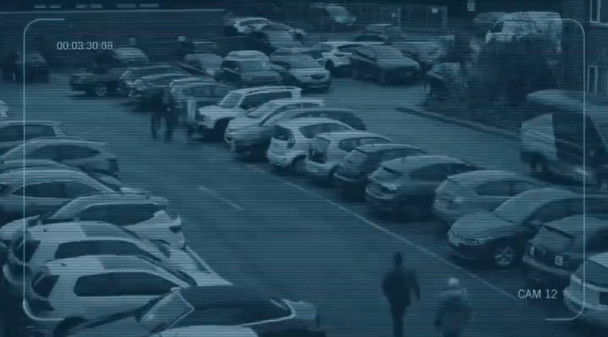
Montana Senate candidate Seth Bodnar released a campaign video where he destroys a Flock Safety surveillance camera with a shotgun. This act has intensified the ongoing debate over automated license plate readers and will likely impact the 2026 midterms. It highlights growing political pressure on states, tech companies, and law enforcement agencies that rely on this surveillance network. Voters in Montana now face a race where digital privacy, police data access, and AI-based monitoring could influence policies beyond the state’s boundaries.
The video features Bodnar shouting “Flock off, man!” before criticizing the cameras for monitoring everyday activities like grocery shopping and attending church. Newsweek contacted Flock Safety, along with the campaigns for Seth Bodnar and Kurt Alme, to comment on the situation.
Bodnar’s video, released on Monday, positions himself against Flock Safety’s automated license plate readers. Shooting the camera beside a flour bag dramatizes his opposition to what he considers rampant surveillance. He warns that Flock cameras monitor people buying groceries, building houses, going to church, and purchasing ammunition. Bodnar argues these devices collect more than traffic data, capturing every passing vehicle and storing identification information in cloud systems that he claims are prone to misuse.
Flock Safety operates over 120,000 cameras across 49 states, asserting it neither sells nor accesses user data, with law enforcement owning the collected information. Bodnar connects these cameras to a larger commercial ecosystem designed to trade personal data.
Legal repercussions for Bodnar depend on the ownership and status of the camera he destroyed. As of mid-September, no investigations by law enforcement agencies or evidence of the camera being a functioning government-owned device have surfaced.
Tennessee Case Highlights the Issue
Bodnar’s action comes during political and legal clashes over Flock Safety. In Tennessee, independent House candidate Adam Lee Heimerman faced arrest in July after allegedly shooting four Flock cameras. This resulted in charges of felony vandalism, emphasizing the devices as symbols of government overspending for some candidates and usable evidence for prosecutors. Heimerman’s case gained national interest as it sparked other candidates to incorporate anti-Flock Safety messaging in their campaigns.
The backlash to such surveillance reached Washington, where Senator Josh Hawley initiated a congressional investigation. He accused Flock Safety of maintaining an unauthorized national network conducting over 20 billion monthly vehicle scans. This investigation has sparked calls for federal regulation as privacy advocates warn that AI-driven monitoring could outpace current legal safeguards.
State Actions Amid Midterm Pressures
Several states are taking measures. Florida’s Governor Ron DeSantis ordered removal of automated readers from highways due to privacy issues. Meanwhile, Rhode Island’s Governor Dan McKee has paused new camera installations. These actions indicate the shift from niche debates to significant political conflicts over privacy.
In Florida, Democratic Senate nominee Angie Nixon supports privacy concerns, reflected in campaign merchandise opposing such surveillance. Montana has gained recognition as a leader in digital privacy, blocking law enforcement from acquiring sensitive information without a warrant through the “data broker loophole” legislation, SB 282. This effort is part of a decade-long drive to limit face recognition, protect genetic data, and ensure digital information’s constitutional protection from unwarranted searches.
Targeting Opponent Kurt Alme
In the video, Bodnar criticizes Republican candidate Kurt Alme for not taking a stance on automated readers. He challenges Alme while firing a shotgun, likely seeing surveillance as a divisive matter that could set him apart in the crowded race.
A poll conducted by Montana Free Press-Rutgers Eagleton between Aug. 27 and Sept. 7 shows Alme leading Bodnar 38% to 30%, with Democrat Alani Bankhead at 16% out of 845 registered voters surveyed. Bodnar’s ad could attract voters opposed to government surveillance and big-tech data practices.
Bodnar brings credibility in national security and tech fields due to his background as a West Point valedictorian, Rhodes Scholar, and Green Beret, along with serving as the University of Montana president. His experience at General Electric overseeing digital systems adds weight to his critique of large data frameworks. Despite controversies, like a $350,000 lawsuit settlement from his university tenure, the surveillance issue allows Bodnar to pivot to privacy concerns, shifting focus from past disputes.
The Future of the Surveillance Debate
Bodnar’s ad could heighten scrutiny on Flock Safety as the midterms approach. With ongoing federal investigations, expanding state bans, and criminal charges over the cameras, the issue faces volatility in the 2026 campaign. Although it remains uncertain if Bodnar’s ad will narrow the polling gap, the trend toward opposing surveillance practices is apparent. Montana’s leadership on privacy laws might turn its Senate race into a national benchmark for voters’ reactions to AI monitoring and the lengths candidates will go to confront it.
Leave a Reply