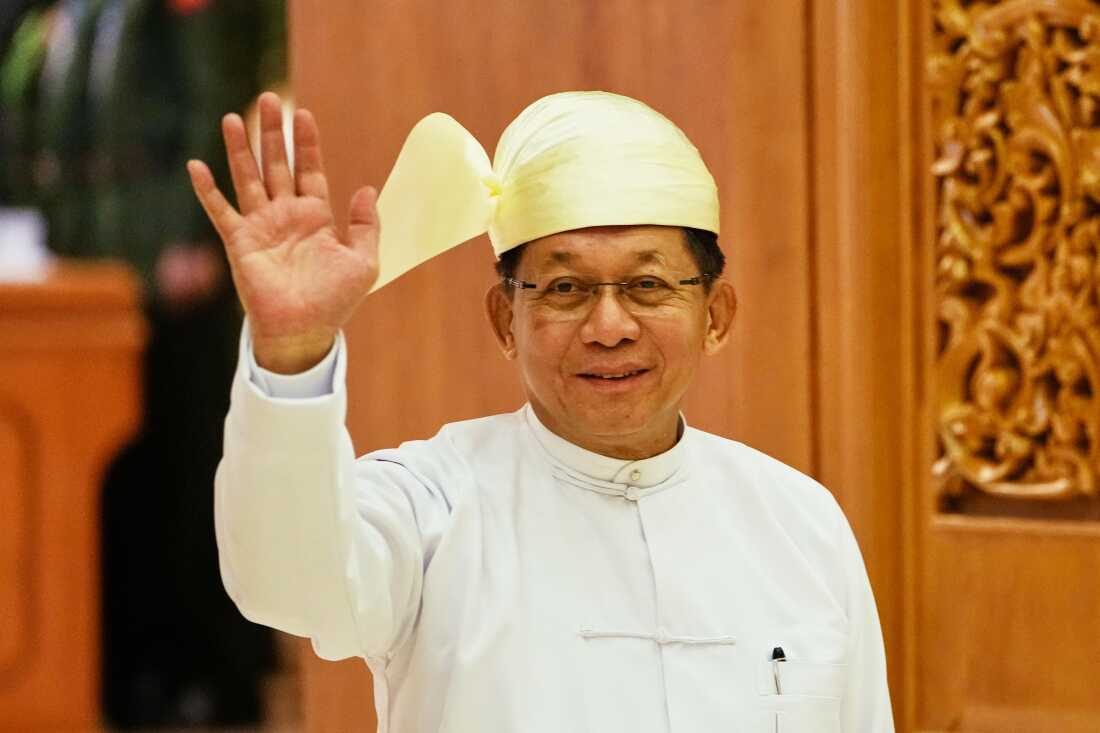
Senior General Min Aung Hlaing, the current president of Myanmar, is on his first overseas trip as president, visiting India. This trip is set to last from Saturday to Wednesday, according to India’s foreign ministry. During the visit, Min Aung Hlaing will meet with Indian Prime Minister Narendra Modi and Indian business leaders. A meeting with India’s President Droupadi Murmu is also anticipated.
The trip marks Min Aung Hlaing’s first international engagement since his inauguration in April. His election as president was conducted under contentious circumstances, with Western governments and human rights organizations labeling the process a sham. In 2021, as the chief of Myanmar’s armed forces, the Tatmadaw, Min Aung Hlaing led a coup against the elected government run by Aung San Suu Kyi, triggering a five-year-long civil conflict that persists today. Despite continued violence, the military conducted the elections. Many voters were disenfranchised due to ongoing war conditions, and Aung San Suu Kyi’s party was prohibited from participating.
Prior to the visit, New Delhi stated that the trip aims to strengthen and deepen the multifaceted relations between the two nations. Although many analysts expected Min Aung Hlaing’s first visit would be to China, India’s longstanding ties with Myanmar made it a viable choice. China, a primary supporter of Myanmar’s military and election process, was hosting high-profile visits from global leaders, potentially influencing the timing of the trip. Myanmar analyst Min Zaw Oo noted that both nations needed more time to prepare for the discussions on their agenda.
Morgan Michaels, an analyst at the International Institute for Strategic Studies in Singapore, emphasized that maintaining this relationship aligns with India’s approach. India sent its minister of external affairs to Min Aung Hlaing’s inauguration in April, indicating New Delhi’s intention to engage with Myanmar’s government. Moreover, Chinese Foreign Minister Wang Yi visited Myanmar recently, underscoring China’s ongoing involvement.
Key issues on India’s agenda include shared security concerns along the 1,000-kilometer border they share. Myanmar seeks to quell resistance to military rule; India addresses insurgent activities in its northeast. Additionally, drug trafficking, arms smuggling, and human trafficking will be significant discussion points. New Delhi also aims to access Myanmar’s rare earth resources, though China’s influence over the supply chain poses challenges.
This diplomatic initiative coincides with Myanmar’s military gaining advantages on the battlefield, supported by new strategies and drone capabilities enhanced by Russian and Chinese technology. Morgan Michaels reported a shift in the conflict, with Myanmar’s military now reclaiming initiative. The military-backed regime strives for international consolidation, aiming to reestablish connections with ASEAN and reclaim its United Nations seat. Richard Horsey from the International Crisis Group suggests active diplomatic consolidation efforts.
ASEAN’s firm stance may be wavering, evidenced by a recent virtual meeting with Myanmar’s new foreign minister, Tin Maung Swe, facilitated by Thailand. Rights groups express concern that such meetings, alongside the India visit, may legitimize Myanmar’s current government despite ongoing internal conflict. The violence, which has claimed tens of thousands of lives, continues largely unnoticed by the international community.
Leave a Reply