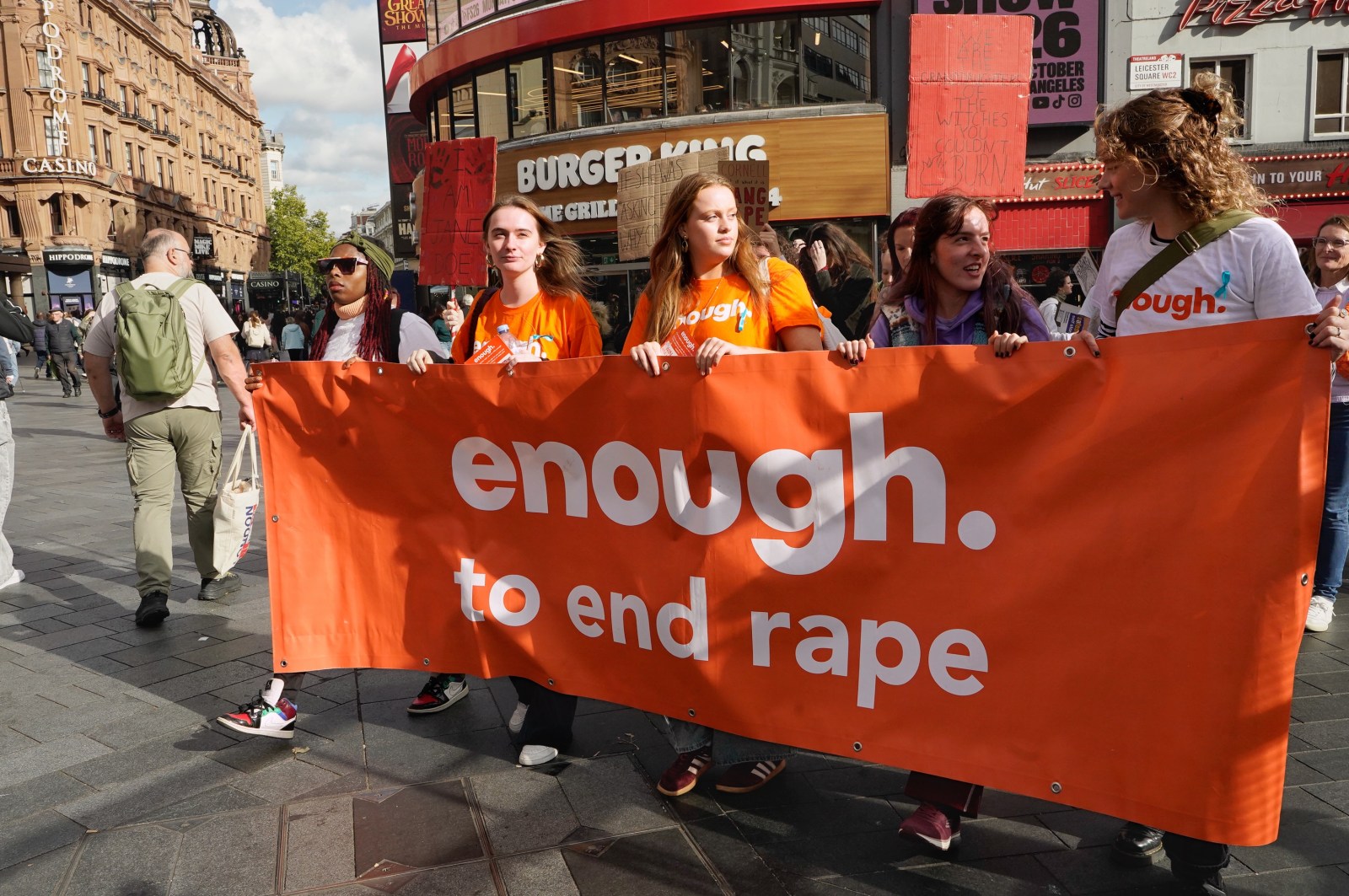
Nearly 100 colleges across the country are gearing up for coordinated “Take Back the Night” events on Sunday. These events are driven by renewed debate over fraternity culture, campus safety, university accountability, and “rape culture.” The controversy surrounding sexual assault at Cornell University has refocused attention on these issues.
The National Campus Take Back the Night Rally is set to begin with an 8 p.m. EST national livestream, providing a platform for students to unite in rallies, marches, and readings of a five-point reform mandate. Interested individuals can view the livestream after registering at takebackthenight.org.
Recently, Cornell, located in Ithaca, New York, has faced criticism over handling sexual assault allegations tied to the Chi Phi fraternity. The case has led to protests, pressure from donors, and a faculty no-confidence vote, while raising broader questions about fraternity oversight and student protection.
Katie Koestner, executive director of Take Back the Night, pointed out that Cornell’s situation offered an entry point for a larger dialogue on the topic.
“Cornell enabled us to have an entry point and a larger audience for this conversation,” she said.
A 2024 survey by Westat for the Higher Education Sexual Misconduct and Awareness (HESMA) Survey Consortium found that 18.9% of undergraduate women reported nonconsensual sexual contact involving force or inability to consent since enrolling in college, compared to 6.5% among undergraduate men.
Liana Mirvis Galper, a Yale University freshman, felt compelled to act for Cornell’s Jane Doe and other students after learning about the issue. She quickly became the national rally campus coordinator for the event.
“In this month of organizing, we have collaborated with incredible speakers and student organizers as we plan the national event,” Galper shared via email.
The mobilization effort expanded to 79 participating campuses, including schools on the East and West Coast and even Hawaii. Initial plans involved local marches through campus areas where assaults occurred or where administrative action failed. However, logistical challenges led to incorporating a national livestream to broaden participation.
The event is described as one of the largest coordinated anti-sexual-violence actions on college campuses in recent years.
Why Cornell Resonated
For activists, Cornell’s case stands out among other campus controversies. A recent lawsuit by Jane Doe, alleging gang rape by Chi Phi fraternity members, has echoed themes present in campus sexual assault debates for years. The accused students deny wrongdoing.
Cornell’s President Michael Kotlikoff acknowledged criticism but committed to investigating. “We don’t have all the answers,” he said, “but we are committed to investigating and finding the answers our community deserves.”
New York Governor Kathy Hochul announced state police would handle sexual assault complaints at Cornell, citing the need for dignity, respect, justice, and accountability.
According to Koestner, the case captivated public attention due to its complexity and affiliations with a notable university.
“It’s good that it also highlights the power and control structure that has been existing in the cover-up and non-transparency,” she commented.
Recently, controversies surfaced at institutions like Louisiana State University and the University of Chicago, reigniting questions regarding university oversight and student safety.
Decades-Old Debate
The “Take Back the Night” movement began in the 1970s, focusing on women’s healthcare, campus safety, and violence prevention. Over time, its scope expanded to include fraternity culture, consent, and institutional accountability.
Katie Koestner embodies this evolution. As a freshman at William & Mary in 1990, she accused a fellow student of rape, becoming one of the first women to publicly discuss “date rape.” Her case received nationwide attention, even appearing on Time’s cover and inspiring an HBO film.
Koestner noted similarities between today’s student concerns and her experiences decades ago. Though disappointing, she emphasized colleges need to do more to protect students.
“If you have a problem where one quarter of the female population and one in 16 of the male population is affected, you need to do something,” Koestner remarked.
Fraternity Role
The Cornell controversy raises questions about revisiting the relationship between colleges and Greek life. Koestner argues fraternities often pose elevated risks but universities have struggled to confront them.
“These protected spaces have harbored hundreds of rapes over the last 100 years,” she told Newsweek.
The national Chi Phi fraternity claims prompt action was taken against the accused members. Interim executive director Trey Robb stated that the chapter voted for removal and expulsion quickly.
Peter Lake, a higher education law specialist, warns eliminating fraternity oversight might create new issues, leading social activities to occur in less regulated environments. He described colleges as balancing demands for stronger oversight with concerns about risky behavior moving off campus.
Five Demands of Sunday’s Event
The “Take Back the Night” campaign centers around a five-point mandate:
- Evidence-based prevention education for all students
- Trauma-informed investigations and independent oversight
- 24-hour emergency response systems and protections for students seeking help
- Monthly transparency reporting and annual campus climate surveys
- Greater use of university expertise to modernize sexual assault laws
Koestner admitted the demands merely scratch the surface but insists reforms must attract wide support and prove effective.
Although campuses have cycled through reforms, Koestner emphasizes the importance of lasting changes stemming from Cornell’s visibility.
“Solving rape culture does not take an hour,” Koestner said. “It takes determination and commitment.”
Leave a Reply