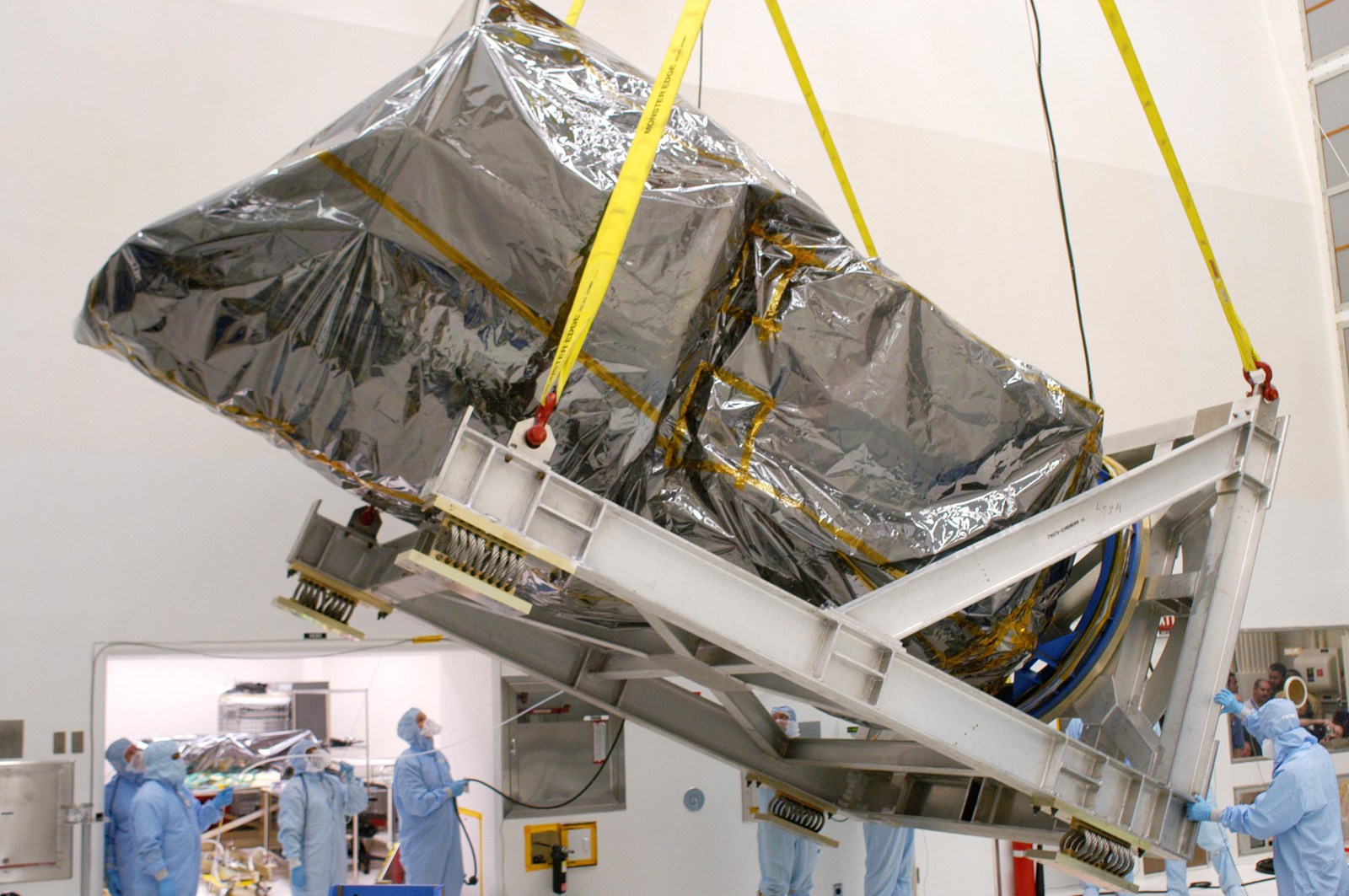
The aging NASA Swift Observatory, which has spent over two decades studying intense cosmic phenomena, is expected to re-enter Earth’s atmosphere soon. Concerns arise regarding whether some debris might survive the descent and where it might land.
Expected Re-entry and Possible Debris
The U.S. Space Force has projected Swift’s atmospheric re-entry to occur around Friday due to orbital decay hastened by high solar activity. Despite most of the 1.5-ton spacecraft likely to burn up, NASA indicates that dense parts, such as tungsten components and mirror sections, may remain and could reach Earth’s surface. Most debris is predicted to fall into the ocean; however, exact locations remain unknown.
Potential Landing Zones
The re-entry corridor covers vast global areas. Mission officials note that impacted regions could include parts of Africa, Australia, India, Southeast Asia, Central America, and South America. Predicting a satellite’s precise re-entry path is complex, as atmospheric changes can affect final breakup locations. Therefore, forecasts are typically refined only shortly before re-entry. Swift’s trajectory is continually monitored by the U.S. Space Force.
Reasons for Swift’s Descent
Swift’s fall follows an unsuccessful rescue mission. NASA recruited Katalyst Space to attempt saving the observatory using a robotic spacecraft named Link. Planned to approach and elevate Swift’s orbit, the rescue faced technical issues and was unable to proceed. Consequently, the rescue vehicle returned to Earth, leaving Swift to descend. Intense solar activity has also accelerated the descent, as it warms the upper atmosphere, increasing drag on low-Earth orbit satellites and causing swifter altitude loss.
Swift Observatory’s Achievements
Since its 2004 launch, Swift Observatory has been pivotal in studying gamma-ray bursts, which are highly energetic explosions. During its 22-year operation, it detected over 2,000 gamma-ray bursts and roughly 1,400 supernovae. It also provided valuable data on black holes, comets, and asteroids, enhancing larger observatories’ work, including the Hubble and James Webb telescopes. By late October, Swift had descended too low for stable operations, leading to its system shutdown, thus concluding one of NASA’s longstanding astrophysics endeavors.
Leave a Reply