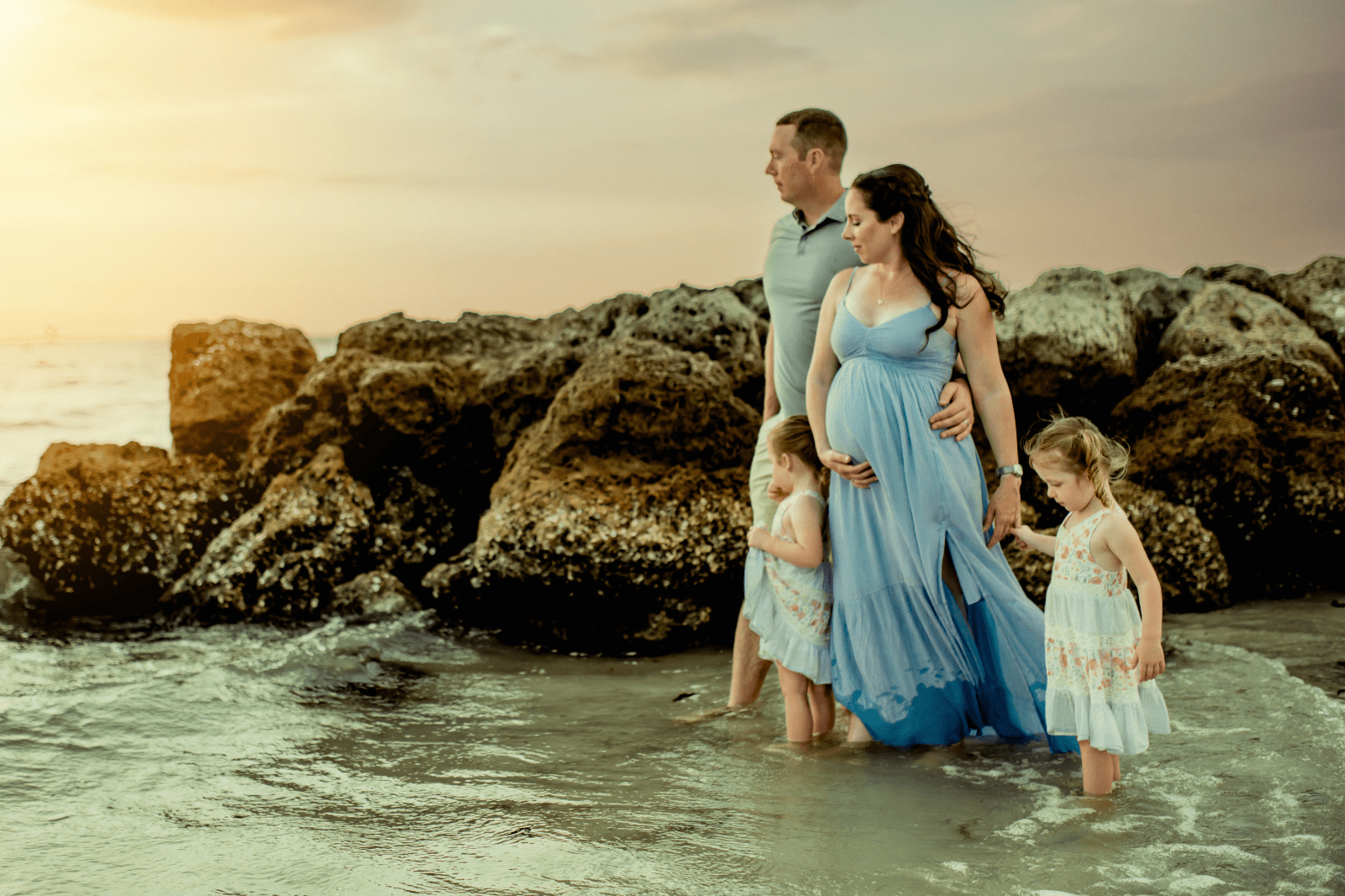
In 2016, Ansley Van Epps and her husband, David Hoyt, were filled with joy as they anticipated the birth of their first child. They held a gender reveal and found out they were expecting a boy, preparing for his arrival with excitement. However, during the 20-week anatomy scan, their world was turned upside down.
The couple received the heartbreaking news that their baby boy was diagnosed with Meckel-Gruber syndrome, a rare genetic disorder that is invariably fatal. This condition severely affected his organs: his kidneys were enlarged and malfunctioning, while parts of his skull had not developed properly. Faced with no alternative, they had to make the difficult decision to terminate the pregnancy for medical reasons.
Further investigation revealed that both Ansley and David were carriers of this genetic condition, resulting in a one-in-four chance that any future pregnancy could be affected. Given this risk, when they explored having another child, doctors recommended the option of IVF paired with preimplantation genetic testing for monogenic disorders (PGT-M). This method aims to screen embryos for specific inherited conditions before they are transferred.
Initially hesitant due to the invasiveness, cost, and complexity of IVF, the couple eventually embraced the procedure after failing to conceive naturally for over a year. Across three IVF cycles, they produced 20 embryos. Many were disqualified due to Meckel-Gruber syndrome or other genetic issues, but four embryos were promising. Three were free of the disorder, and one was a carrier but unaffected by the disease.
In 2019, an embryo classified as unaffected was transferred, resulting in identical twins. Their arrival marked a joyous moment after the persistent trials. Life continued with challenges, as one daughter developed epileptic seizures and required brain surgery for a tumor at 16 months. Thankfully, she recovered well.
Due to their past experiences, Ansley and David waited several years before transferring another embryo. This time, in 2023, they chose the carrier embryo. Sadly, at 17 weeks pregnant, they learned their unborn son, Everston, carried the Meckel-Gruber syndrome they feared. Despite PGT-M testing, the embryo was afflicted with the disorder.
The loss of Everston was a profound shock, compounded by the trust placed in the testing process. PGT-M aims to detect specific genetic conditions, providing some level of assurance regarding embryo viability. Unfortunately, Ansley’s experience is one of the few instances where PGT-M failed.
The couple has faced financial and emotional burdens, having invested over $100,000 in their journey to expand their family. Following Everston’s loss, attempts to transfer their remaining embryos were unsuccessful, leading to further IVF cycles without viable results.
Ansley shared her fertility challenges online since her first son’s loss in 2017. Her narrative resonated with others facing similar diagnoses and struggles. The rarity and isolation stemming from Meckel-Gruber syndrome have led many to reach out through social media, seeking connection and support.
Ansley emphasizes that her experience with PGT-M failing is uncommon. The cause remains uncertain: human error, testing error, or another factor may be involved. What is clear is their thorough attempt to prevent another loss, which still ended tragically.
Today, Ansley reflects on the embryos never used, contemplating the trust placed in the testing outcomes. Her story serves as a poignant reminder of the unpredictability inherent in genetic testing and the hope that no other family faces a similar ordeal.
In Tampa, Florida, Ansley Van Epps works as a newborn photographer. She resides with her husband David Hoyt and their six-year-old twin girls Savannah and Sydney, documenting their lives on social media at @ansleysadventures.
Leave a Reply