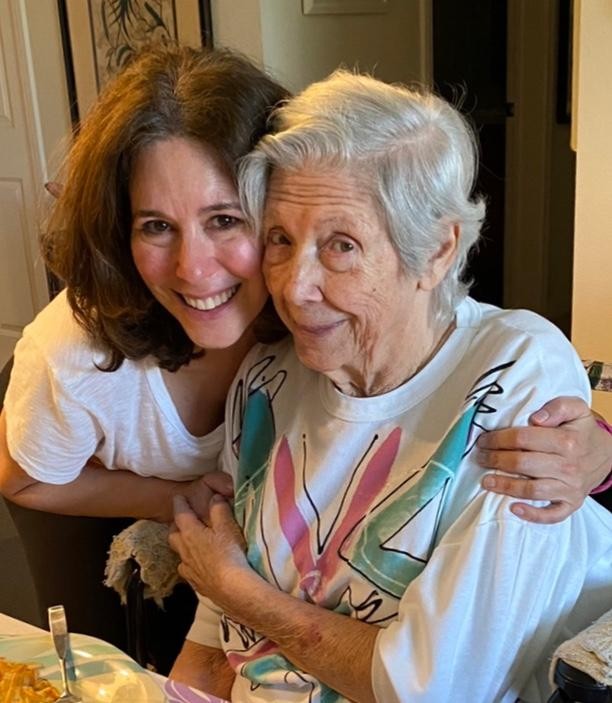
Hearing my mother’s sorrowful cries, expressing her belief that she lived in a haunted house, was startling. She would forget turning on the television and would be unnerved by the artwork that used to adorn her home. She even feared that her trusted nurse might harm her. The woman who once chased away my childhood fears now needed me to calm hers. Facing the challenges of a stroke coupled with lung cancer was daunting enough, but Alzheimer’s brought us to a brink we were unprepared for.
My daughter, at 26, asked me, “Do you think Grandma will remember me?” about my 87-year-old mother. Every couple of weeks, my sister and I alternated visiting her to assist with mail, bills, groceries, doctor’s appointments, wheelchair repairs, and other necessities, until she took her afternoon nap. Each visit seemed to reveal more of her slipping away.
These visits grew more challenging. She often felt overwhelmed by bills but resisted my help without her participation. I managed to complete a few tasks before leaving, both of us weary. It was often emotionally draining, demanding patience beyond measure. Despite occasional strained moments, her declarations of love were genuine, offering a sense of security.
Two Mother’s Days ago, she appeared sharp and spirited. Her candid remarks, while sometimes cringe-worthy, were a source of amusement. Phrases like “She’s not the sharpest pencil,” “He likes hearing the sound of his own voice,” and “She’s lost her virginity more times than she can count,” became favorites. We laughed off Alzheimer’s presence, wrongly believing it couldn’t defeat her.
However, Alzheimer’s progressed rapidly during COVID’s isolating restrictions, making visits difficult and shielding my adult children from witnessing her decline. The concept of video calls baffled her, diminishing their effectiveness.
I learned effective strategies the hard way. “Sundowning,” a period of late afternoon and early evening disorientation, was troubling for her. Argument and correction exacerbated her fears. I recall one instance where she furiously accused me of excluding her from Thanksgiving dinner, even though it was April. My attempt to explain incited anger, leaving me begging forgiveness for an imagined offense. Afterward, I scheduled calls before noon.
Seeking guidance, I turned online. The Alzheimer’s Association likened the disease to a blackboard, where life stories fade from the present backward. Witnessing this firsthand, I adapted by approaching slowly, engaging her with eye contact and concise greetings. Familiar routines provided comfort. Together, we revisited old photographs.
Music proved most comforting to her. Voices like Barbara Streisand and the Bee Gees brought past clarity greater than our physical surroundings.
As her speech faded, I discovered the significance of my presence beyond words. My tone mattered more to her than my sentences.
On my birthday, her attentive caregiver placed “Happy Birthday” signs facing her bed mirror, aiding her recognition. During my visits, the caregiver reintroduced me, allowing my mother to study my face, eyes, and voice, visibly striving to remember.
A YouTube video once showed a daughter lying next to her mother, asking if she recognized her. The mother’s response, “I don’t know who you are, but I know that I love you,” became my guiding principle. As long as love persisted, it ultimately mattered most.
Following my mother’s passing, I frequently dream of her, imagining her youthful again, with vibrant hair and eyes and a lively voice. While Alzheimer’s diminished her memory, in my dreams, nothing dims, especially her love.
Linda Wolff is a Los Angeles-based essayist and humor writer whose work has appeared in various prominent publications. She shares her thoughts on Instagram @carpoolgoddess when she’s not enjoying time with her Goldendoodle. The views expressed here are solely hers.
If you have a personal essay to share with Newsweek, send your story to [email protected].
Leave a Reply