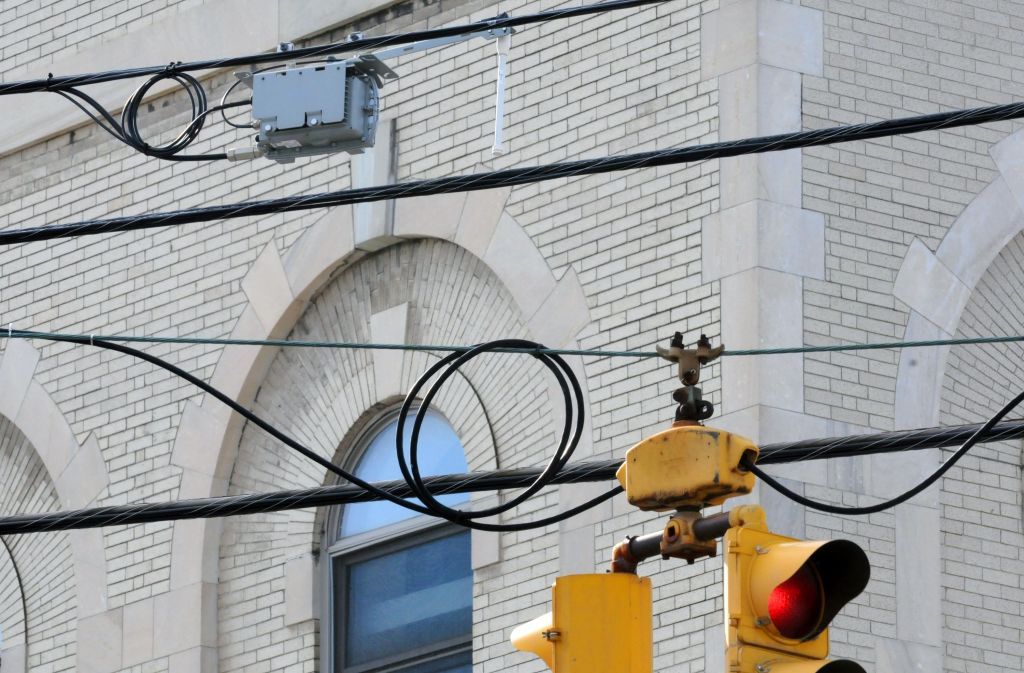
Encountering a red light at an intersection is a common occurrence for drivers. With around 320,000 traffic lights in the U.S., navigating them smoothly can be a challenge. Often, it seems as though the light takes forever to change. This might be because the light hasn’t detected your presence.
Traffic Light Systems
Some lights operate on preset timers, especially near venues that host large events. For instance, intersections near Minnesota’s sports stadiums use fixed patterns during games. In such cases, drivers have no control over the light change.
Other systems rely on detection devices like cameras and underground sensors. Many drivers recognize these detectors as a distinct rectangle outline at intersections. This shape usually indicates an underground induction loop.
“A loop is simply a coil of wire placed under the pavement. When a car affects the loop’s magnetic field, the light changes,” explains Neenah, Wisconsin, Public Works.
Proper Positioning
Triggering these sensors can be tricky. You must stop within the detection area, marked by the solid white stop line. Smaller vehicles like motorcycles should have their tires on the tar lines to ensure detection.
Alternative Detection Technologies
In addition to induction loops, magnetic detectors and magnetometers are common. These also utilize magnetic fields. To trigger them, position your vehicle over the detectors.
Some intersections employ overhead sensors. Infrared systems activate when a vehicle breaks a beam or its heat is detected. Cameras may also be present, not only to adjust signals but also to catch traffic violations.
Troubleshooting and Safety Tips
In cases where sensors fail to detect your vehicle, flashing your high beams might work. However, honking will not, as the sensors aren’t programmed for sound.
If the light doesn’t change, resist the temptation to run it. Consider alternate routes like making a legal right turn and recalculating your path.
For those at left turn signals, California Highway Patrol Officer Dan Olivas says you can turn on red if the straight traffic light is green. He notes it’s important to be cautious and able to explain your actions if questioned by law enforcement.
Leave a Reply