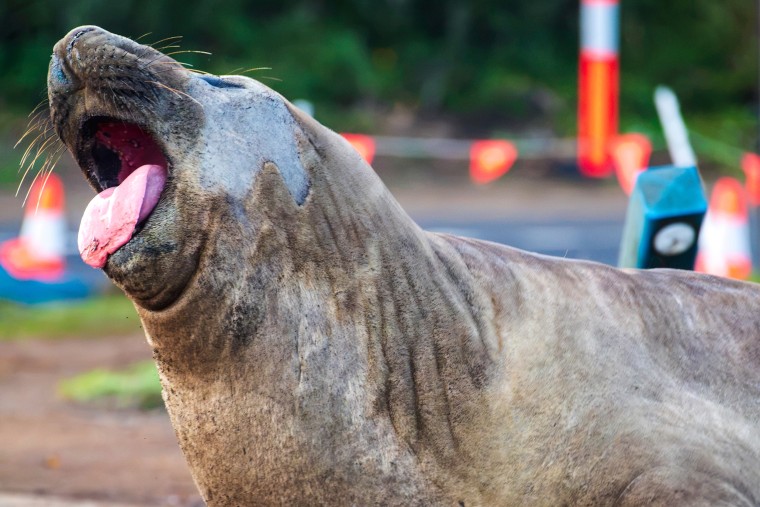
Neil, an elephant seal weighing 1,000 kg (2,200 pounds), returned to his birthplace on the Australian coast. Unlike most locals, he brings fame, fans, and property damage. In June, the 5-year-old seal began his semi-annual visit to beachside towns in southern Tasmania, following months of feeding at sea. However, his presence poses challenges due to his size and widespread social media following.
Neil’s arrival has resulted in the destruction of infrastructure, such as bending traffic bollards, destroying a warning sign, and attempting to climb over a fence. Often, he chooses to rest on roads, halting traffic in towns he visits. Officials say the greatest concern is the danger posed by ill-advised interactions between humans and Neil.
Neil is unique as the only male elephant seal to visit Tasmania in recent years. He has gained 1.4 million followers on TikTok, partially due to his disruptive behavior. During this latest visit, he has been seen encountering parked cars and breaking through road barriers.
Online, some view Neil as an anti-authoritarian figure. Yet, experts like Sophia Volzke, a scientist specializing in elephant seals at the University of Tasmania, explain that Neil is behaving instinctively. Young male seals practice dominance battles by rearing up and clashing chests, preparing for future breeding contests. Without peers, Neil’s practice targets include parked vehicles.
His fame poses risks, with local officials wary that Neil’s celebrity status could lead to unfortunate encounters with admirers. Kris Carlyon from Tasmania’s Department of Natural Resources and Environment emphasized the need for caution during a news conference.
“Neil’s fame is a bit of a double-edged sword,” Carlyon stated. “Some people engage in risky behavior, carrying babies near him for Instagram shots.”
Officials urge the public to avoid disclosing Neil’s current location, fearing a dangerous encounter could necessitate relocating him. They warn that similar situations elsewhere, like with Freya the walrus in Norway, ended tragically to ensure public safety.
Seals typically revisit their birthplaces twice a year to rest and shed fur. While many roam inland, most do not draw attention like Neil. His visits are unusual because female elephant seals, despite occasionally visiting, do not grow as large and cause less disruption.
Volzke mentions that sub-Antarctic islands south of Tasmania are elephant seal breeding grounds. Neil’s mother likely arrived from one to give birth in Tasmania. The return of this species to previous habitats presents challenges requiring coexistence strategies.
Neil’s future involves challenges for rangers and officials. If he survives to adulthood, he could grow to 5 meters (16 feet) and weigh three times his current size. However, statistics show about 90% of male elephant seals perish before maturity, according to Volzke.
Presently, Neil enjoys a patch on the sidewalk, indifferent to commotion. He sometimes interacts with an orange traffic cone, entertaining his online followers. His preference for this spot remains unclear, but he consistently returns after being moved by rangers.
“He’s picked this puddle surrounded by horizontal bollards as his place,” Carlyon noted.
Local sentiments are mixed. Dale Creamer, whose daily life remains unaffected, quipped, “It’s Neil’s world and we’re just living in it.”
Leave a Reply