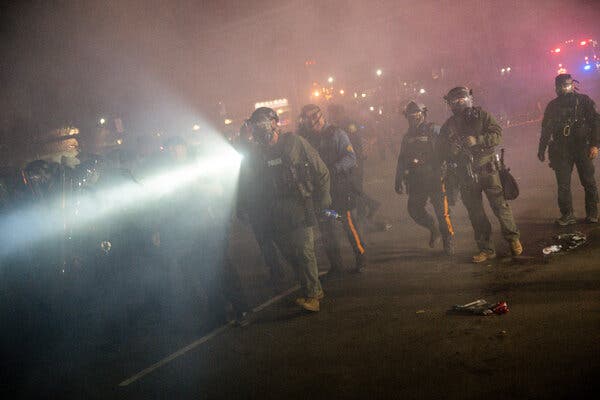
For several consecutive nights, tensions escalated outside the Delaney Hall immigration detention center in Newark. Demonstrators and law enforcement frequently clashed, resulting in scenes of unrest and confrontations. Witness accounts and video evidence highlighted the use of pepper balls and spray by federal agents attempting to disperse protestors who gathered to challenge the conditions inside the facility.
Governor Mikie Sherrill of New Jersey aimed to de-escalate the situation by deploying state police to replace federal agents in managing the protests. His concern stemmed from fears of Newark becoming embroiled in turmoil similar to past incidents in Minneapolis, where fatal encounters occurred during immigration protests.
Despite these efforts, the chaos persisted. Demonstrators continued to press against barricades and ignite fires, prompting state troopers to respond. Officers on foot and horseback were used to control the crowd, creating complex perceptions of law enforcement’s role in these rallies.
This pattern of volatile protests reflects a nationwide challenge for police forces in cities like Chicago, Los Angeles, and New York. While local laws prevent police from collaborating with federal authorities on civil immigration matters, they remain responsible for maintaining public order. This dual mandate often leads to the appearance of cooperation with federal entities.
New Jersey officials now grapple with this complicated crisis. Mayor Ras Baraka of Newark illustrated this when he decided to decrease the city’s involvement in security efforts around Delaney Hall, following his assumption of control earlier in the week.
Protests around Delaney Hall resumed after the center’s re-establishment as a 1,000-bed facility a year ago. Managed by GEO Group, a major private prison operator in the United States, Delaney Hall has been the focus of mostly peaceful demonstrations for months.
Leave a Reply