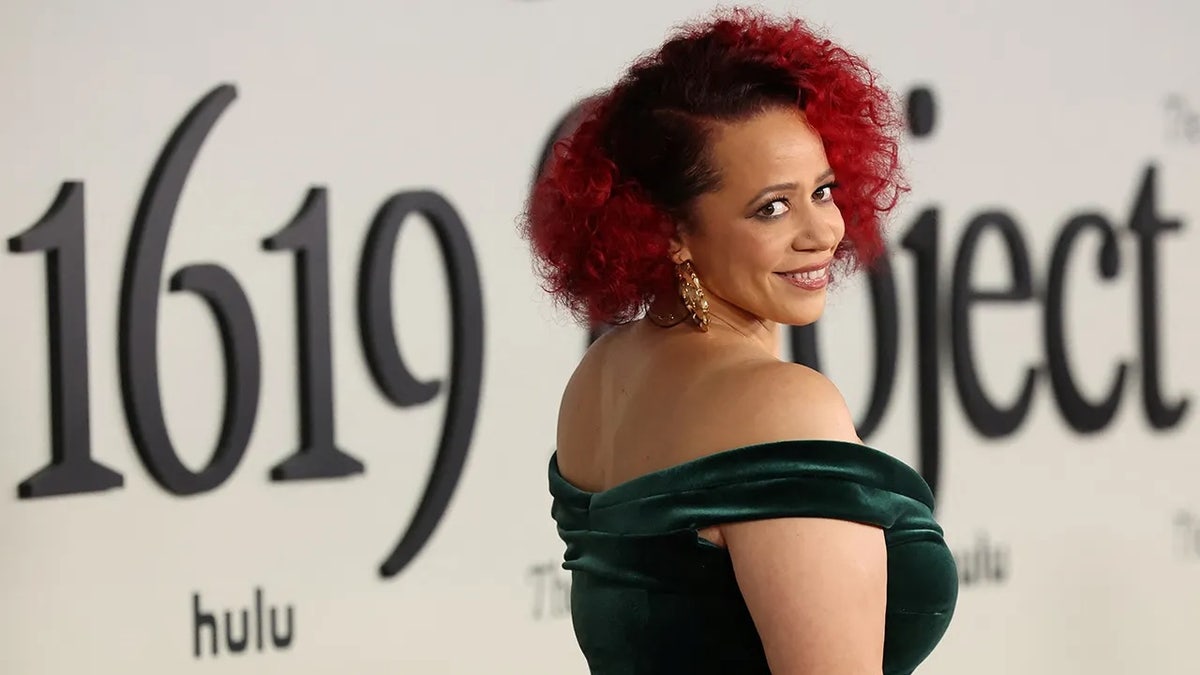
Nikole Hannah-Jones, known for her work with the 1619 Project, has expressed regret over sending her daughter to predominantly Black, high-poverty public schools in Brooklyn, New York. Her daughter, now 16, revealed that she felt her education did not meet her expectations. This comes a decade after Hannah-Jones framed her choice as a stand against school segregation.
In a recent essay in New York Times Magazine, Hannah-Jones revisited old emails with her daughter Najya’s teachers and discussed what she described as undeniable truths. “Now I felt overcome with regret,” she admitted. “Najya deserved better. They all did. But she was mine. This girl, my only child, looked to me to protect her, to give her what she needed to thrive. And I had not chosen her.”
Hannah-Jones shared that the broader focus should be on families without the resources to seek better educational options. She hopes there is more outrage for the numerous Black children whose families cannot afford different schooling choices. “As I write in the piece, there is no absolution to be had for any of us,” she stated.
Corey DeAngelis, a research fellow and school choice advocate, responded by asserting that parents should prioritize their children’s educational needs. “Parents should put their children first,” DeAngelis said. “They should not sacrifice them to a failing government school system in the name of ideology.” He welcomed Hannah-Jones to the school choice movement, suggesting that removing her daughter from the failing system would enhance competition and drive improvements.
I feel like you got cheated,” Hannah-Jones told her, acknowledging that she prioritized broader educational inequalities over her daughter’s individual needs.
In her conversation with Najya, Hannah-Jones apologized, stating that her daughter’s education should have been a priority. Najya revealed she felt neglected because her academic needs were overshadowed by her mother’s social concerns. The essay highlighted issues like insufficient homework and inexperienced teachers, which Najya felt left her unprepared for a more challenging high school environment.
Emily Paige, a principal from Najya’s middle school, noted challenges in balancing educational standards with anti-racism efforts. “It is important to not, in our pursuit of being antiracist, lower expectations,” Paige remarked. “Because this is what happens, right? It’s racism under the guise of antiracism.”
DeAngelis argued that this experience should motivate Hannah-Jones to champion policies for educational funding to follow students to schools of their family’s choice. “School choice is an equalizer,” he asserted, highlighting the disparity in access between families like Hannah-Jones’ and those with fewer resources.
The discussion occurs amidst debates over school choice in New York, a topic contentious with local teachers’ unions and political figures. The 1619 Project itself, while celebrated by some, has been criticized for its portrayal of American history, particularly by notable historians questioning its accuracy.
Leave a Reply