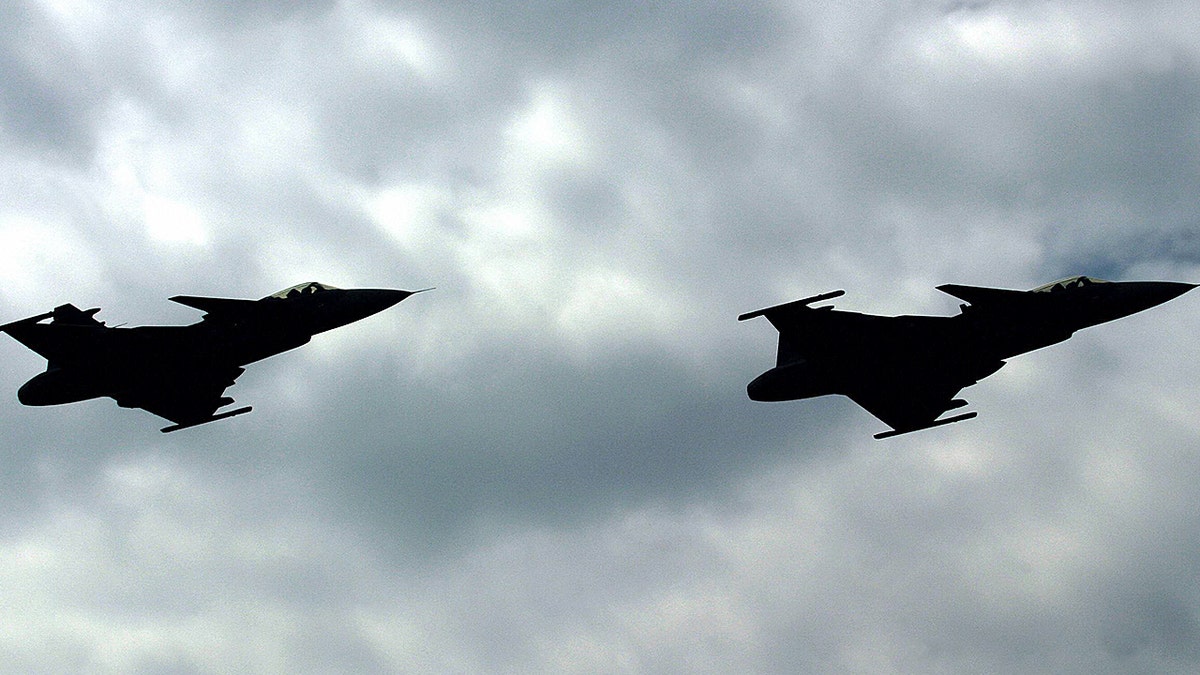
On September 24, Finnish and Swedish fighter jets were deployed to intercept Russian military aircraft over the Gulf of Finland. This event marked a significant step in Nordic defense collaboration against rising tensions with Moscow.
The operation occurred a day before Russian President Vladimir Putin dismissed European concerns over regional threats from Russia. He also mocked Estonia’s new defense minister for preparing the Baltic state against potential Russian aggression.
The Swedish Armed Forces reported that Finnish F/A-18 Hornets and Swedish JAS 39 Gripens were scrambled after detecting Russian aircraft in international airspace. The Russian formation included a Tu-134 transport plane, MiG-31 interceptors, and Su-30 fighter jets, both equipped for air-to-air and air-to-ground combat.
“This is what close cooperation looks like in practice,” said Maj. Gen. Jonas Wikman, commander of the Swedish Air Force. “Built over years on trust and strong personal relationships, we can now operate seamlessly together — as air forces, as nations and as Allies.”
Russian military activity along NATO’s eastern boundary has caused growing concern due to airspace violations. Recent incidents include Russian drones entering Polish airspace, a Mi-8 helicopter breaching Poland’s border, and armed jets entering Estonian airspace before being intercepted by NATO aircraft on September 18.
Estonia’s Defense Minister Martin Herem warned of potential Russian military action against Estonia within a year. Prime Minister Kristen Michal affirmed readiness to shut down border crossings if necessary.
At the St. Petersburg International United Cultures Forum, Putin refuted these threats. “We are not preparing for military action against Europe. We have no such plans, no basis for them, and no real motive to escalate the situation with Europe,” Putin stated, downplaying Estonia’s warnings as “political clowning.”
NATO’s enhanced eastern defense includes cyber and space domain protection and building resilience against hostile actions. NATO maintains that its activities are defensive with a commitment to protect all members.
NATO Secretary General Mark Rutte emphasized the strong ties between the United States and Europe. He warned that any aggressive action by Russia would be met with a firm response.
European intelligence assessed a low but increasing risk of limited Russian military action against NATO. However, a full-scale invasion remains unlikely, although it cannot be dismissed entirely.
Leave a Reply