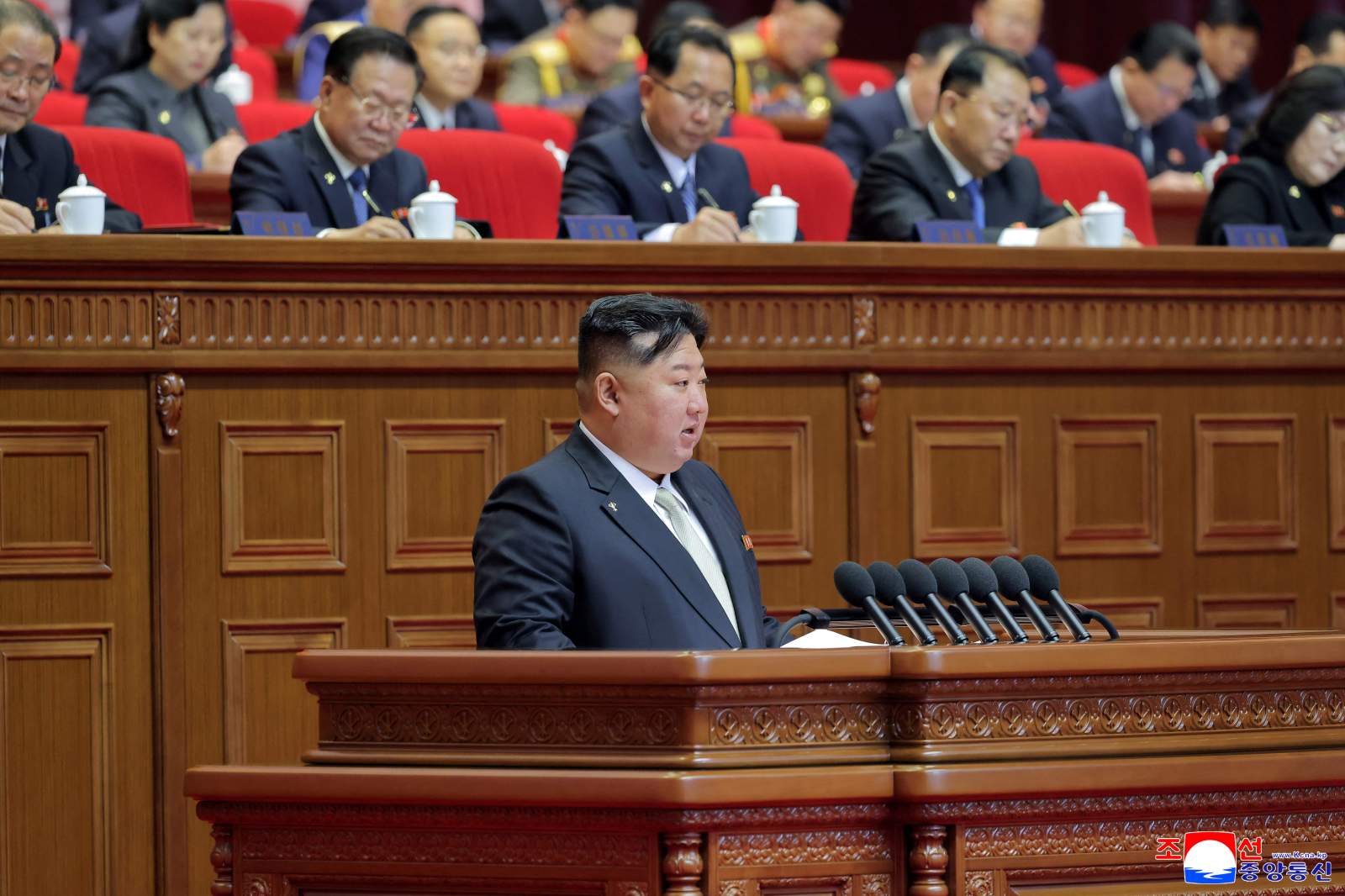
North Korea has introduced significant amendments to its constitution, involving four main changes. These alterations emphasize a hardline stance against South Korea and bolster Kim Jong Un’s control over nuclear forces. The constitution, offline for over two years, has resurfaced, omitting commitments to reunification with South Korea.
Constitution Back Online
Since March 2024, North Korea’s constitution had been unavailable. This followed Kim’s declaration in late 2023 separating the two Koreas as hostile entities. According to Korea JoongAng Daily, the document was modified during the first session of the 15th Supreme People’s Assembly on March 23. The updated constitution aligns with a version obtained by South Korea’s Ministry of Unification earlier in the year.
The revised constitution was published on the propaganda site Naenara and features four critical changes:
Redefining Territorial Boundaries
Article 2 has been rewritten to define North Korea’s territory as adjacent to China and Russia to the north, and South Korea to the south, including airspace and waters. This change labels South Korea as a separate nation without explicit land or maritime boundaries.
South Korean media outlet Asiae.kr suggests this wording seeks to sustain a two-state perspective without overt hostility or detailed border specifications.
“Pyongyang no longer sees Seoul as part of the same — albeit divided — Korean Peninsula, making it clear that South Korea is a primary enemy,” stated Edward Howell, an academic at the University of Oxford.
Reunification No Longer a Goal
South Korea’s progressive president, Lee Jae Myung, has aimed to reduce tensions, opposing forced unification. In August, he called for peace negotiations to replace the 1953 war armistice. However, North Korea’s rhetoric under Kim remains unchanged, as he declared during a February congress that they had “absolutely no business dealing with South Korea.” Kim ordered the removal of references to the “northern half” of Korea from the constitution at a January 2024 assembly.
The revised constitution echoes this position, eliminating terms like “peaceful unification” and “national unity.” Howell noted Kim Yo Jong, Kim’s sister, quickly criticized Seoul’s efforts for reconciliation as “appeasement offensives.”
“The constitutional change solidifies this message,” Howell commented. “Pyongyang is signaling to Seoul that North Korea dismisses the current South Korea’s aspirations for improved relations.”
Increased Authority for Kim Jong Un
The revisions also expand Kim’s power to reject parliamentary decisions and remove lawmakers lacking public confidence, as reported by NK News. The preamble now places less emphasis on former leaders Kim Il Sung and Kim Jong Il, catering to Kim Jong Un’s increasing personality cult.
Strengthening Control Over Nuclear Forces
The revised document further solidifies Kim’s grip on nuclear forces through the State Affairs Commission. Concerns persist over North Korea’s nuclear ambitions, following tests of missile capabilities this year. This includes an intermediate-range missile test on October 3 linked to its hypersonic weapons program. It protested South Korea’s hypersonic glide vehicle launch, as stated by South Korea’s Joint Chiefs of Staff spokesperson, Jang Do-young. Pyongyang tested other ballistic missiles on October 12, aiming to verify improvements to its tactical systems.
These developments align closely with Kim’s tour of a new weapons museum, highlighting an ICBM capable of reaching the U.S. mainland.
Ongoing Tensions
On September 21, a landmine blast in the Demilitarized Zone (DMZ) injured three South Korean soldiers, determined to be from North Korea. Pyongyang denied involvement in a letter to the UN Security Council. Nonetheless, tensions rise along the DMZ with increased fortifications and accelerating weapons tests, according to Armed Conflict and Location Event Data (ACLED).
“The constitutional change lets North Korea portray South Korea as an aggressor,” Howell stated. “North Korea can now marginalize South Korea in negotiations between Pyongyang and Washington.”
Leave a Reply