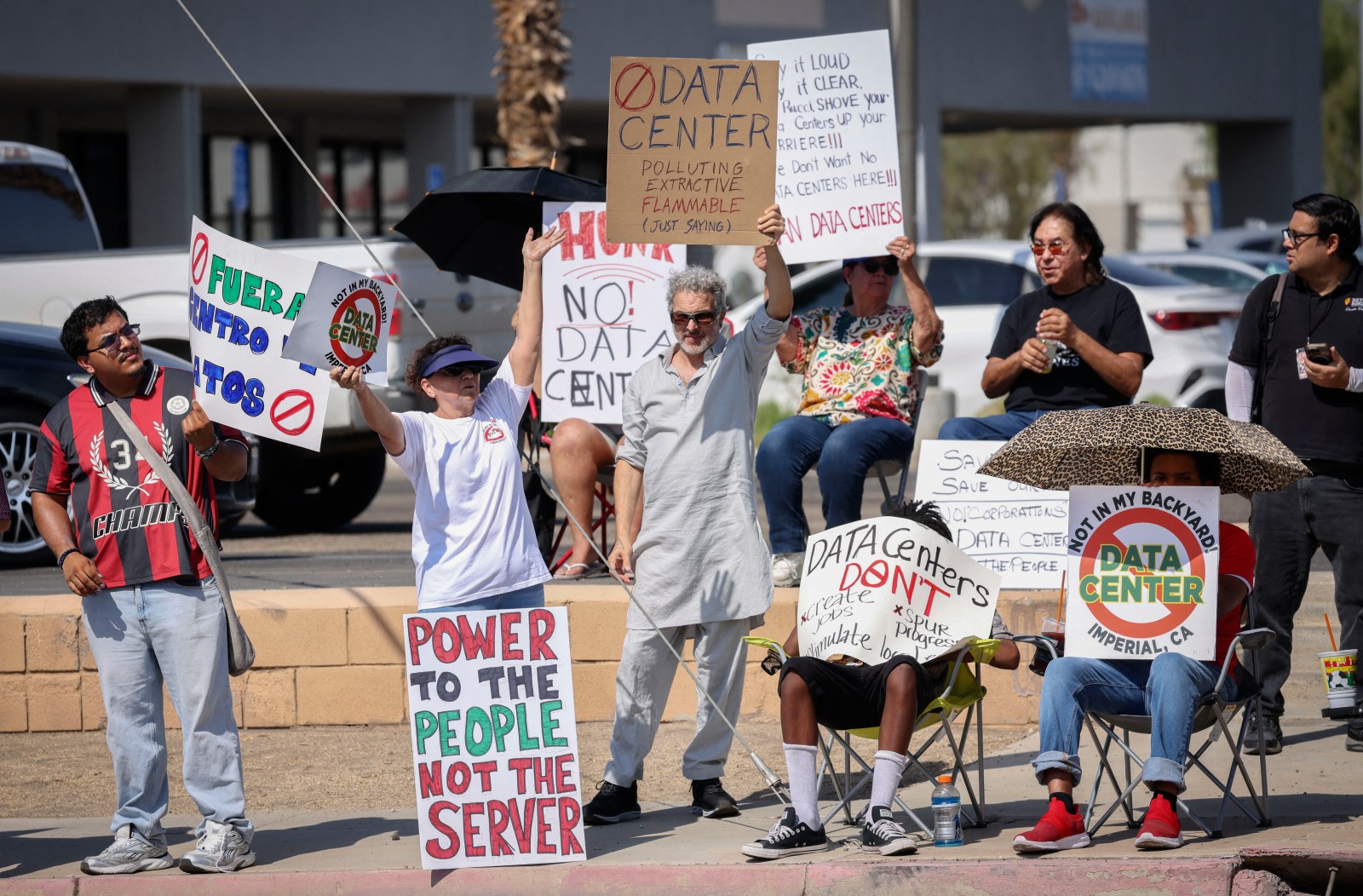
Following significant gains in the recent midterm elections, Democrats have turned their focus to enforcing stricter regulations on the expanding data center industry. This sector emerged as a pivotal issue during the elections, with several Democrats advocating for regulatory changes that may affect data center development. The potential benefits of such developments include job creation, infrastructure investment, and increased tax revenue.
However, many residents across the country have voiced concerns. They worry about the effects on electricity bills, excessive water use, and the noise from these centers disturbing neighborhoods. Political experts have shared insights into what actions congressional Democrats might consider, and efforts have been made to reach out to both parties in the House and Senate for comments.
Challenges for the Data Center Industry
The recent election results highlighted the concerns Americans hold about the impact of data centers. An analysis by Newsweek indicated that lawmakers who strongly supported the acceleration of data center development faced significant electoral challenges. Data centers appeared across 41 ballot measures in 10 states, including California, Florida, Illinois, and New Jersey. Most measures resulted in supporting restrictions or bans on these facilities.
John Ashford, CEO of public affairs firm Hawthorn Group, remarked on the industry’s need to adapt to a new political climate. He stated that collaborating with communities and effectively communicating their role in daily life is essential for the industry’s continued success. Ignoring this necessity is not an option the industry can afford.
Potential Democratic Initiatives
There is still some uncertainty regarding the policies the new Congress will pursue, especially with a divided government. However, Ed Tarnowski from the R Street Institute emphasized that certain congressional Democrats have already laid out plans. For instance, Senator Bernie Sanders and Representative Alexandria Ocasio-Cortez introduced legislation aiming to halt new AI data center construction. New Jersey Representative Frank Pallone Jr. has also backed delaying development.
Previous legislative efforts, like the Ratepayer Protection Act, failed to advance due to strong opposition from Democrats led by Minority Leader Chuck Schumer, who criticized it as ineffective. Instead, Democrats have supported stronger measures such as the GRID Savings Act, requiring data centers using over 150 megawatts to cover grid costs, and the bipartisan GRID Act which limits new facilities above 20 megawatts from grid connection.
Tarnowski suggested that voluntary standards won’t suffice for many Democrats, increasing the likelihood of more federal regulations.
Addressing Voter Concerns
Lauren Bridges of the University of Virginia identified three main areas where Democrats might push for reform: protecting ratepayers, enhancing environmental protections, and increasing data center oversight. This could involve setting distinctive rate structures, revising tax incentives, conducting environmental assessments, and requiring public impact disclosures.
Tim Profeta from Duke University predicted that Democratic leaders might temporarily halt data center development to balance community, environmental, and economic interests. Recent actions by Democratic governors in Virginia and New Jersey demonstrate a trend towards responsible development frameworks with stricter accountability.
Profeta noted the infrastructure investment driven by AI as a significant opportunity. It can promote investment in clean energy and grid enhancement, addressing environmental and cost issues while accelerating data center power availability. New Democratic leaders will need to develop policies enabling this opportunity.
Leave a Reply