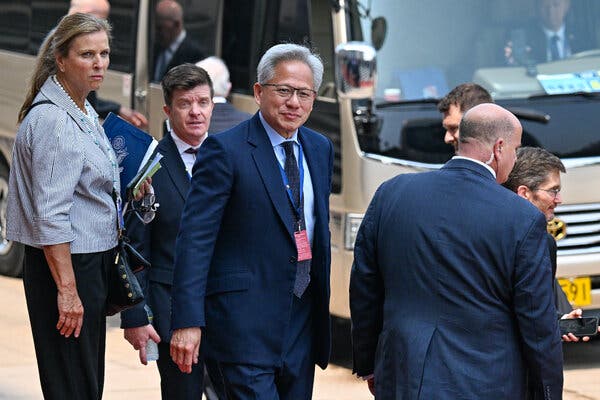
Nvidia, a major U.S. tech company, developed a powerful chip known as the H200, intended to advance China’s artificial intelligence (AI) ambitions. Despite initial expectations, not a single H200 chip has been purchased in China.
Jensen Huang, Nvidia’s CEO, recently visited Beijing but did not discuss the chip with Chinese officials. This visit followed an announcement by President Trump that Nvidia could sell its advanced chip to China. The decision initially appeared as a strategic opportunity to enhance China’s AI capabilities, while also benefiting Nvidia.
Advanced AI systems require vast computing power, and Nvidia’s chips hold a leading position internationally. As of yet, Chinese manufacturers have not produced a chip that matches Nvidia’s capabilities. Trump’s decision reversed past U.S. policies aimed at restricting China’s access to cutting-edge chips.
Officials from past U.S. administrations expressed concerns that allowing China access to Nvidia’s technology could erode the competitive edge American AI firms hold over Chinese counterparts. This concern centers on enabling China to narrow the technological gap until its own chip production could parallel Nvidia’s.
Six months following the announcement, Chinese companies have not bought the Nvidia chip. This situation highlights the deep mistrust between the U.S. and China, two leading technology powerhouses. For years, companies from both countries collaborated on groundbreaking products like the iPhone. However, the relationship has strained over the last decade as both nations now view technology as crucial to economic dominance.
Nvidia finds itself caught between this geopolitical tension. Its chips are vital for AI systems, but both Washington and Beijing increasingly regard such technology as a national security concern. This concern has been amplified by technology’s role in recent global conflicts, including in Gaza, Ukraine, Venezuela, and Iran.
Chinese officials have urged local companies to seek domestic alternatives from companies like Huawei and Cambricon instead of relying on Nvidia. After former President Trump’s recent meeting with Xi Jinping, he indicated that China’s lack of interest in the H200 chip aligns with the country’s push for technological self-reliance.
Leave a Reply