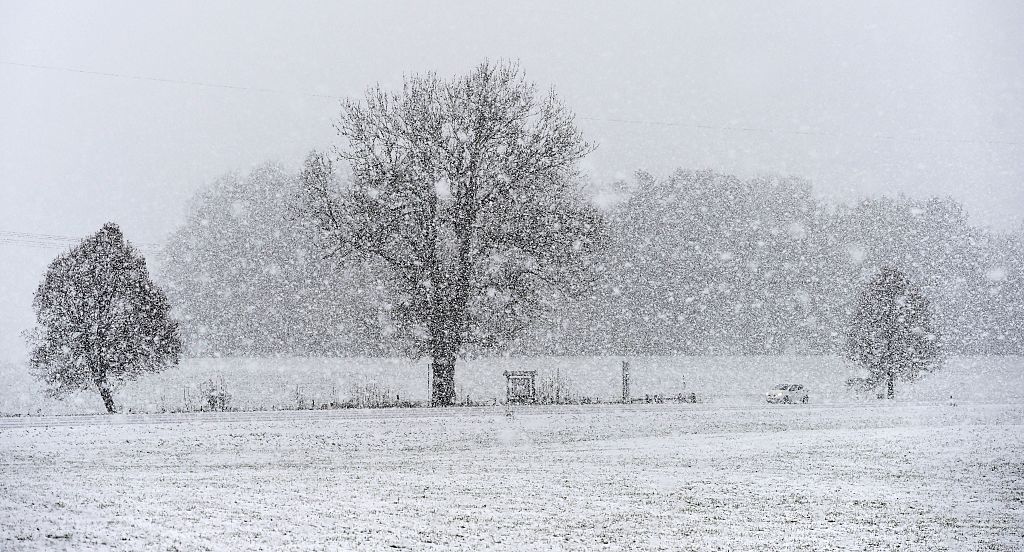
The Old Farmer’s Almanac has issued its Winter 2026–2027 forecast, highlighting the influence of a strengthening Super El Niño on U.S. weather patterns. Rising ocean temperatures in the tropical Pacific disrupt the jet stream, leading to potential major winter storms. Many Americans may encounter wetter conditions, substantial snow, icy weather, or sudden cold spells as these climate signals converge.
Winter Season Predictions
The Almanac anticipates a winter marked by stark contrasts, with varying conditions across regions. An active southern storm track is expected, bringing wetter-than-normal weather from Southern California through Texas, the Gulf Coast, and into the Southeast. These areas could experience repeated storms, muddy fields, and situations where cold air and moisture combine to produce sleet, freezing rain, or heavy snow.
The northern regions promise more volatile weather. The West, northern Plains, Upper Midwest, and Great Lakes are likely to see near-normal temperatures but with unpredictable patterns. Quick-moving clippers, cold snaps, and brief thaws are probable.
Inland areas in the Northeast might face heavy snow, while coastal zones could get mixed precipitation due to wobbly storm paths. Small temperature shifts might change a slushy snow forecast into a significant storm.
Impacts of Super El Niño
El Niño alters the jet stream, typically pushing it south and energizing storms, funneling moisture into the southern U.S. Super El Niño, identified by very warm Pacific waters, can heighten these effects. Wetter conditions in the southern regions become likely, while northern states face variable weather, including fast cold snaps and alternating thaw and freeze periods.
Crystal Egger, a meteorologist with Monarch Weather Consulting, notes an elevated risk for the southern tier due to the strengthening El Niño. California, the Southwest, and southern U.S. regions could see heavy precipitation and severe weather.
Super El Niño conditions can lead to heavy rain and flooding, especially in California, the Southwest, and the South. Florida may experience severe weather like tornadoes during these winters.
The Role of the Polar Vortex
The polar vortex, a cold air pool near the Arctic, is an unpredictable factor. If its circulation weakens or shifts, extremely cold air could drift south, causing cold outbreaks in parts of the U.S. Changes in the Quasi-Biennial Oscillation (QBO) could affect the polar vortex later in the season, leading to temperature drops in regions expecting near-normal temperatures.
Accuracy of the Almanac’s Predictions
The Old Farmer’s Almanac claims 80 percent accuracy for long-range predictions. Last winter, it recorded an 86.1 percent success rate. It accurately predicted rare snow in the Southeast, with significant snowfall reported in cities like New Orleans.
The Almanac’s forecasting involves a blend of traditional and modern methods, using a formula from 1792 along with meteorological tools. Though independent reviews often score its accuracy lower than the Almanac’s claims, it remains a prominent long-range forecasting source.
Preparation Advice
Egger advises the public to not misconstrue “Super El Niño” as predictable. A strong El Niño may imply a less active hurricane season, but a single storm can have major consequences. Her advice for businesses and households is to understand risks before they materialize.
Contact Newsweek editors on this story: Kate Nalepinski and Sam Wilson.
Leave a Reply