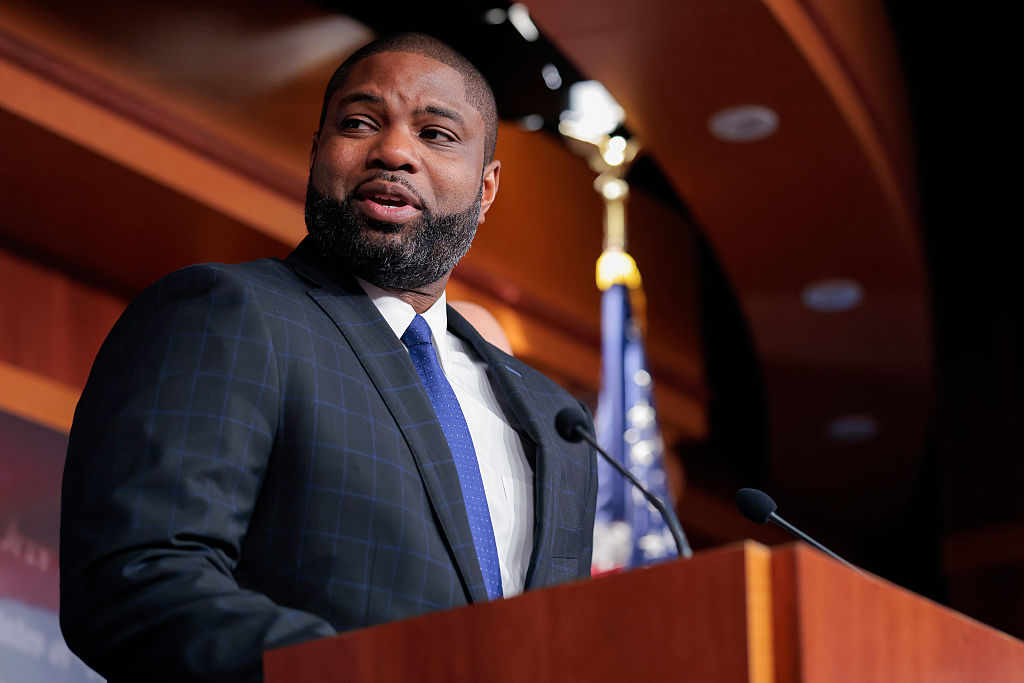
Jerry Demings Stops Campaign Due to Health Reasons
Orange County Mayor Jerry Demings announced the end of his bid for Florida governor. He cited undergoing treatment for prostate cancer as the reason for his decision. As one of the leading Democrats posing a competitive challenge to the likely Republican candidate, Byron Donalds, Demings’ withdrawal reshapes the Democratic field. It leaves former Congressman David Jolly as the most prominent contender, influencing campaign strategies for undecided voters.
During his final State of the County address, Demings disclosed his diagnosis, mentioning he would halt his campaign to prioritize his health. According to local station WKMG, he stated, “I received some bad news from my doctor, who confirmed that I have prostate cancer.” Demings will complete his term as Orange County mayor, stepping down in November. His departure removes a well-known figure from a promisingly competitive race.
Polling Performance: Demings vs. Jolly Against Donalds
Two independent polls in the spring, from Stetson University’s Center for Public Opinion Research and Echelon Insights, showed Demings outperforming Jolly in hypothetical matchups with Donalds. In Stetson’s survey, Donalds led Demings 46% to 42%, while he led Jolly 47% to 40%. Echelon’s poll highlighted a similar pattern, showing Democrats lagging but keeping the race within single digits. These findings offer insights into how Demings’ public profile resonated with undecided voters who could be decisive in November.
Implications for the Democratic Field
With Demings stepping back, David Jolly becomes the most prominent Democratic candidate. Jolly, a former Republican congressman from Pinellas County, has significantly outpaced Demings in fundraising but faces a formidable financial challenge against Donalds. Donalds has raised over $67 million, including $22 million in early 2026. Jolly has gathered about $5 million, while Demings raised roughly $660,000 before suspending his campaign. Demings’ withdrawal means Democrats lose a candidate with strong Central Florida connections and extensive public service experience.
His campaign contributed to keeping the contest close in several polls, despite Florida’s Republican inclination. Demings served as Orlando police chief, Orange County sheriff, and two-term mayor, earning recognition across Central Florida.
Why the Florida Governor’s Race Remains Competitive
Despite Republican advantages in Florida, polls reveal dynamics suggesting a competitive race. Partisan loyalty remains robust, with over 85% of voters supporting their party’s nominee. A significant portion of independents remains undecided, notably in the governor’s race, and their turnout rates are historically lower than those of partisans. Gender divergence is noticeable, where men generally favor Republicans, and women lean towards Democrats.
Economic issues are prevalent in voter concerns. Nearly 40% of Florida voters identify cost of living and inflation as primary concerns, overshadowing topics like immigration, education, or abortion. Kelly Smith, a political science professor at Stetson University, pointed out, “the economic reality voters are experiencing is cutting through partisan divides.”
Impacts of Demings’ Exit on Various Groups
Demings’ decision affects different groups. Democrats must recalibrate strategies, especially in Central Florida, given Demings’ significant local recognition. Independents, many of whom remained undecided, see a revised set of options. Donalds loses a challenger who had better polling numbers against him than Jolly, albeit both Democrats kept the race competitive.
The decision highlights the unpredictable nature of the governor’s race, still months from Election Day. Though Republicans hold structural advantages, Democrats remain competitive, and Demings’ absence introduces new complexities into an already competitive contest.
Leave a Reply