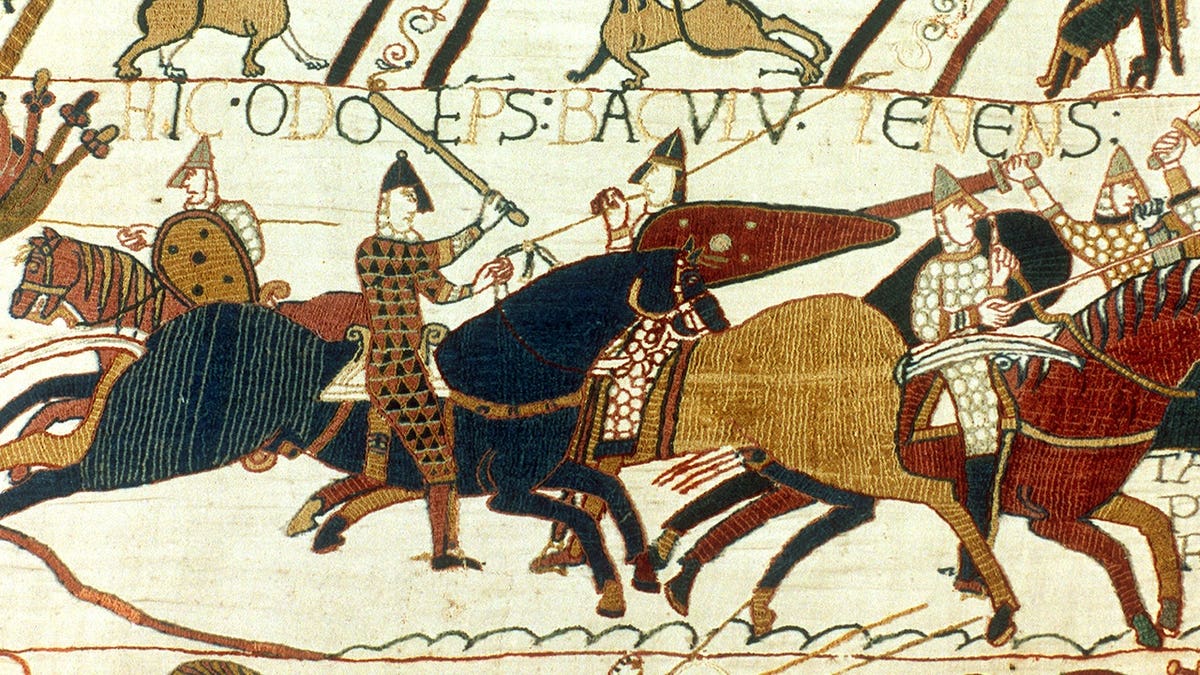
The Norman Conquest of England in 1066, a pivotal event in history, might have new explanations based on recent scholarly research. The University of East Anglia announced findings in August that could reshape the understanding of this famous battle.
Discovery of a Lost Papal Letter
Professor Tom Licence uncovered overlooked excerpts from a lost papal letter within the Vatican archives. This discovery hints at Pope Alexander II’s possible backing of William the Conqueror’s invasion. The motive might be linked to the English siding with the pope’s rival, offering insight into the Battle of Hastings.
Pope Alexander’s letter depicted English leadership as an ‘evil head,’ describing the English as ‘followers of Satan.’
Traditional Views Versus New Insights
The Battle of Hastings traditionally focused on King Harold II and William of Normandy vying for the English throne. It rarely touched on the influence of religious and political dynamics involving the papacy. Licence’s research suggests a significant papal power struggle between Alexander II and antipope Honorius II, influencing the battle.
England’s alignment with Honorius potentially drove Alexander’s support for the Norman invasion, fostering a fresh perspective on the motivations behind these events.
Historians’ Perspectives
Licence noted that despite being unsurprised by his findings, most historians examining the Norman Conquest may overlook such papal politics. Honorius II, though lesser-known, was involved actively in the power tussles of the period.
Historically, England seemed to shift away from supporting Alexander II. The letter accused England of deviating from truth due to its questionable association with an ‘evil head,’ hinting at alignment with Honorius.
Implications for Historical Understanding
These insights challenge prior interpretations of Alexander’s role in 1066’s events. The papal intrigue suggests Alexander aimed at regime change in England, motivated by the broader papal disputes, altering conventional narratives.
Licence’s findings, detailed in his book, ‘Harold: Warrior King,’ encourage revisions in historical thought on the Norman Conquest’s causes. This could redefine papal involvement during the era, shedding light on the broader geopolitical landscape of the time.
Leave a Reply