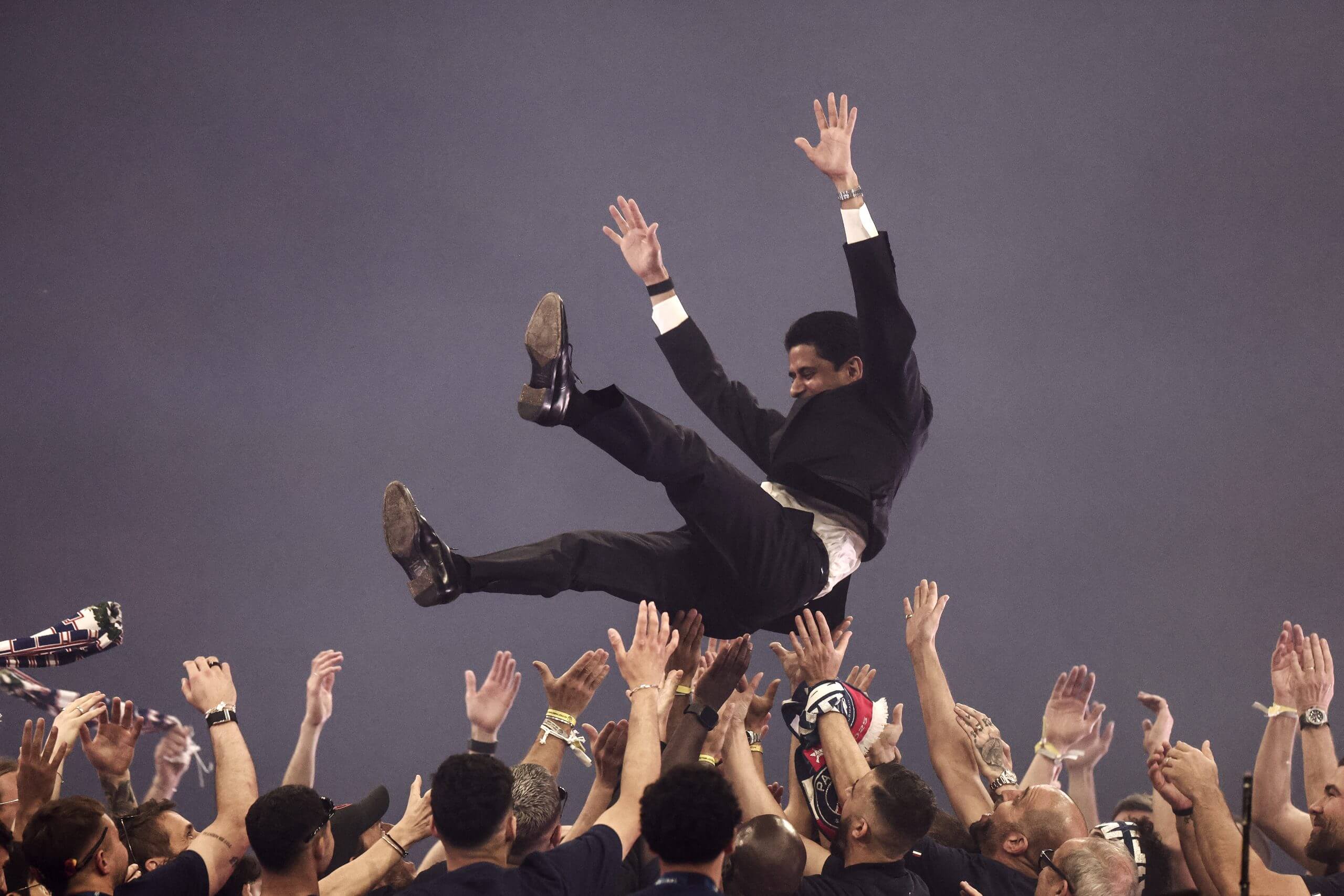
Paris Saint-Germain (PSG) stands out as one of the most captivating teams in football today. Their players exhibit extraordinary skill and versatility, turning simple warm-ups into spectacles. Ousmane Dembele, once seen as unreliable, has emerged as a top-tier striker. Desire Doue amazes with his speed and skill, while Bradley Barcola’s talent is so abundant that he struggles for game time. Khvicha Kvaratskhelia, a blend of strength and agility, captures the essence of thrilling sports. Their brand of football is fast-paced, full of goals, and tinged with vulnerability.
This team’s reputation is heightened by the ownership of Qatar Sports Investments (QSI), who acquired PSG in 2011. Their motivation, whether fostering sportswashing, leveraging soft power, or enhancing Qatar’s image, remains debated. Nevertheless, their investment has transformed PSG into a powerhouse, with 12 league titles and a recent Champions League victory. Valued now at around €4.25 billion, PSG is a testament to strategic acquisition.
“I wanted to build a brand,” said Nasser Al-Khelaifi, chairman of both QSI and PSG, revealing his priority during our conversation for the book Who Owns Football?
PSG’s evolution has involved significant branding efforts. They sought to establish the team as synonymous with Paris, redesigning their logo and courting celebrities. Strategic partnerships, like with Nike’s Jordan imprint, furthered their image. Al-Khelaifi’s emphasis on store expansion highlights their goal of global recognition.
Transfer policy was critical to brand-building. Initially featuring stars like Zlatan Ibrahimovic and David Beckham, PSG later focused on assembling a robust team. Acquiring young talents like Dembele and Kvaratskhelia shifted their strategy toward sustainable success. Although the goal of a homegrown team remains unfulfilled, they now deliver exciting football.
Increased awareness of Qatar due to PSG and the World Cup is double-edged. While more recognize Qatar’s achievements, familiarity with issues like the kafala system and human rights concerns has grown. PSG operates as a geopolitical tool, complicating the typical relationship between a club and its supporters.
Despite ethical complexities, PSG’s football remains dazzling. Watching their dynamic play offers a stark contrast to their ownership story. As they prepare for another Champions League final, PSG exemplifies both the power and the intricacies of state-influenced sports ventures.
Leave a Reply