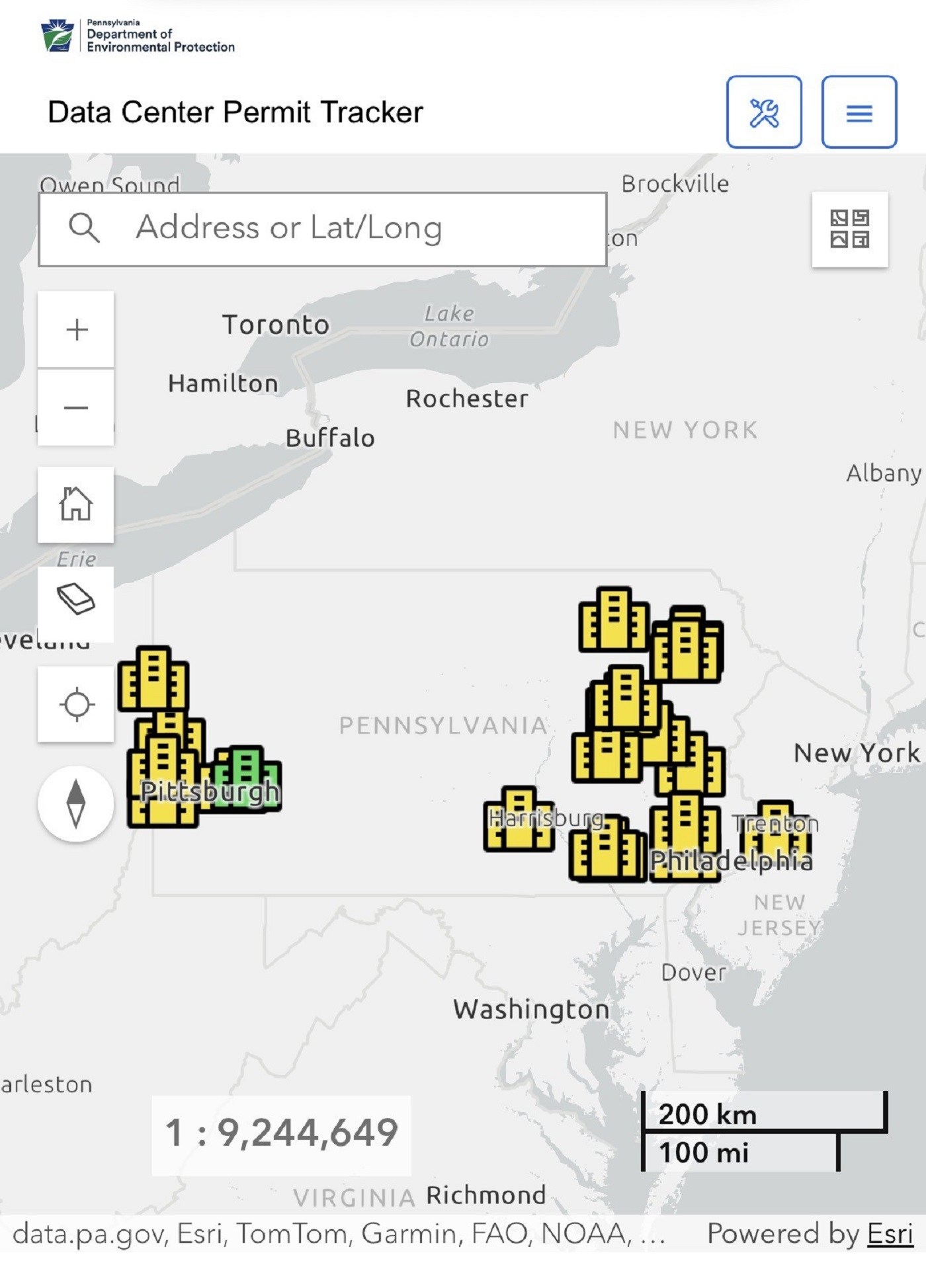
Pennsylvania has introduced a public map for residents to track data centers seeking environmental permits. This development aligns with the increasing attention on artificial intelligence infrastructure as a key issue before the 2026 U.S. midterm elections.
The Pennsylvania Data Center Permit Tracker, managed by the Department of Environmental Protection (DEP), displays proposed data center projects and updates residents on their environmental permitting progress. This initiative is part of Governor Josh Shapiro’s administration strategy addressing AI-related concerns about electricity costs, water supplies, environmental impacts, and community effects.
Newsweek reached out to the DEP and Shapiro for comments and has not yet received responses.
The launch comes amidst rapid growth in the data center sector, with proponents highlighting job opportunities, investment, and AI competitiveness. However, critics voice concerns over increased energy and water demand and community pressures. Local figures, such as Scott Taylor from Protect Elizabeth Township, express resistance to these developments. Virginia Marcille-Kerslake from Food & Water Watch notes the adverse effects of large-scale data centers seen in other states.
Other states, including Virginia, have tools to provide data center information, yet Pennsylvania’s tracker uniquely connects environmental permits with public accessibility. While Virginia’s data center map relies on community input, Pennsylvania offers an official resource.
Independent national projects, like the Data Center Record map, also monitor data center progress.
Data Centers: A Prominent Election Issue
With data center development becoming central to the November 3 midterm elections, candidates are increasingly asked to balance AI investments’ economic benefits against rising energy costs, environmental effects, and expansion speed. The forthcoming election, termed the data center election, underscores this debate.
Across the U.S., communities confront AI infrastructure expansion, raising national discussions on its costs versus benefits. Tech companies push to construct facilities serving artificial intelligence, cloud computing, and digital services, while criticism focuses on escalating energy demands, water consumption, environmental consequences, and community impacts.
Opinion polls indicate significant local opposition to these centers. A May Gallup survey revealed about 70% of Americans oppose building AI data centers locally, more than those against nearby nuclear plants. The Annenberg Public Policy Center survey from August indicated 61% opposition to local data centers, with bipartisan agreement distinct in this matter.
Politicians emphasis technology investment for competitive purposes against China. However, they also recognize the need for tighter regulations or more thorough project reviews. Local resistance forces officials to elucidate who will fund new infrastructure.
AI as a Political Issue
Former President Donald Trump advocates for data centers. A Reuters/Ipsos poll from October 7 highlighted 84% of voters perceiving AI as a threat to workers, with 69% supporting stricter AI regulations. 56% favor limiting data center construction.
The survey suggests broader implications, questioning AI development and regulation.
The AI sector’s political relevance appears in Newsweek’s AI Policy Scorecard, appraising Congressional members’ AI stands and records. The scorecard evaluates five areas: regulation and governance, data centers and energy, jobs and the economy, safety and privacy, and national security concerning China.
Using congressional votes, sponsorship, and public statements, the scorecard rates lawmakers from AI skepticism to AI enthusiasm, aiding readers in assessing representatives’ technological policies.
Candidates increasingly face the challenge of addressing AI infrastructure support, construction, regulation, and funding.
Newsweek’s scorecard indicates Pennsylvania’s congressional delegation holds varied AI perspectives, with most House members receiving “mixed” ratings.
Newsweek’s Martyn AI assistant contributed to this story. Editors Rebecca Flood and James Debens shaped the content.
Leave a Reply