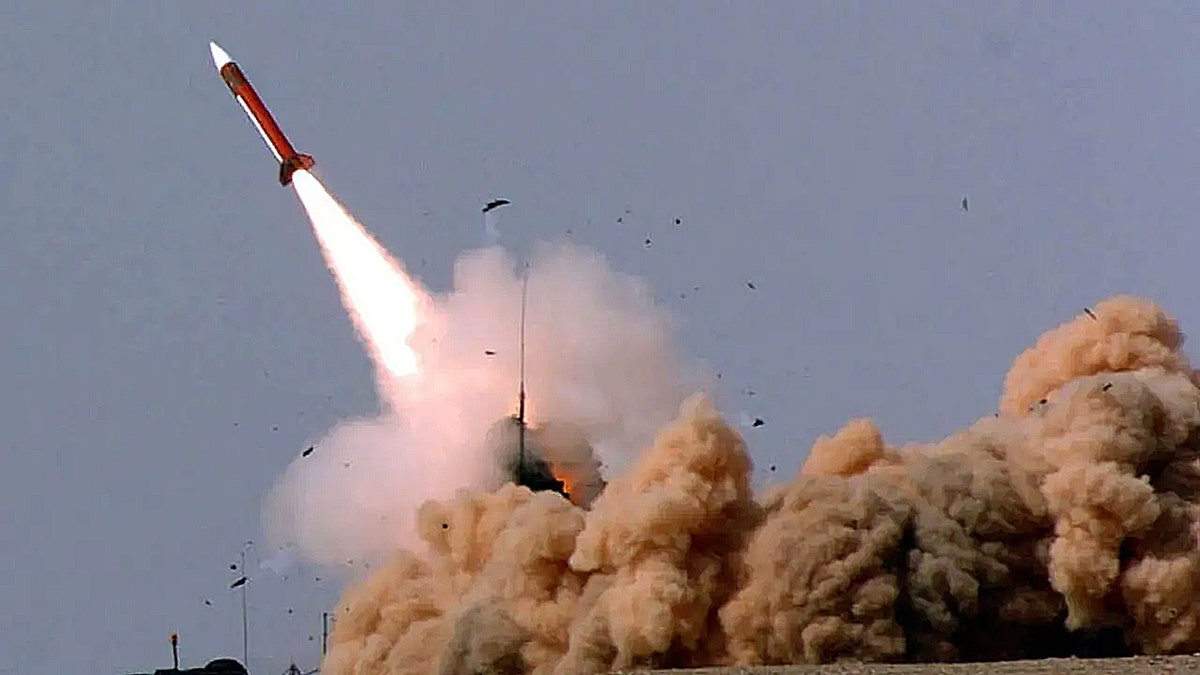
The Pentagon is dealing with a significant issue as its missile defense stockpile dwindles after months of conflict with Iran. The current supply of interceptors is decreasing, prompting discussions about the capability to uphold limited retaliatory strikes.
According to the Center for Strategic and International Studies, open-source budget data indicates that U.S. inventories of Patriot missile interceptors have fallen dramatically, from approximately 2,300 units before the conflict to fewer than 827. Similarly, THAAD interceptors have decreased from 452 to under 278.
“Over half the global inventory of Patriots has now been used in the Middle East. The same applies to THAAD interceptors,” said Kelly Grieco, a missile expert at the Stimson Center.
This reduction poses significant risks as the U.S. may face challenges in protecting its forces and bases globally, especially if another major conflict arises, like in the Pacific region.
In response, the Pentagon requested $67 billion for fiscal year 2026’s emergency funding, with $18.2 billion earmarked for replenishing advanced missiles like the Patriot and THAAD, as well as Navy Tomahawks. Bloomberg reported that future budgets will focus on acquiring low-cost munitions, with 70% of purchases by 2031 expected to cost $600,000 or less.
Jerry McGinn, an expert on the defense industrial base, noted, “Today’s munitions like Tomahawk and Patriot are effective but designed long ago for performance, not mass production. This makes scaling production a challenge.” These intricately made systems take years to produce, complicating efforts to restock them quickly.
Concerns about stockpile levels emerged before the recent Middle East conflict. The Pentagon convened a meeting with Silicon Valley firms like Shield AI and Anduril to discuss methods to replenish depleted inventories. McGinn emphasized the need for companies to scale production to meet government demands.
Brandon Tseng of Shield AI described initial skepticism from venture capitalists about defense technology but highlighted the successful introduction of the V-BAT in Ukraine. This AI-driven targeting system is a cost-effective alternative to expensive drones, offering capabilities like intelligence, surveillance, and targeting over long ranges, even under challenging conditions such as GPS jamming.
The current Middle East strategy, involving limited retaliatory strikes, appears unsustainable due to diminishing interceptor supplies. Iran’s tactic involves persistently targeting U.S. bases, forcing the country to rely heavily on these interceptors, potentially exhausting U.S. resources over time.
“Iran’s strategy is clear,” Grieco said. “They aim to deplete U.S. stockpiles, betting that increasing human and financial costs will eventually lead the U.S. to reconsider the conflict’s worth.”
Leave a Reply