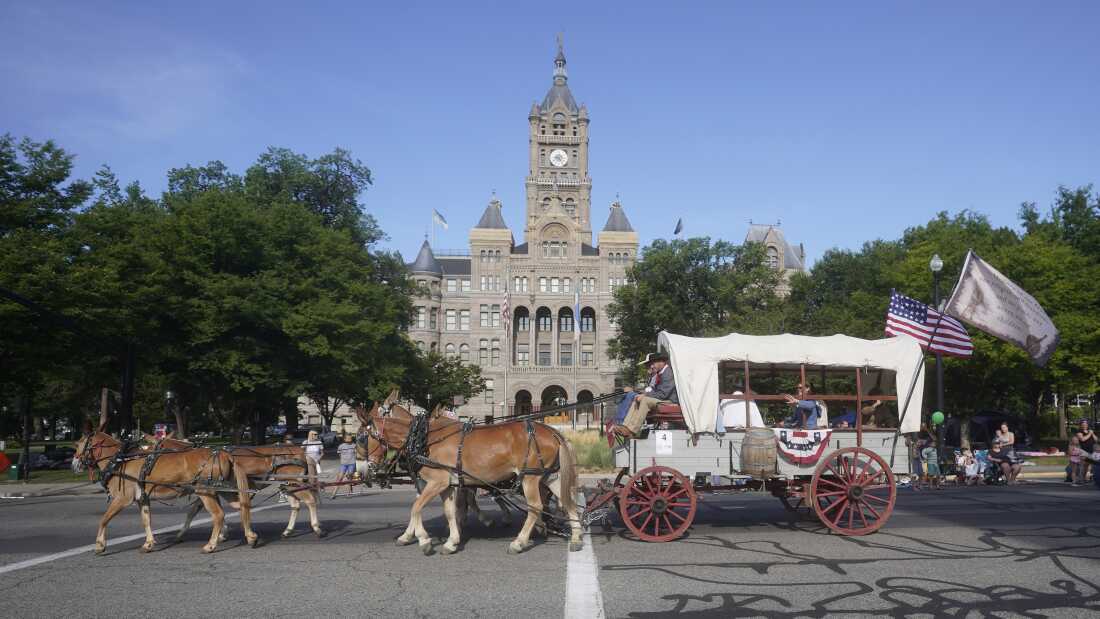
Pioneer Day is a cherished holiday in Utah celebrated every July 24th. It features festivities like parades, rodeos, and fireworks, similar to the Fourth of July. The day commemorates the arrival of pioneers in 1847 in the Salt Lake Valley, marking the beginning of the state and providing a refuge for members of The Church of Jesus Christ of Latter-day Saints, known as Mormons.
In Provo, a recent celebration included dancing and musical performances, emphasizing community spirit. However, the holiday often overlooks the conflict between settlers and Native Americans during the state’s early years.
“It’s still being utilized in the aspect we’re still being ignored,” Meyer said. “We’ve been exterminated from public view.”
The Provo River massacre of 1850 is a seldom-discussed episode where Native people were driven out by settlers. Historian D. Robert Carter notes that tensions escalated with crop thefts and livestock killings, prompting Brigham Young to instruct settlers to retaliate. A violent encounter resulted in significant loss of life among the Timpanogos Nation.
Perry Murdock, a tribal council member, commemorated this history by leading a memorial walk and sharing traditional music. The Timpanogos Nation seeks an apology and the rescindment of historical extermination orders, believing it would foster peace and reduce fear.
State leaders and the LDS Church have yet to respond openly. However, Utah House Minority Leader Angela Romero indicated willingness to discuss an apology. Provo Mayor Marsha Judkins publicly acknowledged the tragic past during celebrations, inviting Chief Meyer to address the public.
Sam Andersen learned about the order amid the celebrations. As an LDS Church member, he emphasized the importance of inclusive historical recognition on Pioneer Day, advocating for acknowledgment of all narratives involved.
Meyer and Andersen hope rescinding the order might heal both Native communities and pioneer descendants, fostering a more comprehensive state history.
Leave a Reply