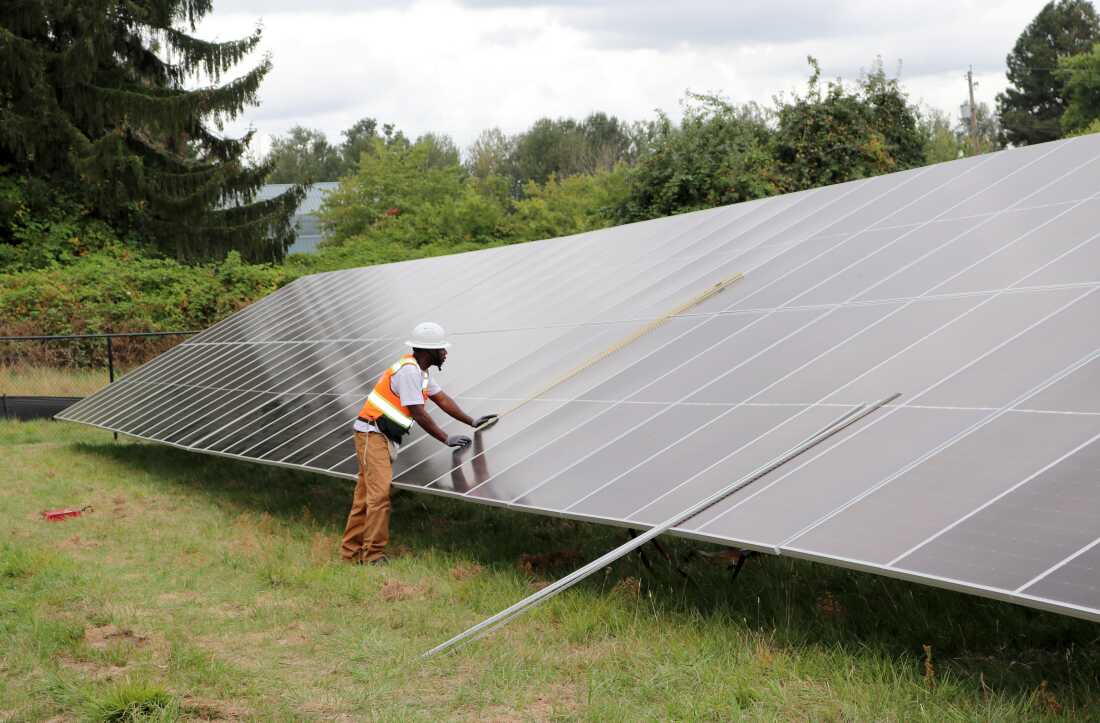
The PDX Community Solar project benefits from a grant exceeding $4 million, sourced from the Portland Clean Energy Fund. This project delivers power to qualified, low-income residents in Portland, Oregon, particularly in the Cully neighborhood. These efforts highlight the broader initiative, with NPR dedicating a series to explore community-led climate solutions amidst political challenges.
Portland’s Climate Initiatives
Over the past seven years, Portland has developed a community solar project aimed at reducing emissions and lowering energy bills for 150 low-income families. The city has distributed over 20,000 air conditioning units to prepare households for heatwaves. Furthermore, Portland has backed energy efficiency retrofits for 3,100 homes and trained 2,000 individuals in renewable energy and construction. These projects have been supported by the Portland Clean Energy Fund, an innovative climate fund addressing racial, social, and climate justice.
In 2018, 65% of voters approved a measure leading to a 1% retail sales tax on large corporations like Target, Walmart, and REI. Unlike typical sales taxes, this tax is paid by companies, not consumers. For instance, a $100 transaction generates $1 for the city. The fund began in 2019 and has amassed around $1 billion, expected to reach $1.6 billion by mid-2029.
“It’s a fund designed to enhance local, community-based solutions addressing climate realities,” explained Sam Baraso, program manager of the Portland Clean Energy Fund.
This local fund continues to grow despite national challenges in climate funding. President Trump’s executive order halted expenditures for climate projects under President Biden’s Inflation Reduction Act, impacting national climate funding.
Origin of the Fund
The genesis of the fund began nearly ten years ago. Leaders from nonprofits led by communities of color brainstormed ways to finance climate action. Given limited funding and urgent climate change impacts like heatwaves and wildfires, they proposed taxing large corporations to create a dedicated fund centering on those most impacted.
“The fund emerged from front-line communities often most affected by and excluded from climate crisis solutions,” Baraso noted. “It poses the question: ‘What if those most impacted by climate change designed the solutions?'”
Successes and Future Plans
Some successful initiatives include:
- Distribution of over 20,000 free portable air conditioning units since 2022.
- A community solar project aiding 150 low-income families.
- Planting 15,000 trees over five years in urban heat islands.
- Replacing six concrete parking lots with urban gardens and community spaces.
Since 2021, the fund has provided over $262 million through nonprofit grants, with projects significantly reducing greenhouse gas emissions. For instance, projects have reduced approximately 25,500 metric tons of carbon emissions, equivalent to removing 6,000 gas-powered vehicles for a year.
Challenges and Discussions
The fund’s financial success has prompted debates about spending and defining climate action. Mayor Keith Wilson proposed a $75 million renovation plan for the Moda Center using green technology, sparking discussions regarding its alignment with the fund’s original focus. The Portland Police Association suggested allocating 25% of the fund’s revenue to hire more police, facing both support and opposition.
Impact on Other Cities
The fund inspired other cities such as Ann Arbor, Denver, and Seattle. Ann Arbor increased property taxes for climate funding, while Denver implemented a 0.25% sales tax, exempt from essential items, generating $41 million in its first year.
Amruta Nori-Sarma, a Harvard assistant professor, noted the importance of local buy-in and community input in creating impactful climate solutions. The Portland Clean Energy Fund’s structure and funding mechanism contribute to its uniqueness.
The first five-year plan for the Portland Clean Energy Fund, aiming to invest $1.6 billion in the city, is expected to conclude by mid-2029.
Leave a Reply