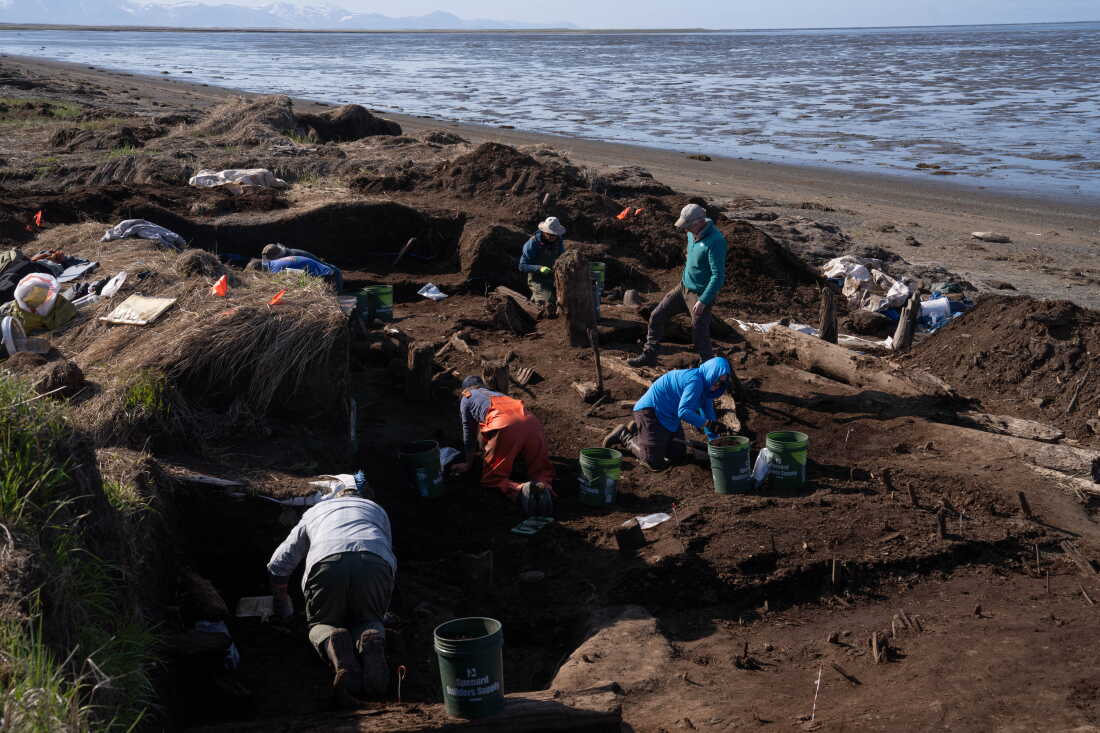
On June 8, volunteer excavators and archaeologists at the Nunalleq dig site near Quinhagak, Alaska tirelessly searched for artifacts. These efforts follow the remnants of Typhoon Halong sweeping through western Alaska, which caused significant flooding and displaced thousands across isolated areas last October. In Quinhagak, the storm damaged homes and infrastructure. The day after, Jenny Matthew and her husband assessed the damage on the beach. Amidst debris, they spotted a wooden bowl carved 400 to 600 years ago and unearthed by the storm from Nunalleq, an archaeological treasure trove.
Nunalleq is famous for showcasing pre-contact Alaska Native Yup’ik culture, providing vital insights into Quinhagak’s past. The storm not only spread artifacts but also heightened risks to what’s still buried, eroding land buffers against the Bering Sea. An urgent dig post-storm aimed to recover items before another severe storm occurs.
Since 2009, archaeologists have diligently worked at Nunalleq. Lead archaeologist Rick Knecht explains how thawing permafrost unveiled many cultural pieces in the early 2000s, prompting the village to safeguard them. Artifacts include animals, ropes, sewing devices, masks, and kayak fragments. The frozen ground has preserved organic-based artifacts that might erode otherwise. Volunteer efforts with a limited budget, supported by funding sources like the Pacific Northwest Archaeological Society, make this possible. While Nunalleq spans two Olympic swimming pools, the emergency dig focuses on a smaller area around ancient sod houses.
Kenneth McElroy, among many volunteers, examined leather pieces uncovered at Nunalleq. Charlotta Hillerdal, involved in the excavation for over 15 years, received news of the storm damage while in Scotland, expressing deep concern. Knecht describes shoreline erosion exacerbated by reducing ice and thawing permafrost, both influenced by climate change. He notes how October’s storm narrowed the distance between the sea and the site, sometimes letting seawater enter.
Despite challenging conditions akin to outpacing bulldozers, Knecht is determined to protect these historical artifacts, raising funds through initiatives like GoFundMe and Quinhagak Heritage Inc. Stephanie Harold creates watercolor illustrations of the artifacts, supporting the effort.
“When you know that you come from a people that were so resilient … you get a boost.”
The Nunalleq Culture and Archaeology Center allows descendants and visitors access to Quinhagak’s past. Elizabeth Church, director of Quinhagak Heritage Inc., emphasizes the importance of understanding origin and identity for everyone. The center manages the dig and Museum-lab that emphasizes the dedication to preserving these cultural artifacts despite damages.
As fall storm season nears, recovering as many artifacts as possible swiftly becomes urgent. The community treasures their ancestors’ belongings, intertwining them into their identity. Evidence of people adapting and innovating amid environmental changes inspires resilience and pride within the community.
Leave a Reply