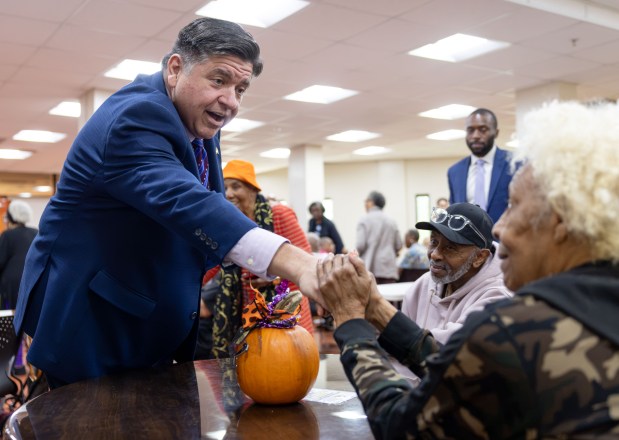
Gov. JB Pritzker, following his 2022 election win against Darren Bailey, has been looking forward to a new term in Springfield. Embracing the title of the ‘happy warrior,’ Pritzker has highlighted both his optimism and the vigorous political stance often tied to figures like Hubert Humphrey. Pritzker has been a vocal critic of Republican President Donald Trump. As early voting commenced in Chicago, Pritzker emphasized an optimistic approach to solving issues during a meeting with faith leaders.
Speaking to an assembly in Oakland, Pritzker expressed his belief in potential positive outcomes. He stated, ‘If you work a full-time job, you should earn enough to support your family and have a comfortable life.’ This outlook illustrates his desire for comprehensive support systems for Illinois residents.
Pritzker reminded voters and community leaders of the positive changes he aims to achieve, focusing on economic stability and social welfare.
Absent from his reelection campaign, however, is a detailed state-level agenda for handling affordability challenges and other critical issues. In a conversation at his campaign headquarters, Pritzker outlined suggestions for Democrats in Washington if they achieve a majority. These included raising the federal minimum wage and implementing universal paid leave and healthcare.
Pritzker acknowledged that many affordability issues are ongoing challenges. Instead of presenting new policies, he noted his team’s work on these long-term problems over the years. His previous accomplishments, such as increasing the minimum wage and implementing paid leave, are focal points of his campaign.
Pritzker’s approach aligns with a strategy he used during previous campaigns, particularly against Bailey, who struggled with limited fundraising and Trump’s poor popularity ratings. Political expert Tabitha Bonilla remarked that incumbents with a solid track record often avoid big policy shifts during reelection efforts.
In his current term, Pritzker has pursued initiatives like lowering energy costs by attracting nuclear power developments and pushing affordable housing projects. Yet, much of this work involves building on existing efforts, such as increasing state-funded preschool seats and repealing old moratoriums on nuclear power.
Bailey’s contrasting agenda included temporary suspensions of gas taxes, yet faced legal challenges due to constitutional constraints. Pritzker prioritized stabilizing state finances, achieving 12 credit rating upgrades. Economic uncertainties, however, could strain these finances, impacting Pritzker’s future political goals.
Pritzker has not presented a comprehensive revenue-raising plan since his failed 2020 income tax amendment proposal. His approach to property taxes similarly lacks systemic solutions, pointing to local governance responsibilities for tax levies.
Despite challenges, Pritzker’s record includes notable actions like increasing educational funding and leveraging new state revenue sources. His stance acknowledges complexities around shifting education funding burdens and the politically tricky landscape in Illinois.
His cautious positioning has garnered some unexpected endorsements, such as from the Illinois Retail Merchants Association and former Republican leader Jim Durkin. These alliances reflect Pritzker’s collaborative and pragmatic political style.
While facing critics on property tax issues, Pritzker points to his administration’s measures empowering local entities to address financial burdens. His focus remains on equitable state partnerships with local governments, underscoring a balanced approach to governance.
With endorsements from veteran groups, Pritzker’s alignment against Trump’s policies resonates with parts of the electorate. His stance has been bolstered by actions taken during federal policy challenges, showing commitment to state interests.
Leave a Reply