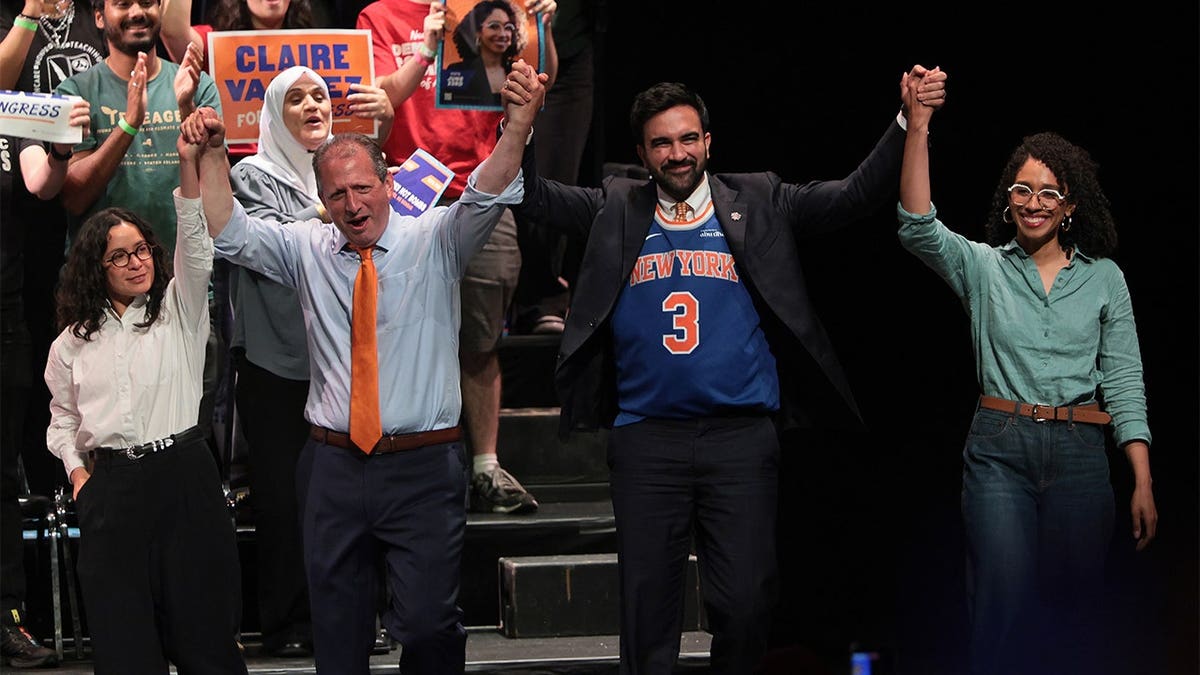
The Democratic Party is experiencing an ideological shift as progressive victories emerge from deep-blue congressional districts to broader statewide contests in Michigan, Wisconsin, and Minnesota. The upcoming elections in these key states could redefine the party’s future and risk important seats in the upcoming November elections.
Following recent triumphs by far-left and socialist candidates in deep-blue districts, like those in New York City and Colorado, attention turns to Michigan and Wisconsin. Upcoming Senate primaries in Michigan and Minnesota, along with Wisconsin’s gubernatorial primary, will test the progressive movement’s ability to secure statewide power.
Senator Bernie Sanders, a prominent progressive figure, emphasized recent successes by saying, “Within the last year, we have won mayor’s races in New York City, Seattle, Washington, D.C., as well as congressional elections and Democratic primaries across several other states.” These victories have given momentum to progressives, encouraging them to challenge the party’s direction.
“Socialism has not worked anywhere on the globe,” commented former New York Governor Andrew Cuomo in a Fox Business interview. He criticized the promises of free services, adding, “There’s no such thing as free. Someone always pays.”
Progressive success, notably through candidates like Melat Kiros who defeated a long-standing Democrat in Colorado, has invigorated the Democratic Socialists of America. They assert that, “Only socialism can address decades of poor capitalist management in the US.” However, these ideals face backlash within the party.
Democratic political analyst Van Jones expressed concerns about the far-left influence, arguing that certain ideas are “regressive,” not progressive. Meanwhile, Jamie Metzl urged moderation, warning Democrats to confront the “bigots and anti-Americans” within their ranks.
In Michigan, the Democratic Senate primary pits Rep. Haley Stevens, backed by Senate Democratic Leader Chuck Schumer, against progressive Abdul El-Sayed. Party leaders fear El-Sayed’s nomination risks losing the Democrats’ hold on the seat. El-Sayed advocates for Medicare for all and has criticized US policies on immigration and Israel, contrasting sharply with more moderate Democrats.
Opponents argue El-Sayed’s positions might alienate voters in a state closely contested by former President Trump. The campaign is heavily financed, with significant spending from groups like the United Democracy Project opposing El-Sayed.
Wisconsin and Minnesota feature similar ideological battles. DSA-backed Francesca Hong is gaining support in Wisconsin’s crowded gubernatorial race, while Minnesota sees Lt. Gov. Peggy Flanagan facing off against moderate Rep. Angie Craig for a Senate seat.
The results of these primaries hold immediate implications, affecting not just the Democratic Party’s future trajectory but also impacting this year’s midterm elections. Joe Caiazzo, a Democratic strategist, highlighted the stakes: “Democrats must strategically maintain these seats in November.”
Leave a Reply