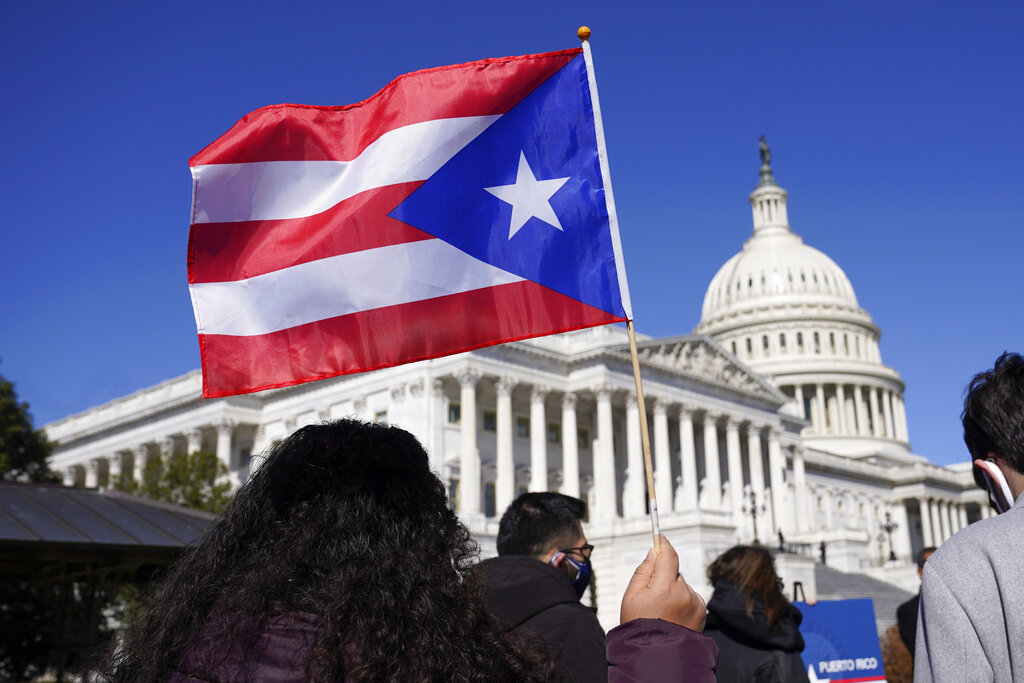
On March 2, 2021, a woman waved Puerto Rico’s flag at a news conference on Capitol Hill, marking a historic moment. The U.S. House of Representatives has approved a bill permitting Puerto Rico to hold its first-ever binding referendum on statehood or independence. Despite this, the bill faces significant obstacles in the Senate.
The political landscape in midterm elections traditionally poses challenges for the ruling party to retain Congress seats. This November appears similar, with Republicans confronting difficulties in maintaining their narrow U.S. House majority. A pivotal voting group, often misunderstood by the party, are Puerto Ricans, the second-largest Hispanic voting bloc in the nation.
To capture these crucial votes, Republicans must revise their stance against Puerto Rican statehood. A poll by McLaughlin and Associates, commissioned by the Puerto Rico Statehood Council, indicates robust support among Hispanic voters. The findings show 68% of Hispanic voters and 71% of Puerto Rican voters support statehood, presenting a political prospect with minimal risk.
More striking is the 78% of Republican Puerto Rican voters backing statehood, compared to 13% in opposition. Republicans supporting statehood outnumber Democratic supporters, with 69% approval. This alignment with conservative values emphasizes the statehood movement’s potential within the Republican narrative.
The poll further indicates that 68% of Republican Puerto Ricans favor candidates endorsing statehood. Thus, candidates’ positions on statehood chiefly influence Republican voters. This insight counters typical rhetoric from political figures such as Sen. Mitch McConnell.
Republican leadership in Puerto Rico, including the governor and top legislative entities, reflects these conservative values. The community’s shared priorities encompass strong military support, policies against crime, and traditional family values. The disparity in opinion over statehood stems from entrenched opposition, which inadvertently benefits Democrats by positioning them as receptive to Puerto Rican voters.
These voters play a crucial role beyond the 6 million Puerto Ricans residing in the U.S. states, with significant populations in areas like Pennsylvania, Georgia, and Florida. Control of the House could pivot on districts like Pennsylvania’s 7th, highly populated with Puerto Rican and Dominican communities. Cook Political Report categorizes this race as a true toss-up, where Puerto Rican votes could decisively impact outcomes.
As noted, 12 of 38 swing districts feature at least 20% Hispanic populations. Harnessing effective communication targeting Puerto Ricans in these districts could secure enough seats for Republicans to maintain power.
The Republican strategy need not center exclusively on statehood. Simply refraining from opposing it could shift voter allegiance. With figures like Kamala Harris and Ken Martin affirming statehood, Democrats seem poised to leverage this issue. Should Republicans dismiss the relevance of statehood, Democrats will likely claim recognition upon regaining full control.
José Fuentes, the former Puerto Rico Attorney General and current chairman of the Puerto Rico Statehood Council, articulates these findings with potential implications for partisan strategies.
Leave a Reply