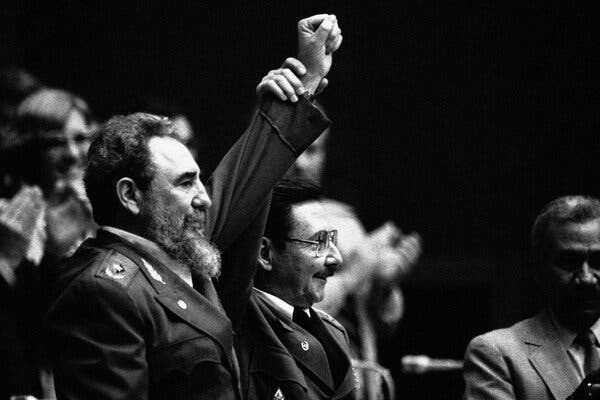
Raúl Castro, at 94 years old, no longer holds any official title in Cuba. Yet, he continues to exert substantial power, particularly over the military, according to experts. His influence extends to pivotal negotiations with the Trump administration concerning the ongoing dispute between Havana and Washington.
Cuban state media still regards him highly, often calling him “the leader of the Cuban Revolution.” He played a crucial role alongside his brother Fidel in the 1959 revolution that led to the downfall of a U.S.-backed dictator.
Raúl Castro is frail today, struggling with hearing and speech difficulties. Nevertheless, he still appears at significant national events, most recently wearing his military uniform during the International Workers’ Day parade on May 1.
Raúl’s health is notable considering his history as a heavy drinker with a preference for neat vodka, inspired by his student years in Moscow. Alcibiades Hidalgo, his former chief of staff who defected to Florida in 2002, remarked on Raúl’s remarkable aging and continued influence over Cuba’s political direction.
While Fidel Castro, who passed away in 2016, was the revolution’s charismatic figure, Raúl Castro preferred working behind the scenes. Brian Latell, a former CIA analyst specializing in Cuban affairs, highlighted their contrasting styles, noting that Raúl was the one handling logistical tasks while Fidel managed the more visible leadership.
After the revolution, Raúl Castro was critical in developing Cuba’s Revolutionary Armed Forces and successfully repelled the Bay of Pigs invasion organized by the CIA. He played a key role in Fidel’s declaration of Cuba as a Communist state in 1961, actively organizing the Cuban Communist Party.
As defense minister, Raúl Castro established GAESA, a massive military conglomerate encompassing various businesses, including hotels, stores, and gas stations, thus becoming Cuba’s most significant economic force.
Initially seen as a potential reformer, Raúl Castro relaxed some of the country’s stringent economic regulations, allowing Cubans to engage in buying and selling homes and vehicles. In 2015, he restored diplomatic relations with the United States and hosted President Barack Obama in Havana in 2016.
Despite these economic changes, Raúl maintained strict political control through the Communist Party and upheld the repressive state security systems that define Cuba’s governance.
Leave a Reply