Match Summary
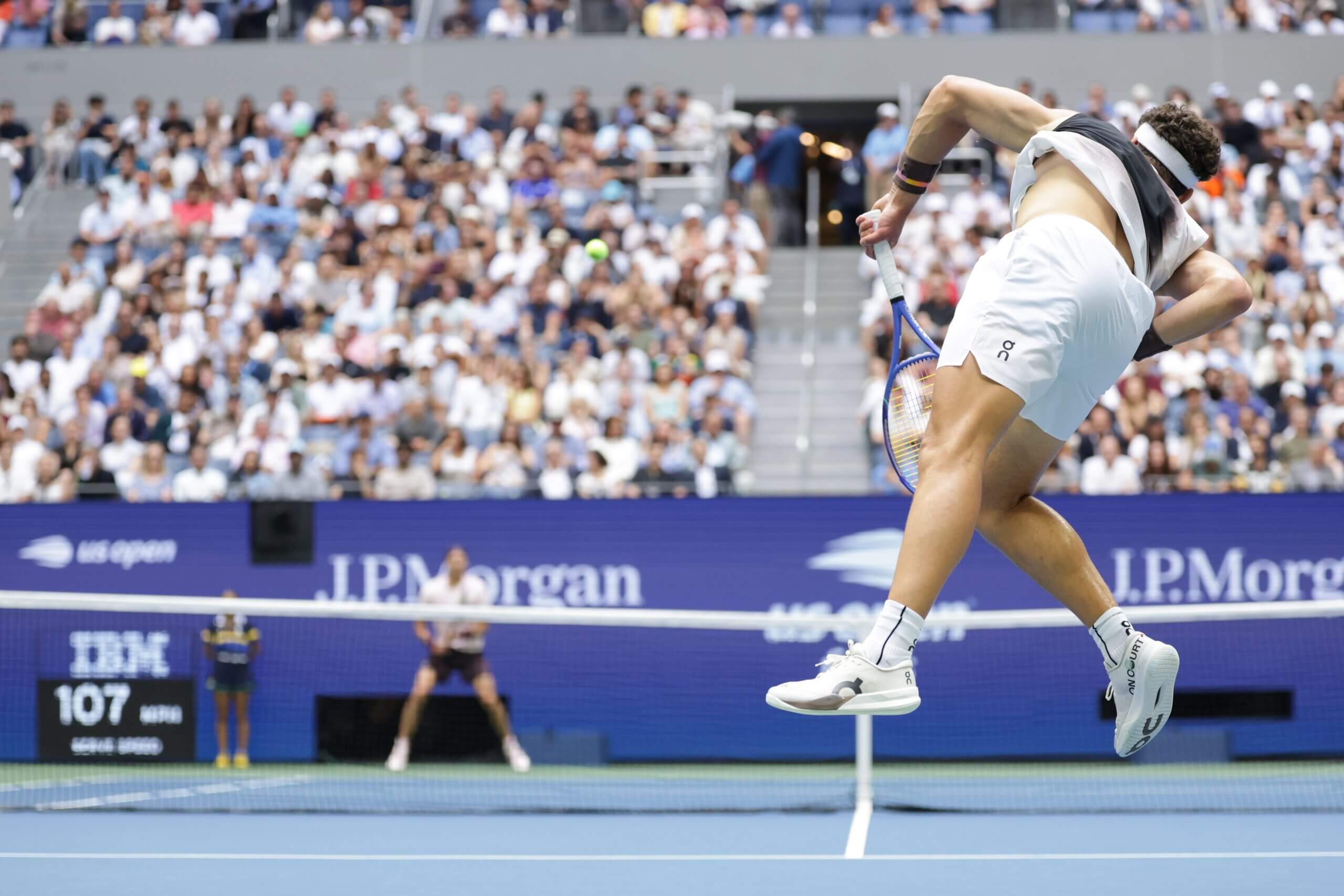
In the 2026 U.S. Open men’s final, Alexander Zverev defeated Ben Shelton to secure his second Grand Slam title of the year. Zverev, the number one seed, began the match strongly by breaking Shelton’s serve in the opening game. He continued to control the match, despite Shelton’s efforts to rally in the third set, leading to a final score of 6-3, 7-6(2), 5-7, 6-2.
Zverev’s win highlighted his experience in major finals and Shelton’s difficulty in pushing Zverev out of his comfort zone. This extended the 23-year wait for an American man to win a Grand Slam singles title.
First Game Analysis
The first game of the final set the tone for the match. Shelton, appearing in his first Grand Slam final, aimed to hold serve, but Zverev broke him early. This mirrored a similar scenario for Taylor Fritz two years prior, where the opening game went against expectations.
“Zverev’s ability to adapt and Shelton’s struggle against his tactics dictated the match’s early pace.” — Matt Futterman
Despite securing some points with an ace and a forehand volley, Shelton’s attempt to attack Zverev’s backhand ended with a miss, illustrating the challenge left-handed players face against Zverev, who boasts a 44-1 record against lefties.
Shelton’s Adjustments
Shelton tried various strategies to counter Zverev’s deep return position. He served differently, aiming lower to offset Zverev’s height. The problem was maintaining precision over a taxing match under challenging conditions. Despite good tennis IQ and making solid decisions, Shelton’s volleys and touch shots were less effective.
Even with adjustments, Shelton couldn’t consistently challenge Zverev, revealing the uphill battle he faced in his debut final.
Serve Comparison
Both players have elite serves, but Zverev’s positioning made Shelton’s serve less potent. Shelton’s lack of break points and Zverev’s deep return position illustrated the disparity in serve effectiveness. Zverev’s 93% success on first serves contrasted with Shelton’s 70%, underscoring the strategic advantage.
Shelton had improved his return game but struggled against Zverev, who calmly drew errors from Shelton throughout their match.
Execution Challenges
Shelton had moments where his tactical choices showed promise. At 3-3 in the second set, Shelton maneuvered but failed to capitalize on scoring chances, missing potential winning shots. Zverev held his serve, undermining Shelton’s efforts to pressure him.
“Great players capitalize on slight openings; Shelton needed to seize these chances but fell short.” — Matt Futterman
With errors affecting key moments, Shelton lost momentum in the second set and couldn’t regain the advantage.
Final Set Dynamics
Shelton appeared to regain momentum during the third set, breaking Zverev’s serve after a series of dominant service games. However, in the fourth set, Zverev quickly reclaimed control, breaking Shelton’s serve in the first game. Shelton’s inability to maintain pressure allowed Zverev to secure a decisive victory.
Experience Factor
Experience in Grand Slam finals proved crucial. Zverev, who had faced pressure in previous finals, managed his nerves effectively. Shelton, new to this high-stakes environment, couldn’t settle into his game fully. By the third set, his surge came too late to alter the outcome meaningfully.
Post-Match Remarks
Zverev acknowledged the supportive, albeit partisan, crowd. He praised Shelton’s potential, predicting future success at the U.S. Open for him. Zverev also expressed gratitude toward his personal team and family.
Shelton expressed his appreciation for the tournament atmosphere and fan support. Remaining optimistic, he vowed to return, aiming to improve his performance and become a fixture in major finals.
Leave a Reply