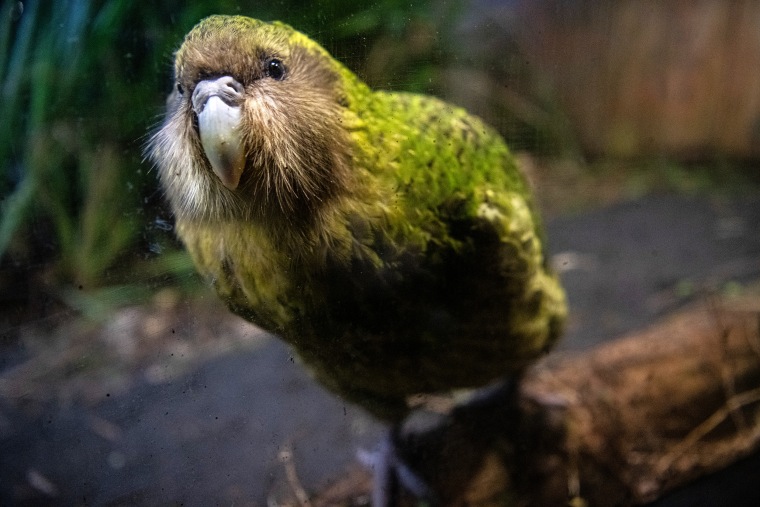
On September 1, 2026, officials in New Zealand announced an encouraging update on one of the world’s most endangered parrot species, the kakapo. The New Zealand Conservation Department reported a remarkable increase in the kakapo population, with 90 new chicks counted. This record number brings the total population to 325 birds.
Kakapos, native to New Zealand, have reached a new milestone of independence at 150 days old. This achievement allows them to be added to the official population tally.
The kakapo is distinguished by several unique traits. Known for its flightless nature, the bird’s waddling gait makes it vulnerable to ground predators. Furthermore, the kakapo is the heaviest parrot species, with males weighing up to 9 pounds. Its vibrant yellow-green plumage and large gray beak are characteristic features.
This record season is notable for kakapo conservation. The department’s statement highlights the boasting owl-like facial features of the nocturnal birds. Conservation manager Deidre Vercoe emphasized that although the population increased significantly, the species remains critically endangered.
“There is still a long road of recovery ahead,” Vercoe noted, “but ninety chicks in a single season is a record.”
The Kakapo Recovery Programme commenced in 1995 with a mere 51 birds. The species has faced challenges such as low genetic diversity and limited hatching success. A four-year gap between breeding seasons makes the recent increase even more significant.
Each kakapo is equipped with a radio transmitter for tracking. This has become an essential part of the recovery efforts that began after human arrival led to a drastic population decline due to hunting, habitat loss, and introduced predators like cats and rats.
The kakapo’s evolution included losing the ability to fly, given the historical absence of ground predators in New Zealand. Today, kakapos reside on protected offshore islands, relying on berries from Rimu trees, which fruit intermittently every two to four years.
Innovative methods were trialed this season, such as monitoring remote nest technology data to reduce intensive management. Tāne Davis from the kakapo recovery group highlighted efforts to balance intervention levels with more natural breeding outcomes.
A notable shift is planned regarding naming practices for new chicks. Some chicks from 2026 will remain unnamed, symbolizing a movement towards a more natural recovery approach.
Looking forward, there is optimism for shorter gaps between breeding seasons. Vercoe expressed hope for another productive season in 2028 based on current modeling predictions.
Leave a Reply