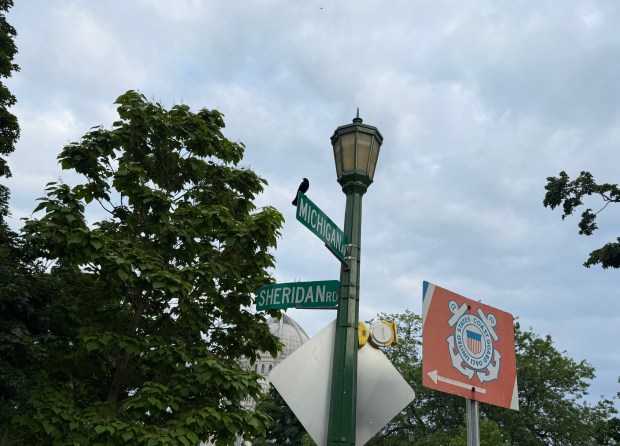
Teri Weber enjoys daily walks on Sheridan Road in Winnetka. She often catches views of Lake Michigan between homes. However, she recently experienced a startling encounter. Red-winged blackbirds began dive-bombing her unexpectedly.
“The first bird approached from behind, then the second from the front,” Weber shared. “I ducked, waved my hat, and screamed.” Other locals have shared similar stories. A social media post by Weber received 50 responses. Six other people reported being dive-bombed as well.
Nancy Davidson from Wilmette also experienced attacks. The birds swooped on her twice during her regular exercise on Sheridan Road. “The bird came from nowhere,” Davidson recounted. “It struck my head and scared me off instantly.” She noted her unfamiliarity with the species until this year.
JP McNamara, the Marketing and Communications Manager for the Wilmette Park District, explained the situation. He mentioned the birds are common in Illinois during spring and summer. Male red-winged blackbirds become defensive, protecting their nests during early nesting season.
“While the behavior can be startling, it is meant to deter rather than injure,” McNamara stated.
Public conversations have increased around red-winged blackbird activity. Physical contact with humans remains rare. The behavior usually ends after the nesting season when the young leave the nest.
Experts emphasize that dive-bombing is a normal part of the species’ breeding. Bridget Kiernan from the Chicago Botanic Garden notes the increased aggression as typical for this time of year. She leads bird walks and often educates about red-winged blackbirds’ defensive nature. The species’ success is due to this aggressive territorial protection.
Red-winged blackbirds nest near water, in wetlands, or urban areas. Kiernan observed dive-bombing rises in June after chicks hatch. By July, incidents decline as the breeding season closes.
Leah Pietrusiak of Chicago faced a dive-bombing near Humboldt Park Boat House. Her encounter led to a social media post with shared experiences from others. Having grown up in Oak Park, she first encountered such behavior years ago on Grand Avenue.
“I walked early one morning and suddenly, it happened again,” she said. “The bird hit my head, and I felt it for hours.” This recent experience involved only one defensive act, seen as a warning. Pietrusiak plans to wear a hat during future walks to remain cautious in nesting seasons.
Weber suggests proactive measures by local officials, like limiting nest building in public spaces, could help prevent incidents. Once red-winged blackbirds lay eggs, the nests cannot be legally removed due to the Migratory Bird Treaty Act of 1918 and Illinois Wildlife Code.
Kiernan advises precautions for residents during these incidents. A wide-brimmed hat can provide protection. Understanding red-winged blackbirds’ warning calls helps one anticipate entering their nesting territory, giving space or choosing another path.
The birds’ calls can be explored through a National Park Service audio resource.
Leave a Reply